Involves Animals
Maui: Molokini and Turtles Luxury Yacht Snorkel (opens in a new tab)
We are a family-owned Maui company with over 40 years of experience on Hawaiian waters. Our expert Captains and crew bring decades of…
5 hours
Prices checked
Beach
Last updated
The one reliably calm swim on the Hāna coast, under the cinder cone where Queen Kaʻahumanu was born in 1768.
After sixty-odd miles of curves, Hāna Bay is where the Hāna Highway stops being a drive and becomes a place. The road drops into town, turns towards the water, and delivers you to a wide lawn, a grey-brown beach and a working pier, with a cinder cone rising behind it.
The beach is dark salt-and-pepper sand rather than the black of Waiʻānapanapa, and the water in front of it is, on most days, the calmest on this entire coast. Kaʻuiki Head shelters the bay from the south and the pier breaks the swell from the north, so while the shoreline either side of Hāna is a wall of cliff and whitewater, this small pocket is swimmable. That is rarer on the east side than visitors expect. There is no lifeguard — Maui County staffs nine beaches and this is not one of them — so calm is relative and your own judgement is the only safety system in play.
The cone above the beach is the reason Hāna sits where it does. Kaʻuiki Head was a fortress, fought over repeatedly by Maui and Hawaiʻi Island forces in the 1700s, and in 1768 Queen Kaʻahumanu was born in a cave on its flank. She became the favourite wife of Kamehameha I, then kuhina nui — effectively co-ruler — and in 1819 she was central to the breaking of the ʻaikapu, the act that ended the kapu system and reordered Hawaiian society. A short, steep red cinder trail runs from the wharf towards a plaque marking the birthplace. The small light offshore stands on Puʻu Kiʻi islet.
The rest of the bay is a county park doing county park things: lawn, picnic tables, restrooms, a pavilion, canoe club activity, people fishing off the pier and children in the shallows after school. It is where Hāna gathers, which is exactly why visitors should arrive quietly and leave it as they found it.
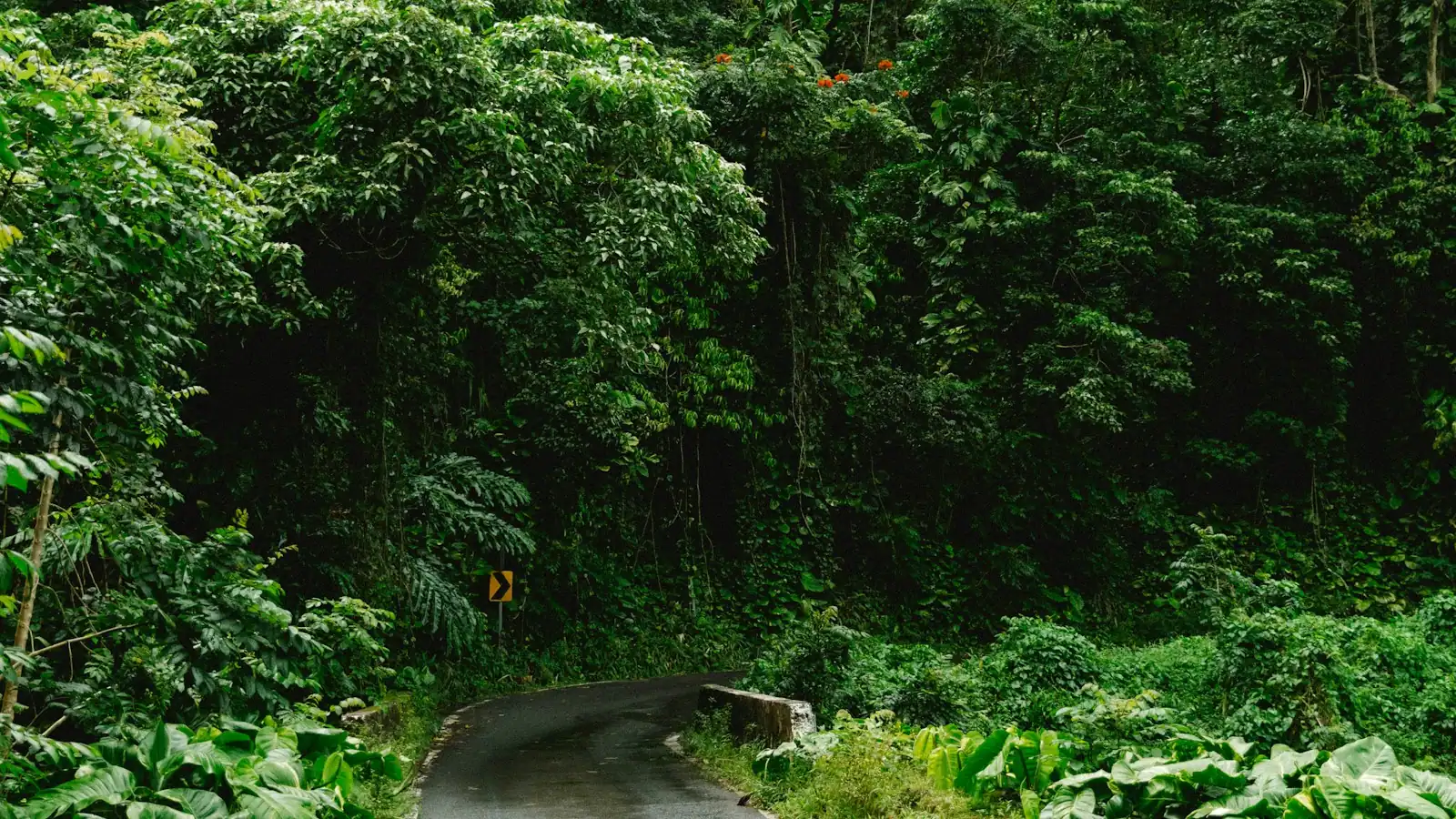
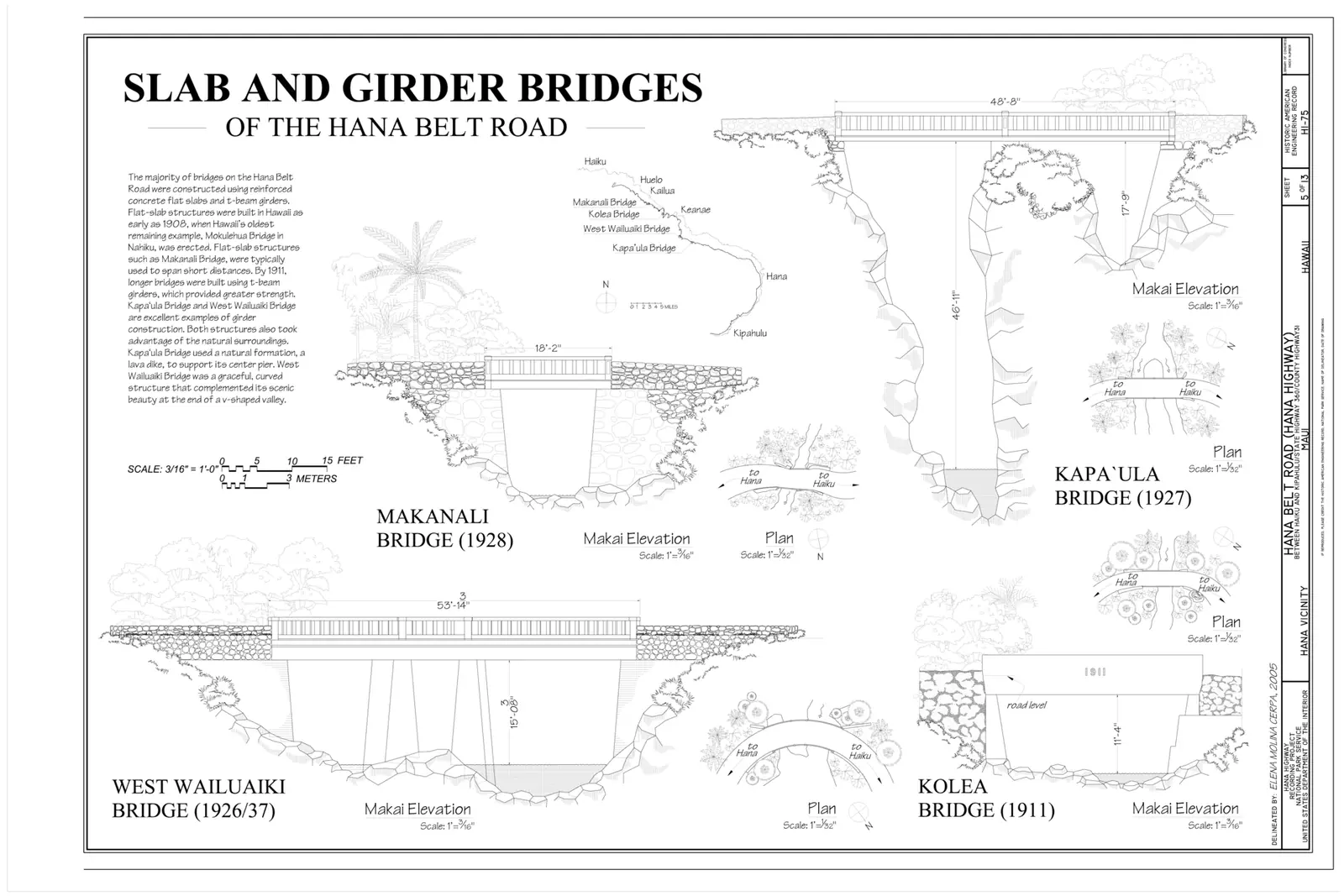
Follow the Hāna Highway (Route 360) east from Pāʻia for roughly 52 miles. Allow two and a half to three hours each way without stops, and a full day with them — the road has around 600 curves and 59 bridges, most of them one lane.
In Hāna town, turn makai onto Keawa Place at the signed turn for the bay; the road drops straight to the park and the wharf.
Parking is free and paved, and there is normally space. Do not park on the grass, and do not block the boat ramp or the canoe halau.
Fill your tank in Pāʻia. Fuel in Hāna is limited, expensive and closes early. Drive the return leg in daylight if you possibly can.
Hāna Bay is the most forgiving water on the Hāna coast, and that is a comparison to a very unforgiving coast.
The protected corner near the pier is shallow, sandy underfoot and usually gentle — it is where local families put small children. Move out towards the open mouth of the bay and conditions change quickly: the bottom drops, current runs, and on a north swell the pier end takes real energy.
There is no lifeguard here. Maui County's staffed beaches are Kamaʻole I, II and III and Mākena on the south shore, Hoʻokipa, Baldwin and Kanahā on the north, and D. T. Fleming and Hanakaoʻo in the west. Hāna has none of that, and neither does anywhere else on this coast.
Two conditions to respect. After heavy rain — which is most weeks in Hāna — streams push brown water and debris into the bay, visibility goes, and swimming is a poor idea for a day or so afterwards. And on any day with a north or northeast swell running, the bay loses its shelter and the shore break gets abrupt.
If in doubt, watch what residents are doing. If the bay is empty on a warm afternoon, there is a reason.
Kaʻuiki is the cinder cone that forms the southern arm of the bay. Its Hawaiian name is usually read as ka ʻuiki, the glimmer.
It was a stronghold. Through the eighteenth century Kaʻuiki changed hands between Maui and Hawaiʻi Island forces more than once, and its defensibility is obvious the moment you stand under it: steep on every side, with water at its foot and a clear view of anything approaching.
In 1768 Kaʻahumanu was born in a cave here. She went on to become the most politically consequential woman in Hawaiian history — Kamehameha I's favourite wife, then kuhina nui under two successors, and one of the people who deliberately broke the ʻaikapu in 1819, ending the religious system that had ordered Hawaiian life. Whatever you think of what followed, almost nothing about nineteenth-century Hawaiʻi happens the same way without her.
A short red cinder trail leaves from near the wharf and climbs towards a plaque marking the birthplace. It is 400 feet of gain, unmade, loose and slick when wet, and it is not a casual stroll in flip-flops. Treat the site as what it is — a place of consequence to the community you are standing in — rather than a background for photographs.
The red-sand beach on the far side of Kaʻuiki is one of the most photographed places in East Maui, and this guide does not recommend walking to it.
The reason is the route, not the beach. The trail contours across a steeply eroding cinder slope above the sea, on ground that has repeatedly given way. Visitors have been seriously injured and rescues here are difficult. It also crosses land that is not a public right of way — the path runs over private and church-held ground, and the community has been clear that it would rather people did not.
Two further points people are not told. There is no rescue infrastructure and often no phone signal. And the beach is regularly used by people who are not wearing anything, which families discover by arriving.
If you want dramatic coastline in Hāna, Waiʻānapanapa State Park gives you black sand, sea arches and a proper trail on state-managed land with a reservation system, and it is five minutes back up the highway. That is the right trade.
If you go anyway, go in dry conditions, in real shoes, with nobody following you who cannot get themselves back out.
Hāna is a small community of roughly a thousand people at the end of a long road. Supply is thin and it is not a failure of planning on their part.
Allow more daylight than you think you need for the drive home. The Hāna Highway after dark is a different and much harder road.
Operators run these trips past Hāna Bay, or stop there as part of a longer route. We list what the booking data supports — not everything that mentions the name.
Booking through these earns us a commission from Viator. You pay the same, and payment did not decide what is listed.

Involves Animals
We are a family-owned Maui company with over 40 years of experience on Hawaiian waters. Our expert Captains and crew bring decades of…
5 hours
Prices checked

Short term availability
Your West Maui Snorkel adventure departs from Kaanapali Beach. Along the way keep your eyes open for Hawaiian spinner dolphins, bottle…
4 hours
Prices checked

Nature and Wildlife Tours
Trip Highlights - 15 minute boat ride to Molokini - Snorkel the crystal clear waters of Molokini crater, Maui's 1st Snorkeling destination…
2 hours
Prices checked

Low Supplier Cancellation Rate
You’ll have the chance to drive, or simply be a passenger in one of today’s most advanced 4 seater off-road vehicles, the Canam sport max…
2 hours
Prices checked

Low Last Minute Supplier Cancellation Rate
Sea Maui’s Sunset Dinner Cruise is our premium dining & Sunset experience. Leave behind the hustle and bustle of the land when you're…
2–3 hours
Prices checked

Excellent Quality
All riders must be 36 inches or taller to participate/ride submarine. Dive 100 feet below the surface and experience Maui’s marine…
2 hours
Prices checked

Sustainable Tours
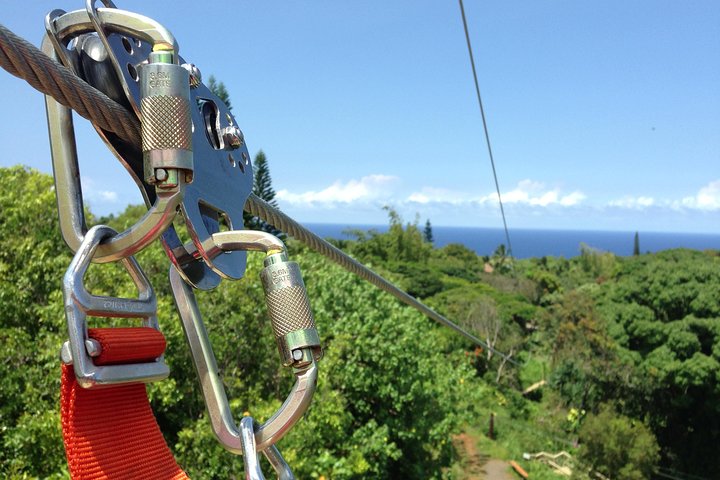
THIS IS A 8 LINES TOUR - JUNGLE ADVENTURE This adventure with Jungle Ziplines Maui includes eight amazing Ziplines, three tree platforms…
2 hours
Prices checked

Day Trips
Live the real Maui experience on the Road to Hana with our expert guides! Immerse yourself in the beauty of the spectacular Hana…
Full day
Prices checked
Straight-line distances, so allow more on the road — the island is long and has one main parkway.

Park
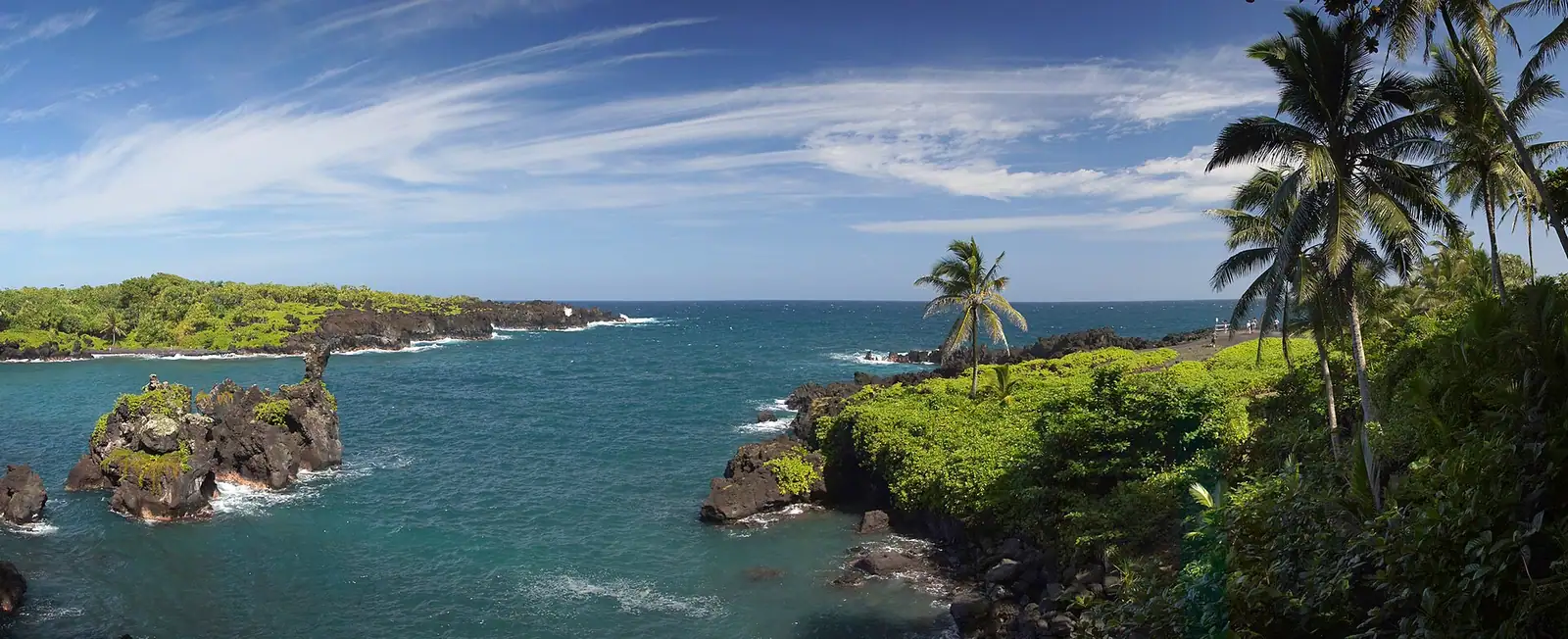
Black basalt sand, freshwater caves and an ancient coastal trail, three miles before Hāna — and you cannot get in without booking ahead.
1–2.5 hoursNon-residents pay per-vehicle parking plus a per-person entry fee, both by advance reservation. Hawaiʻi residents with state ID are free.2.4 mi away

Historic site
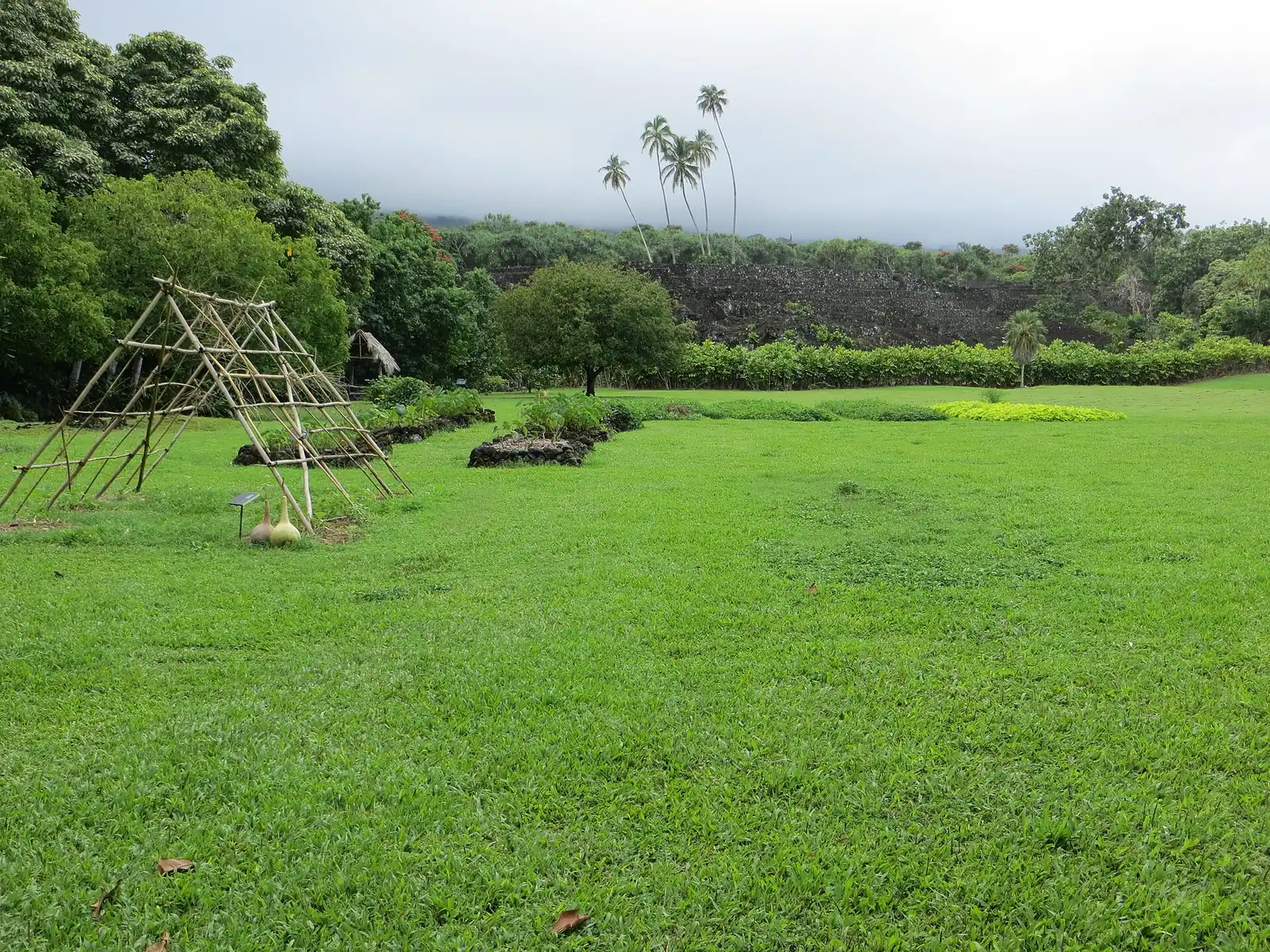
A dry-stacked stone platform the size of a city block, the largest heiau in Polynesia, standing in a hala forest above the Hāna coast.
1–2.5 hoursAround $18 per adult for a self-guided visit; roughly $30 for the guided tour. Children 12 and under free.4.5 mi away

Landmark
Sixty-four miles, 620 curves and 59 bridges — and a road that several hundred people use to get to work.
8–12 hoursThe road itself is free. Several stops along it charge for parking or entry.12.7 mi away

Water feature
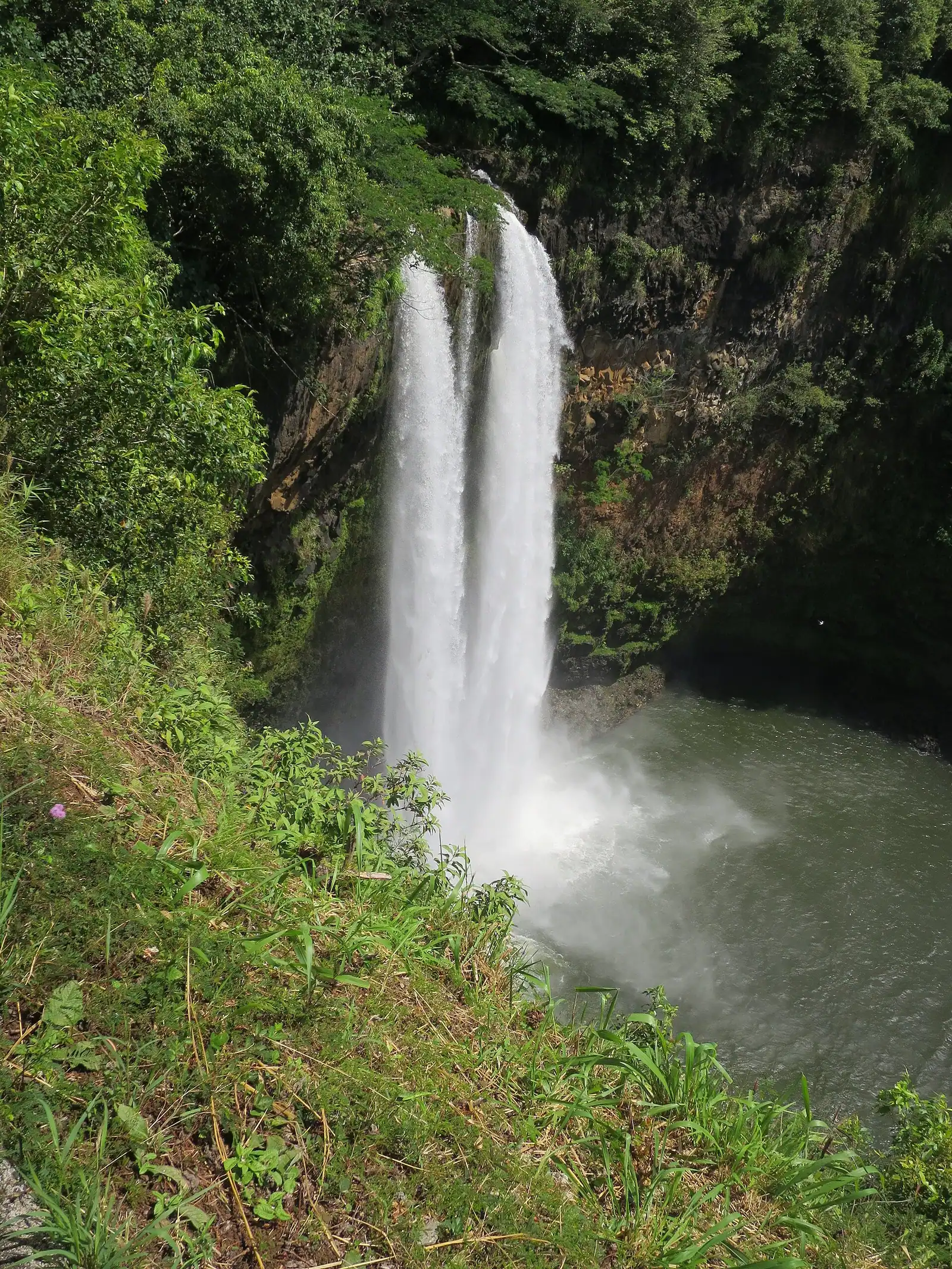
Eighty feet of water beside the road south of Hāna, and the only serious Maui waterfall you can see without leaving the car.
10–40 minutesFree. No entry fee, no reservation and no parking charge.4.1 mi away
Where this place fits into a day, and the pages that plan one.

Guide hub
Maui is two volcanoes joined by a low, windy isthmus, and almost every planning mistake visitors make comes from forgetting that. The western half…

Guide hub
Maui's attractions do not cluster. They are strung along a figure-eight island where the two halves are separate volcanoes and the connecting road…

Guide hub
Every beach on Maui is public. Hawaiʻi law puts the shoreline below the upper reach of the waves in public trust, and coastal landowners, including…

Things to do
The Hāna Highway is not the road to a place. It is the place. Highway 36 becomes Highway 360 a few miles past Pāʻia, and from there it runs roughly…

Budget
Maui has the most expensive activity market in this network and one of the better free ones, which is a stranger combination than it sounds. The…

Guide
Sixty-four miles, around 600 curves and 59 bridges, most of them one lane. The road is the destination, and the people who live along it are the reason to drive it well.
10 min readKealoha Nakamura
Usually, and it is the most reliably calm water on the Hāna coast — Kaʻuiki Head shelters the south side and the pier breaks the north swell. The protected corner near the wharf is shallow and sandy, which is where local families swim. There is no lifeguard; Maui County staffs nine beaches and none of them are in Hāna. Avoid the bay for a day or so after heavy rain, when runoff browns the water.
A county beach park with a dark salt-and-pepper sand beach, a wide lawn, picnic tables, a pavilion, restrooms, free parking and a working pier used by fishermen and the local canoe club. Behind it rises Kaʻuiki Head. What is not there, reliably, is food — the snack window by the pier has been closed and concessions come and go. Buy supplies before you arrive.
Kaʻahumanu was born in 1768 in a cave on Kaʻuiki Head, the cinder cone above Hāna Bay. She became the favourite wife of Kamehameha I and later kuhina nui, effectively co-ruler, under his successors. In 1819 she was central to breaking the ʻaikapu, ending the kapu system that had governed Hawaiian society. A short, steep cinder trail from the wharf leads towards a plaque marking the birthplace.
This guide does not recommend it. The trail contours across an actively eroding cinder slope above the sea, ground that has given way before, and visitors have been seriously injured on it. It also crosses private and church-held land where the community has asked people not to walk. There is no rescue infrastructure and often no signal. Waiʻānapanapa State Park, minutes up the highway, gives you black sand and sea arches on a properly built trail.
Very limited — essentially one station, priced accordingly, and it closes early. Fill up in Pāʻia before you start the drive, which is the single most common planning mistake on this side of the island. Cell coverage is also patchy on the Hāna Highway, so download offline maps first, carry water and some cash, and allow enough daylight for the drive back.