Skip to content
Menu

Booking through these earns us a commission from Viator. You pay the same, and payment did not decide what is listed.

Search

Attraction directory

Maui Attractions

Last updated

Maui attractions by region, with the permits and fees each one needs. Haleakalā, ʻĪao Valley, Waiʻānapanapa, Molokini, the beaches and Upcountry farms.

  • 34Places listed
  • 21Free to visit
  • 11Areas
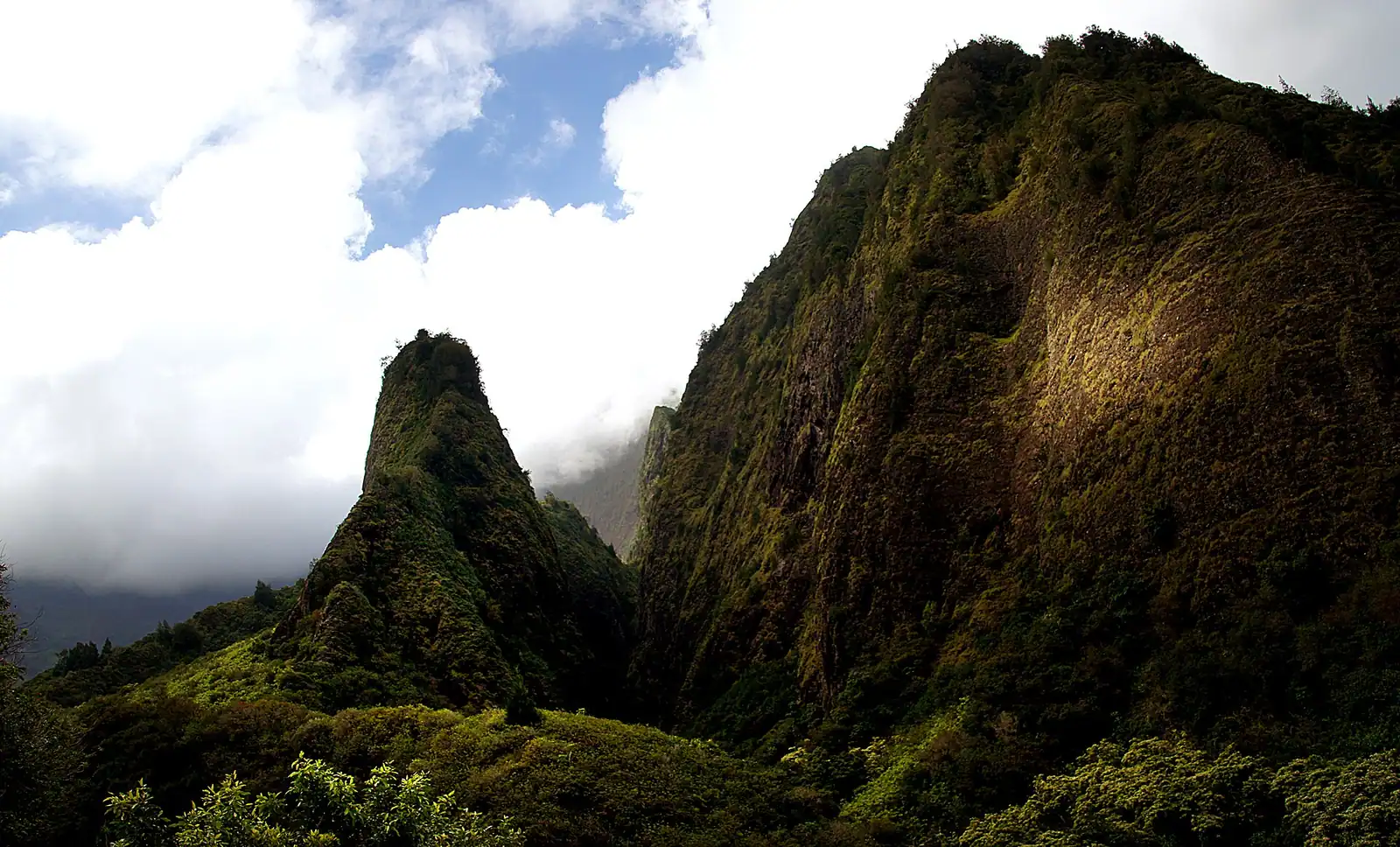
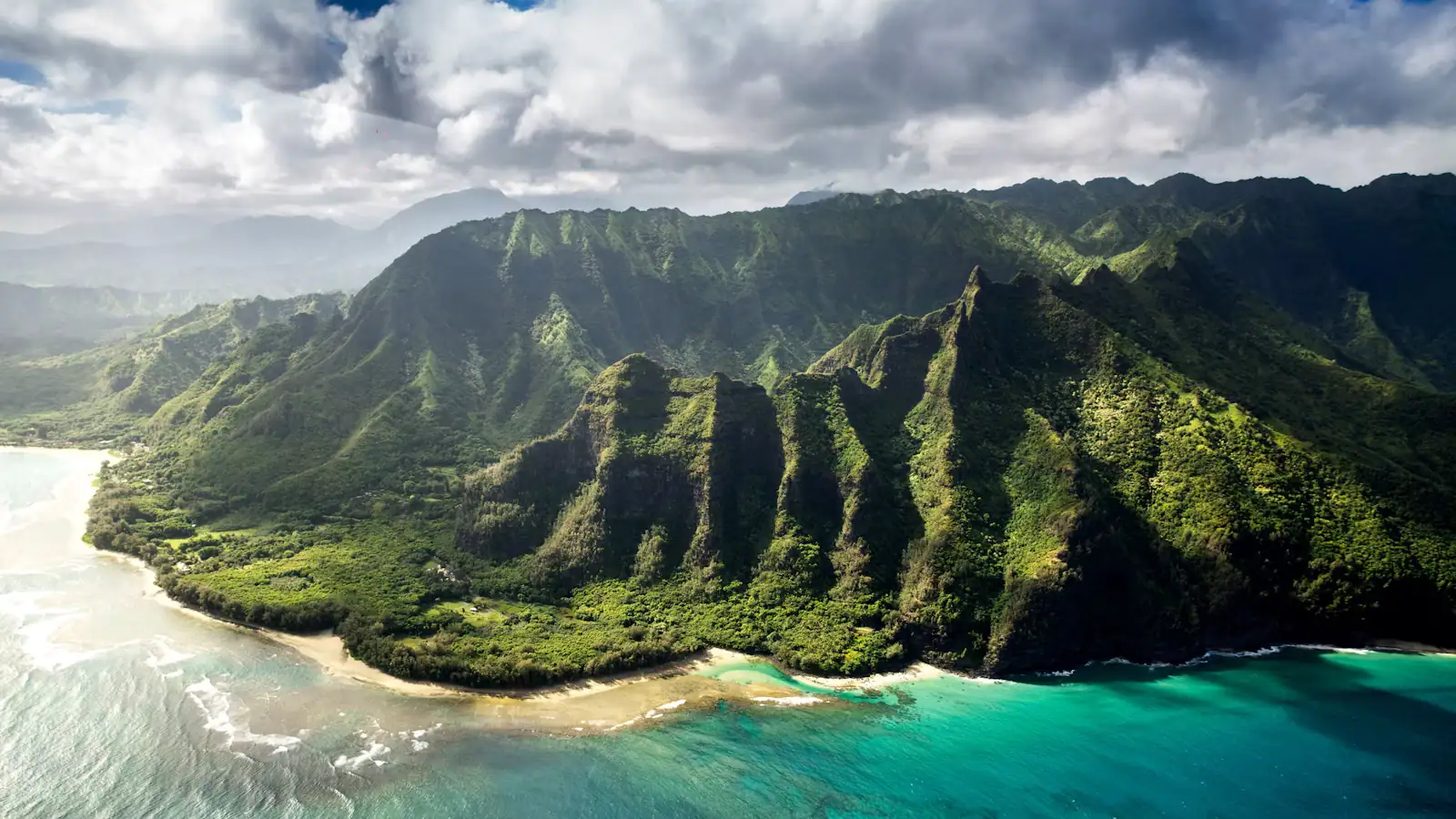
The green pinnacle of Kūkaʻemoku rising above the forested floor of ʻĪao Valley on Maui with cloud on the ridgeline

Maui's attractions do not cluster. They are strung along a figure-eight island where the two halves are separate volcanoes and the connecting road runs through what used to be sugar country. A visitor who picks places off a list without looking at a map ends up with a day that reads well and drives badly: ʻĪao Valley in Wailuku, Haleakalā's summit at 10,023 feet, and the Pipiwai Trail past Hāna are all worth a morning, and no two of them belong in the same one.

The honest way to plan is by region. Central Maui, around Kahului and Wailuku, holds ʻĪao Valley State Monument, the Maui Tropical Plantation at Waikapū and the arts centre, and it is where the airport and the supermarkets are. South Maui runs from Kīhei's beach parks down through Wailea's resort strand to the wild end at Mākena. West Maui is the resort coast from Lahaina north through Kāʻanapali and Kapalua to Honolua Bay. Upcountry climbs the western slope of Haleakalā through Pāʻia, Makawao, Kula and out to the ranch land at ʻUlupalakua. And East Maui is the Hāna side, which is a full day on its own and a different climate entirely.

The second organising fact is the permit calendar, and it catches a lot of people out. Three of the island's best-known places now run timed entry for non-residents. Haleakalā's summit requires a sunrise reservation for any vehicle arriving between 3am and 7am, booked separately from the park entrance fee. ʻĪao Valley State Monument requires an advance booking with parking charged per vehicle and a small per-person entry fee. Waiʻānapanapa State Park, the black-sand beach outside Hāna, also requires one, and state roadwork that began in July 2026 has reduced the number of slots. All three are cheap. None of them can be arranged in the car park.

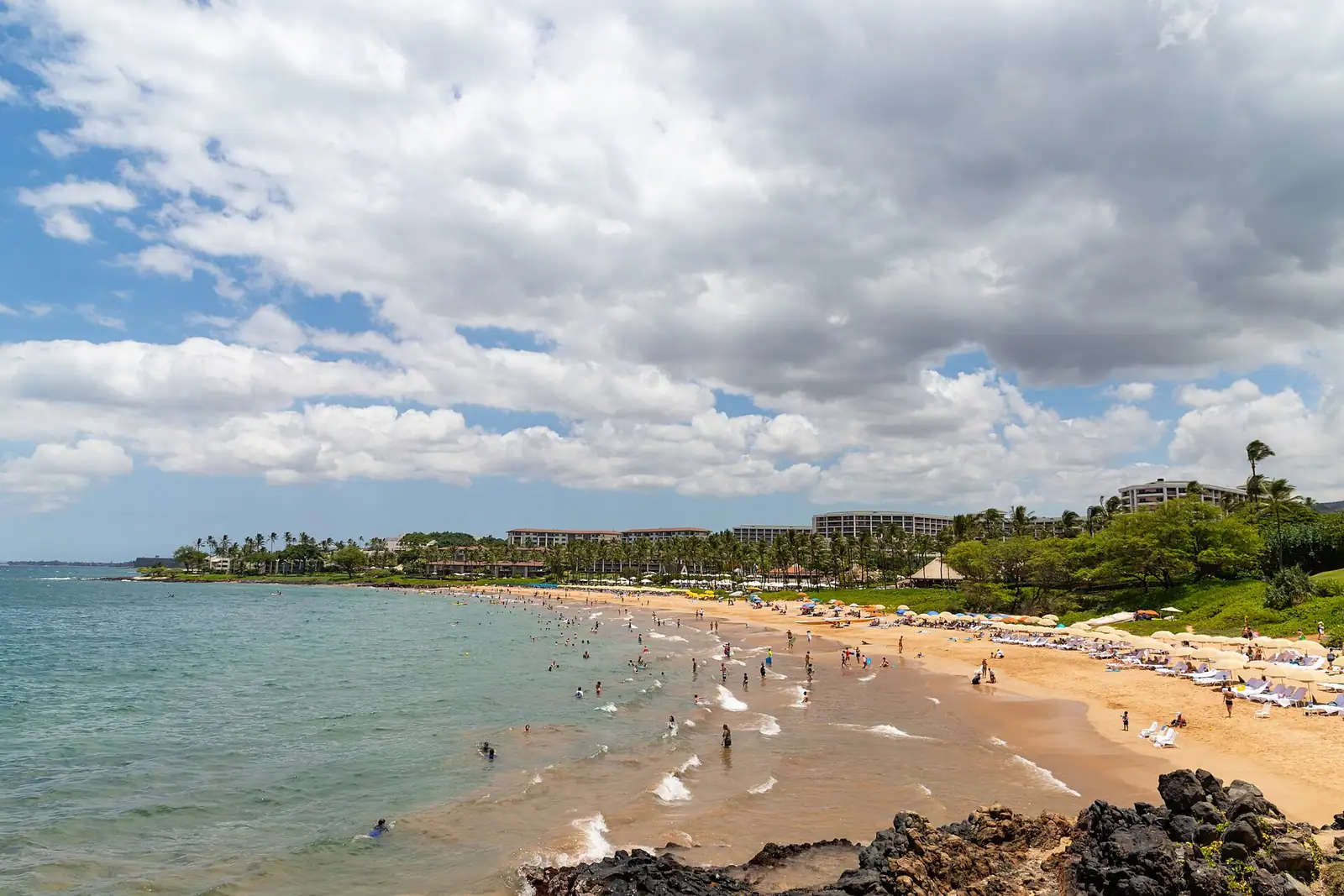
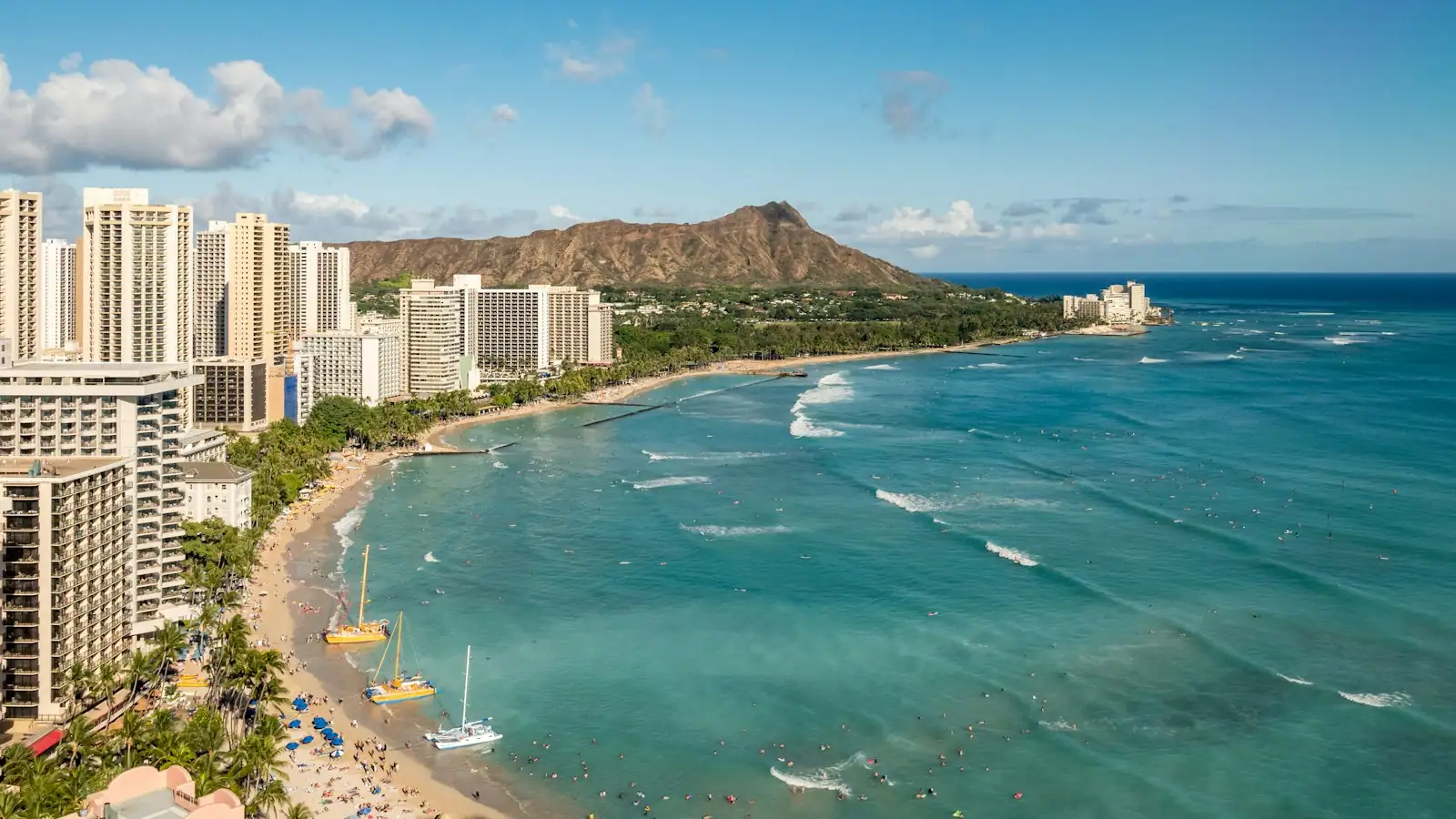
The third is that Maui's beaches are legally open in a way that surprises visitors from mainland resort towns. Hawaiʻi law makes the shoreline public to the high-water mark, and resorts are required to provide public access and parking. That means Wailea Beach in front of the luxury hotels, Kāʻanapali in front of the big resorts and the small lots at Ulua and Mokapu are all yours, and the only thing standing between you and them is how early the stalls fill.

One place needs stating plainly rather than listing. Historic Lahaina town was destroyed by the August 2023 wildfire, which killed about a hundred people. Front Street reopened to traffic between Pāpalaua and Shaw Streets in August 2026 and businesses have returned to it, but Banyan Court Park is closed and the tree is not expected to be publicly accessible before 2028 at the earliest. Lahaina is a town rebuilding, not an attraction. Spend money in the businesses that have reopened and do not photograph the burn zone.

What follows is the island region by region, with what each place actually asks of you: the drive, the fee, the permit, and the hour that makes it worth going.
The island at a glance

RegionAnchor attractionsDrive from OGGNeeds booking
CentralʻĪao Valley, Wailuku town, Maui Tropical Plantation5–20 minʻĪao Valley, yes
SouthKīhei beach parks, Keawakapu, Ulua, Wailea, Mākena Big Beach25–40 minNo
WestKāʻanapali Beach, Kapalua Bay, Nāpili Bay, Honolua Bay, Nākālele Blowhole, Olowalu40–75 minNo
UpcountryMakawao, Kula Botanical Garden, Aliʻi Kula Lavender, Maui Wine25–55 minNo
SummitHaleakalā National Park, the crater rim, Sliding Sands90 minSunrise permit
EastWaiʻānapanapa, Hāna Bay, Kahanu Garden, Pipiwai Trail, Waimoku Falls, ʻOheʻo Gulch150–210 minWaiʻānapanapa, yes
OffshoreMolokini CraterBoat from Māʻalaea or KīheiBook a boat

Two distances to internalise. Kīhei to Kāʻanapali is 45 minutes on the Honoapiʻilani Highway, the single road into West Maui, which closes occasionally for rockfall and brush fire. And Haleakalā's Kīpahulu district, where ʻOheʻo Gulch and the Pipiwai Trail are, is about ten miles beyond Hāna town and roughly three and a half hours from the summit by road. Same national park, opposite ends of a very large mountain.

Haleakalā: the summit, and the trail nobody expects

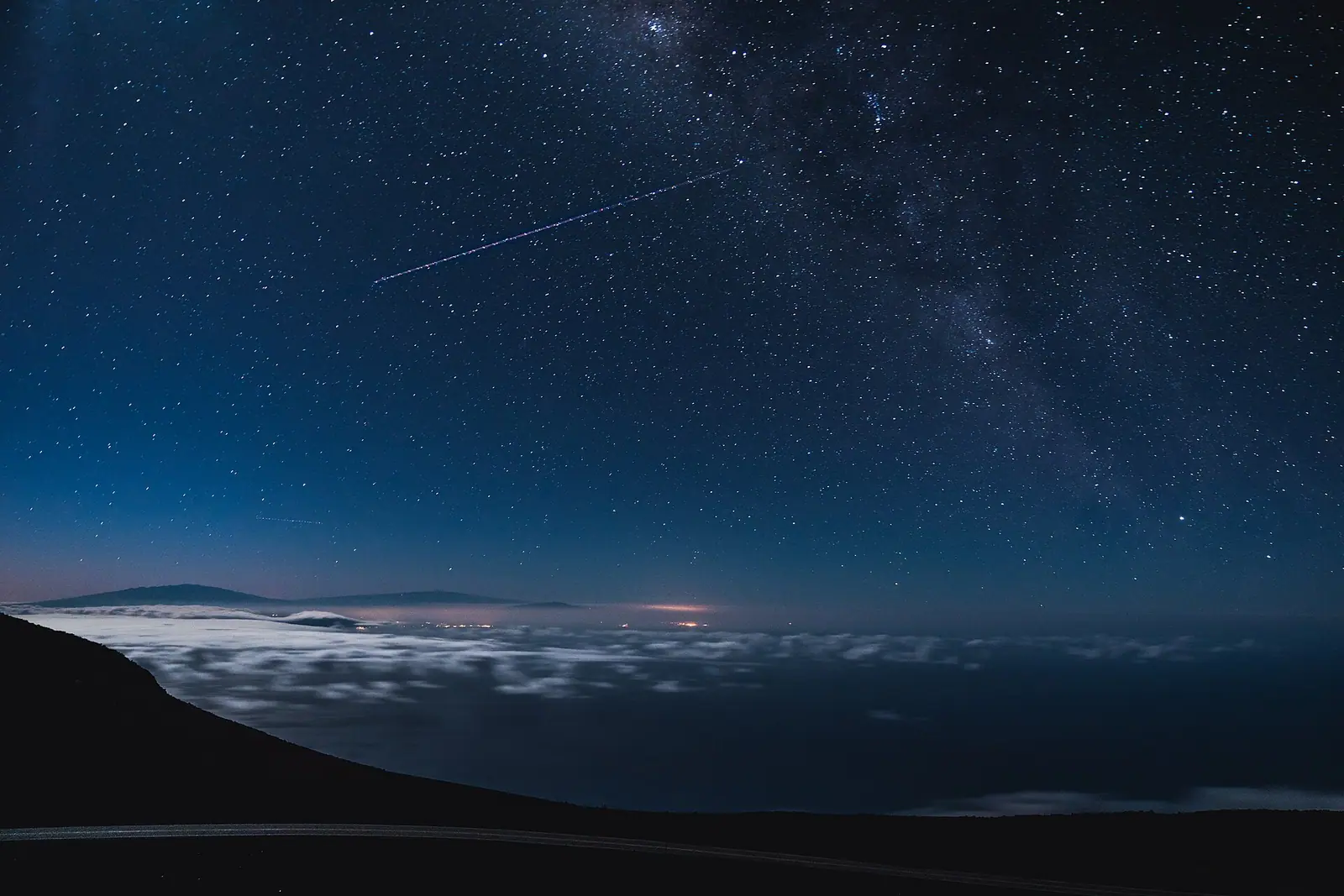
The drive from sea level to 10,023 feet at Puʻu ʻUlaʻula takes about ninety minutes from Kahului and climbs through four climate zones in thirty-odd switchbacks. The reward at the top is a seven-mile-wide erosional basin floored with cinder cones in rust, ochre and black, and on a clear morning the summits of Mauna Kea and Mauna Loa on Hawaiʻi Island appear above the cloud deck a hundred miles off.

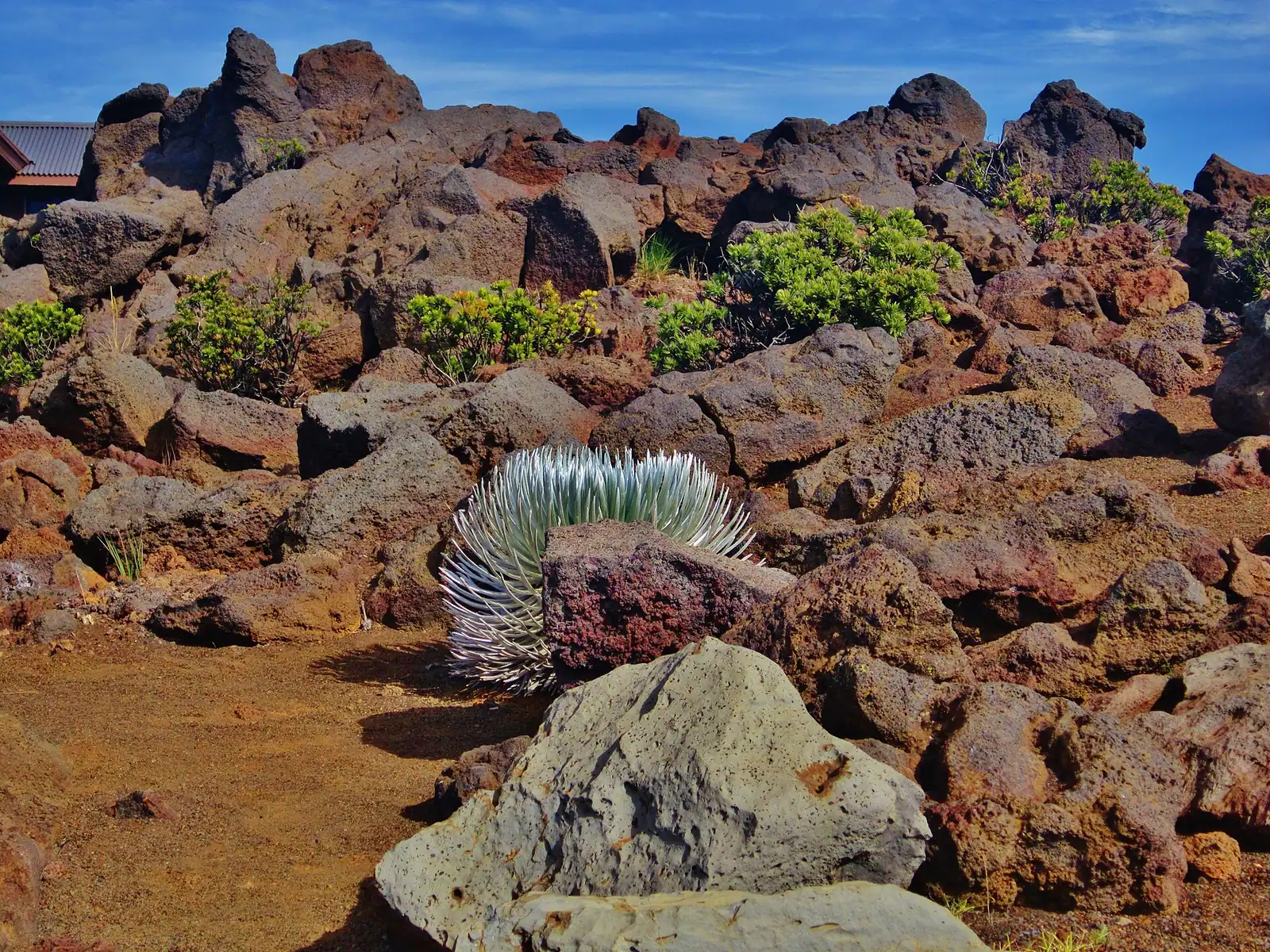
Three things are consistently undersold. The ʻāhinahina, the Haleakalā silversword, grows nowhere else on the planet, lives for decades as a silver rosette and then flowers once and dies; the ones beside the Kalahaku overlook are the easiest to see without hiking. The Keoneheʻeheʻe trail, usually called Sliding Sands, drops into the basin from the visitor centre and is the closest thing on earth to walking on another planet, with the catch that every step down is a step back up at altitude. And sunset from the rim is almost as extraordinary as sunrise, needs no reservation, and has a fraction of the crowd.

Dress for it properly. Dawn temperatures at the summit are regularly in the 30s Fahrenheit with wind on top, and visitors arrive in shorts every single morning. The air holds roughly a third less oxygen than at sea level, so headaches and breathlessness are common, and the park advises against going up within 24 hours of scuba diving.

The Haleakalā page covers the reservation mechanics; the sunrise guide covers the booking windows in detail.

The Hāna side: waterfalls, black sand and a heiau

East Maui gets its own weather. The windward slope catches the trades, Hāna receives several times the rainfall of Kīhei, and the vegetation changes from kiawe scrub to rainforest within an hour's drive.

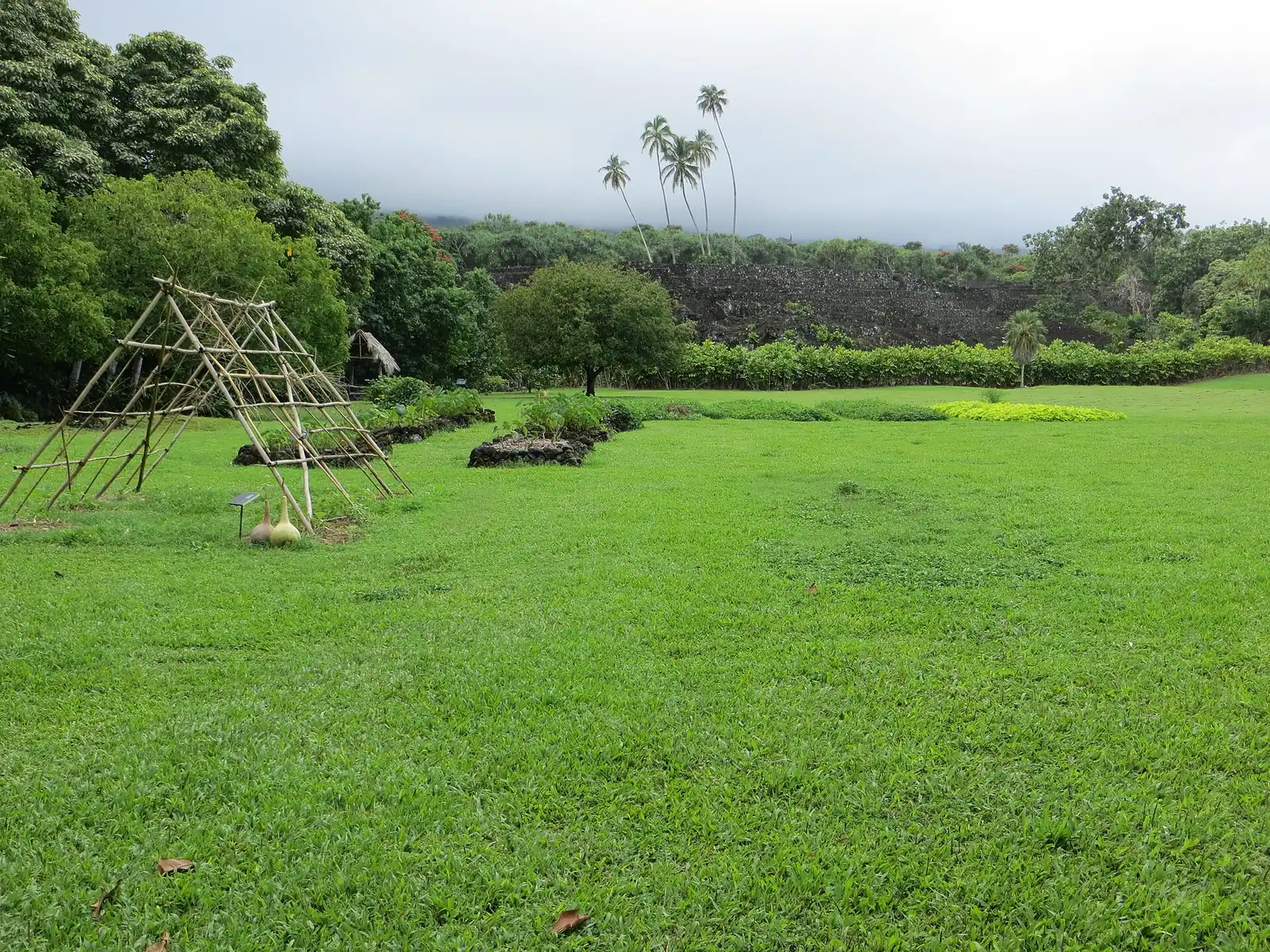
Twin Falls at the start of the road is the first stop most people make and sits on working farm land, so it is a privilege rather than a right. Waiʻānapanapa State Park is the one that needs a booked slot: Pāʻiloa's black sand is ground lava, the sea caves are genuinely cold, and the old Piʻilani coastal trail runs along the cliff over blowholes. Kahanu Garden at ʻUlaʻino holds Piʻilanihale Heiau, the largest ancient temple platform in Polynesia, an engineering work of stacked stone that predates European contact by centuries. It is a sacred place with limited opening days, and it deserves more than a photo stop.

Hāna Bay is the town's centre, with Kaʻuiki Head above it, the cinder cone associated with the birthplace of Queen Kaʻahumanu. Past Hāna the road continues to Wailua Falls, which drops beside the highway and is the most photographed waterfall on Maui, and then to the Kīpahulu district of the national park.

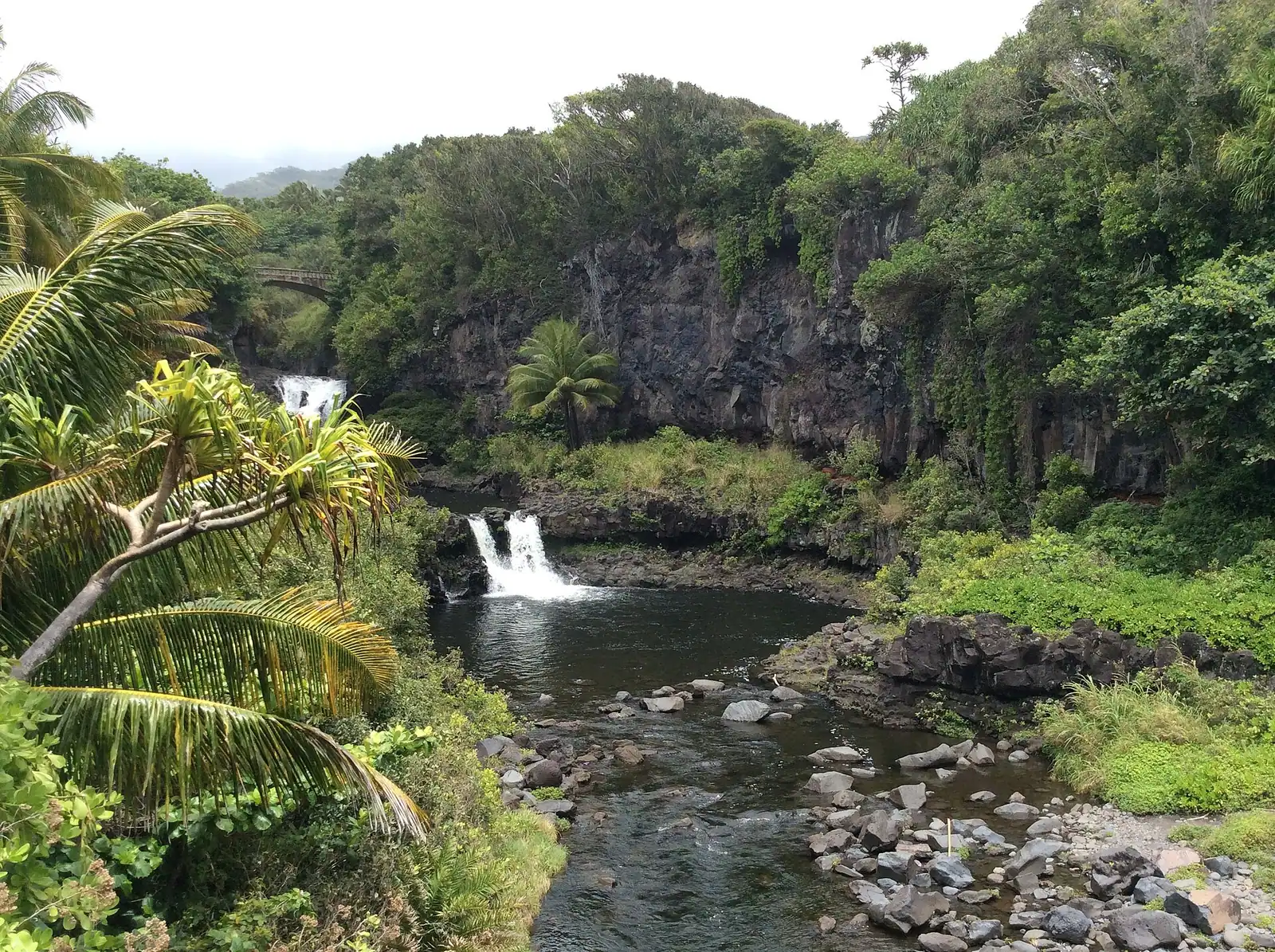
That is where ʻOheʻo Gulch is, a stepped series of pools running to the sea. The name "Seven Sacred Pools" is a marketing invention and there are more than seven. Swimming is frequently closed for rockfall and flash-flood risk, so check at the ranger station rather than assuming. The Pipiwai Trail starts from the same car park and is the best hike on Maui that does not require altitude: four miles round trip, about 800 feet of climb, past a vast banyan, through a bamboo forest that clatters in the wind, and out at the base of Waimoku Falls, which drops roughly 400 feet down a sheer wall.

Central Maui: ʻĪao Valley and the working towns

ʻĪao Valley State Monument is ten minutes from Wailuku and one of the most significant places on the island. Kūkaʻemoku, the green pinnacle usually called the ʻĪao Needle, stands about 1,200 feet above the valley floor in a rainforest amphitheatre carved out of the West Maui caldera.

It is also a battlefield. In 1790 Kamehameha I defeated Maui's forces here at Kepaniwai, a name that translates as the damming of the waters, because the stream was blocked by the dead. Hawaiians treat the valley as a burial ground and a place of consequence. It reads as a short paved walk to a lookout, and it is worth arriving knowing what happened here.

Non-residents need an advance reservation, with parking charged per vehicle and a per-person entry fee on top. Go early: the valley cloud in by late morning most days, and the Needle disappears into it.

Wailuku town below it has had a quiet revival along Market Street, with antique shops, a handful of good restaurants and the Bailey House Museum in a missionary-era building. Maui Tropical Plantation at Waikapū runs a tram through working orchards and has a zipline course over the fields, which makes it one of the few genuinely rainy-day-resistant stops in the middle of the island. And Maui Ocean Center at Māʻalaea, fifteen minutes south, is the island's reliable indoor half-day, with a walk-through reef tunnel and a humpback exhibit that makes more sense after you have been out in the channel.

Which beach, and why

Every beach in Hawaiʻi is public to the high-water mark and resorts must provide access, so the resort frontage is not a barrier. Parking is the variable.

BeachBest forFacilitiesThe catch
KāʻanapaliSwimming, the beach walk, snorkelling at Puʻu KekaʻaFull, via resort access lotsParking fills by mid-morning
Kapalua BayProtected swimming, first snorkel of the tripRestrooms, showers, small lotTiny car park, arrive before 9am
Nāpili BayTurtles, sunset, swimmingMinimal, street parking onlyNo lifeguard, access via narrow lanes
Honolua BaySummer snorkelling in a conservation districtNone at allUnswimmable in winter north swell; muddy trail in
HoʻokipaWatching windsurfers, turtles on the east endRestrooms, lookout parkingNot a swimming beach
Baldwin BeachLong walks, the sheltered Baby Beach coveRestrooms, lifeguard, picnicStrong shorebreak on the main stretch
KeawakapuSunset, long soft-sand swimShowers, small lots at both endsParking is scattered; the north lot is easiest
UluaThe easiest snorkel from shore on the south sideRestrooms, showersThe lot is small and fills by 8:30am
Wailea BeachThe Wailea coastal path linking five beachesFull, public access lotChairs and umbrellas are resort property
Mākena Big BeachSpace, scale, Puʻu Ōlaʻi behind youRestrooms, two lotsA shorebreak that injures people every year

If you want one sentence of advice: snorkel on the south or west shore in the morning before the trades come up, and walk on the north shore in the afternoon when the wind makes everything else uncomfortable.

Upcountry and the north-shore towns

The slopes above Pāʻia are the part of Maui that resort visitors drive past on the way to somewhere else, and the part that people who move here tend to live in.

Pāʻia was a sugar town and then a windsurfing town, and it is now the last real supermarket, petrol station and breakfast before the Hāna Highway begins. The Mantokuji Buddhist temple at the east end of town, with its cemetery facing the sea, is the plantation era still standing.

Twenty minutes up Baldwin Avenue, Makawao is paniolo country. Hawaiian cowboys were working cattle on these slopes in the 1830s, decades before the American West had an industry, and the town still has wooden storefronts, a rodeo arena and a Fourth of July rodeo that is a local event rather than a show.

Higher again, Kula sits around 3,000 feet where the air is cool and the farms grow protea, onions, coffee and lavender. Aliʻi Kula Lavender has a hillside of it with a view down across the isthmus to the West Maui Mountains, and Kula Botanical Garden is a well-kept eight acres of native and introduced planting. The road continues out to Maui Wine at ʻUlupalakua, on ranch land that King Kalākaua used to visit, where the tasting room is the old ranch manager's cottage and the pineapple wine is better than it sounds.

Two practical arguments for Upcountry. It removes forty minutes from a 3am summit drive if you stay up here. And on a hot, crowded south-shore afternoon it is fifteen degrees cooler with nobody in it.

What each place costs, and what needs booking

Fees change, so confirm current rates before you go. These are the ones that matter.

  • Haleakalā National Park. $30 per private vehicle, valid three days, covering both the summit and the Kīpahulu districts. $25 per motorcycle, $15 per person on foot or bicycle. The America the Beautiful annual pass is accepted. The sunrise reservation is separate: $1 per vehicle through recreation.gov, required for any vehicle entering the summit district between 3am and 7am, released 60 days ahead at 7:00am Hawaiʻi time with a further batch two days out. Fee-free days do not waive it.
  • ʻĪao Valley State Monument. Advance reservation required for non-residents, currently around $10 per vehicle for parking plus roughly $5 per person entry. Hawaiʻi residents with state ID are exempt, and small children are free.
  • Waiʻānapanapa State Park. Timed entry required for non-residents, currently around $10 per vehicle plus about $5 per person. Slots release 30 days ahead at midnight Hawaiʻi time and go fast. Roadwork that began in July 2026 has cut availability and is expected to run into 2027.
  • Kahanu Garden. A ticketed National Tropical Botanical Garden site with limited opening days. Check the schedule before building a Hāna day around it.
  • Maui Ocean Center. Full-price aquarium admission, on the high side by mainland standards. Buying online ahead usually saves a little and skips the queue.
  • Free. Every beach. Hoʻokipa's lookout. The Kāʻanapali beach walk. Nākālele Blowhole. Olowalu. Baldwin Beach. The Wailea coastal path. Makawao, Pāʻia and Wailuku towns. Hāna Bay.

Two hidden costs. Resort parking in Wailea and Kāʻanapali is often charged nightly on top of the room rate, and the free public access lots at both fill early. And Maui's rental car is effectively a fixed cost of the trip rather than a choice.

Visiting these places well

Several of Maui's best-known attractions have a safety or cultural dimension that the brochures do not lead with.

Nākālele Blowhole. The spout is spectacular and the ground around it is undercut lava. People have been pulled into the hole and killed. Stay well back from the rim, keep children within reach, and treat the unmarked scramble down as the real hazard it is.

Mākena Big Beach. The shorebreak dumps directly onto a steep sand face. It produces spinal and shoulder injuries in fit adults every year, and there is no reef to soften it. Look, do not bodysurf.

ʻOheʻo Gulch. Swimming is closed more often than it is open because of rockfall and flash-flood risk from rain falling miles upstream in weather you cannot see. Ask at the ranger station. Do not climb the closure signs.

ʻĪao Valley. A burial ground and a battlefield. Stay on the paved paths, do not build rock stacks, and do not enter the stream area that is fenced.

Heiau and cultural sites. Piʻilanihale at Kahanu Garden and the smaller platforms along the Hāna coast are religious structures, not ruins. Do not climb on stone walls, move rocks or leave offerings unless you know what you are doing.

Wildlife distances. Ten feet from a green sea turtle, fifty feet from a Hawaiian monk seal, and more if a seal has a pup. These are enforced, and Hoʻokipa has volunteers who will tell you.

Sunscreen. Maui County requires mineral-only sunscreen, zinc oxide or titanium dioxide. The ordinance covers use as well as sale.

Every attraction in Maui

All 34 places we cover, grouped by area. Filter, sort, or read straight down.

Narrow it down

34 places

Type
Best for
Setting
Time needed
Admission

Hāna7

  • A long dry-stacked wall of fitted dark volcanic stone rising in stepped terraces

    Historic site

    Kahanu Garden & Piʻilanihale Heiau

    A dry-stacked stone platform the size of a city block, the largest heiau in Polynesia, standing in a hala forest above the Hāna coast.

    1–2.5 hoursAround $18 per adult for a self-guided visit; roughly $30 for the guided tour. Children 12 and under free.

  • A narrow path running through a dense stand of tall green bamboo

    Trail

    Pīpīwai Trail

    Four miles through a banyan, a boardwalk bamboo forest and two stream bridges, ending under a 400-foot waterfall.

    2.5–5 hoursCovered by the Haleakalā National Park entrance fee, around $30 per vehicle and valid three days across both districts.

  • Dark volcanic sand and black rock at the edge of a small ocean cove

    Park

    Waiʻānapanapa State Park

    Black basalt sand, freshwater caves and an ancient coastal trail, three miles before Hāna — and you cannot get in without booking ahead.

    1–2.5 hoursNon-residents pay per-vehicle parking plus a per-person entry fee, both by advance reservation. Hawaiʻi residents with state ID are free.

  • A sheltered bay with dark sand, a small pier and a steep green headland behind

    Beach

    Hāna Bay

    Free

    The one reliably calm swim on the Hāna coast, under the cinder cone where Queen Kaʻahumanu was born in 1768.

    1–2.5 hoursFree. Parking is free.

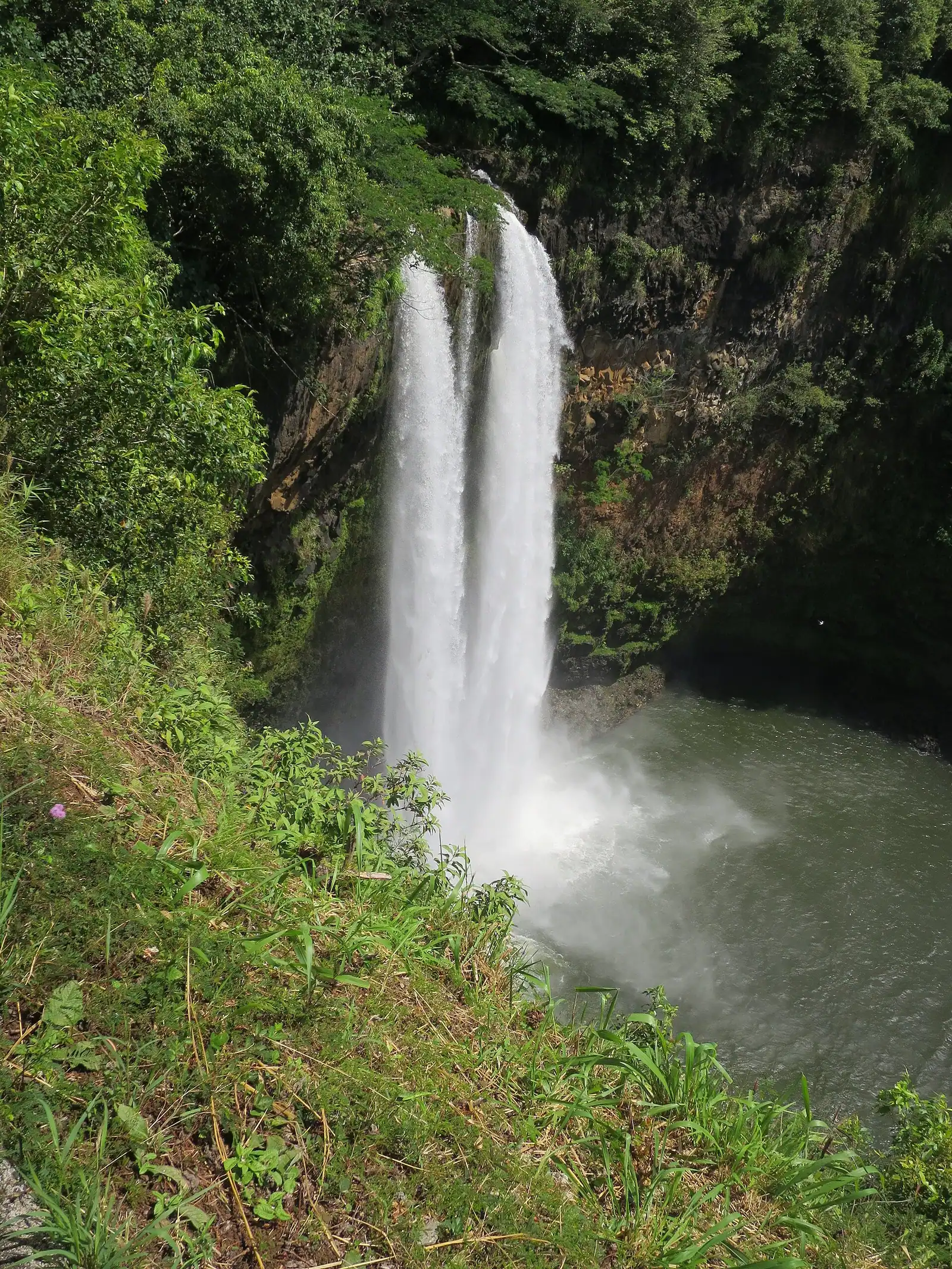
  • A tall narrow waterfall dropping down a dark cliff face into forest

    Water feature

    Waimoku Falls

    Four hundred feet of water down a sheer lava wall, two miles up a rainforest valley and reachable no other way.

    0.5–1 hoursCovered by the Haleakalā National Park entrance fee, around $30 per vehicle for three days.

  • A stream stepping down rock terraces towards the ocean under cloud

    Water feature

    ʻOheʻo Gulch

    A staircase of stream pools falling to the sea at Kīpahulu, where swimming has been closed and the famous name was never real.

    0.5–1.5 hoursCovered by the Haleakalā National Park entrance fee, around $30 per vehicle for three days across both districts.

  • A single waterfall falling into a rock pool in a narrow fern-covered gully

    Water feature

    Wailua Falls

    Free

    Eighty feet of water beside the road south of Hāna, and the only serious Maui waterfall you can see without leaving the car.

    10–40 minutesFree. No entry fee, no reservation and no parking charge.

Kula5

  • Bare volcanic cinder cones on a high crater floor under early morning light

    Park

    Haleakalā National Park

    A 10,023-foot volcano with a reservation system at the gate and a second district four hours away on the far side of the island.

    3–8 hoursAround $30 per private vehicle, valid three days and covering both districts. Sunrise entry needs a separate $1 reservation.

  • A mountain ridge standing above an unbroken layer of cloud at first light

    Viewpoint

    Puʻu ʻUlaʻula (Haleakalā Summit)

    The highest point on Maui, 10,023 feet up, where the horizon curves and the clouds are a thousand feet below your feet.

    1.5–4 hoursCovered by the Haleakalā National Park entrance fee, around $30 per vehicle for three days. Sunrise entry needs a separate $1 reservation.

  • Rows of grapevines running across an upland slope with hills beyond

    Entertainment

    MauiWine at ʻUlupalakua Ranch

    Free

    Maui's only winery, pouring estate syrah and sparkling pineapple wine in a cottage built for King Kalākaua on a working cattle ranch.

    1–2.5 hoursNo admission charge to visit the grounds and tasting room. Flights, glasses and bottles are paid for individually.

  • Rows of flowering lavender running across a sloping field

    Park

    Aliʻi Kula Lavender

    Thirteen acres of lavender at 4,000 feet, with a view that takes in both of Maui's coastlines on a clear morning.
    1–2 hoursA small admission charge, historically a few dollars per adult; children 12 and under free.

  • A spiky pink protea flower head with stiff bracts, photographed close up

    Park

    Kula Botanical Garden

    Eight acres of protea, koa and orchids at 3,300 feet, where the air is cool enough to grow things the rest of Maui cannot.

    1–2 hoursAround $15 per adult and about $5 for children roughly 6–12; under-sixes free.

Wailuku4

  • A sharp green ridge rising steeply out of a densely vegetated valley

    Historic site

    ʻĪao Valley State Monument

    A green spire 1,200 feet above the valley floor, in a place Hawaiians remember as a battlefield rather than a viewpoint.

    0.5–1.5 hoursNon-residents pay a per-vehicle parking fee plus a per-person entry fee, both booked in advance. Hawaiʻi residents with state ID are free.

  • Fish swimming past a large curved aquarium viewing window

    Museum

    Maui Ocean Center

    The only aquarium on Maui, showing Hawaiian species exclusively — and by county law, no whales or dolphins in tanks.

    2–3 hoursAround $50 for adults, roughly $40 for children 4–12, slightly less for over-65s. Under-fours free. Substantial kamaʻāina and military discount.

  • Low two-storey storefronts along a quiet main street with shopfront awnings

    Neighbourhood

    Wailuku Town

    Free

    Maui's county seat — antique shops, an 1833 mission house and a 1928 theatre, three miles below the mouth of ʻĪao Valley.

    1.5–4 hoursFree to visit the town. Museum admission and theatre tickets are charged separately.

  • A plume of seawater bursting upward from a hole in dark coastal rock

    Water feature

    Nākālele Blowhole

    Free

    A lava vent on Maui's northernmost point that fires seawater skyward — and a place where standing in the wrong spot has killed people.

    0.5–1.5 hoursFree. No entrance fee and no parking charge.

Pāʻia3

  • A windsurfer carving off the top of a breaking wave with spray behind the sail

    Beach

    Hoʻokipa Beach Park

    Free

    Maui's wave-sailing arena, watched from a clifftop lookout, where green sea turtles drag themselves onto the sand most afternoons.

    0.5–2 hoursFree. Both the beach park and the clifftop lookout are free to enter and free to park at.

  • Low wooden storefronts with painted signs along a small-town main street

    Neighbourhood

    Pāʻia Town

    Free

    A two-street sugar town that surfers took over, and the last place to buy petrol, coffee and a picnic before the Road to Hāna.

    1–3 hoursFree to visit. You pay for what you buy, and parking is free but scarce.

  • A long sweep of pale sand at Baldwin Beach Park with ironwood shade along the left and surf breaking down the shoreline

    Beach

    H.A. Baldwin Beach Park

    Free

    A mile of north shore sand with lifeguards, a shaded pavilion and a sheltered pool at the western end that toddlers can actually use.

    1.5–5 hoursFree, including parking. County beach park with lifeguards, restrooms, showers and a pavilion.

Kapalua2

  • A small crescent beach enclosed by two low rocky points with calm clear water

    Beach

    Kapalua Bay

    Free

    A crescent held between two lava headlands, calm on days the rest of West Maui is blown out — with about forty parking stalls.

    1.5–4 hoursFree, including the public beach access car park.

  • Snorkeller looking down over a shallow coral reef in very clear blue water

    Nature preserve

    Honolua Bay

    Free

    A protected bay with no sand, no restrooms and no lifeguard — and the best shore snorkelling in West Maui for half the year.

    1–3 hoursFree. No entry fee, no permit and no parking charge — and no facilities of any kind.

Kīhei2

  • A wide golden beach with calm water and palm trees under bright morning sun

    Neighbourhood

    Kīhei

    Free

    Six miles of beach, three lifeguarded parks and the best free whale watching on Maui, plus a wind that arrives every afternoon.

    2–8 hoursFree. All the beach parks are public with free parking.

  • A long, softly curving beach with calm shallow water and a dry hillside beyond

    Beach

    Keawakapu Beach

    Free

    Three quarters of a mile of soft sand between Kīhei and Wailea, three free car parks, and the island's best morning swim.

    1.5–4 hoursFree, with three free car parks along its length.

Wailea2

  • Pale sand and calm turquoise shallows below a landscaped resort lawn with palms

    Beach

    Wailea Beach

    Free

    A calm crescent between the Grand Wailea and the Four Seasons, with a free public lot and a paved path linking four beaches.

    1.5–5 hoursFree, including the public beach access car park. Hawaiʻi shorelines are public to the high-water mark.

  • A snorkeller floating above shallow reef and coral heads in clear water

    Beach

    Ulua Beach

    Free

    A small Wailea cove with reef on the point, used by every South Maui dive school, sharing one modest car park with Mokapu.

    1–3 hoursFree, including the shared Ulua and Mokapu public car park.

Haʻikū1

  • A small waterfall dropping into a green pool in dense tropical forest

    Water feature

    Twin Falls at Wailele Farm

    The first waterfall on the Hāna road, on a working farm with 55 parking spaces and a queue that starts at 7am.

    1–2.5 hoursAround $10 per vehicle for parking, first come first served, with no booking system.

ʻAlalākeiki Channel, off Mākena1

  • Reef fish over coral in very clear blue water

    Nature preserve

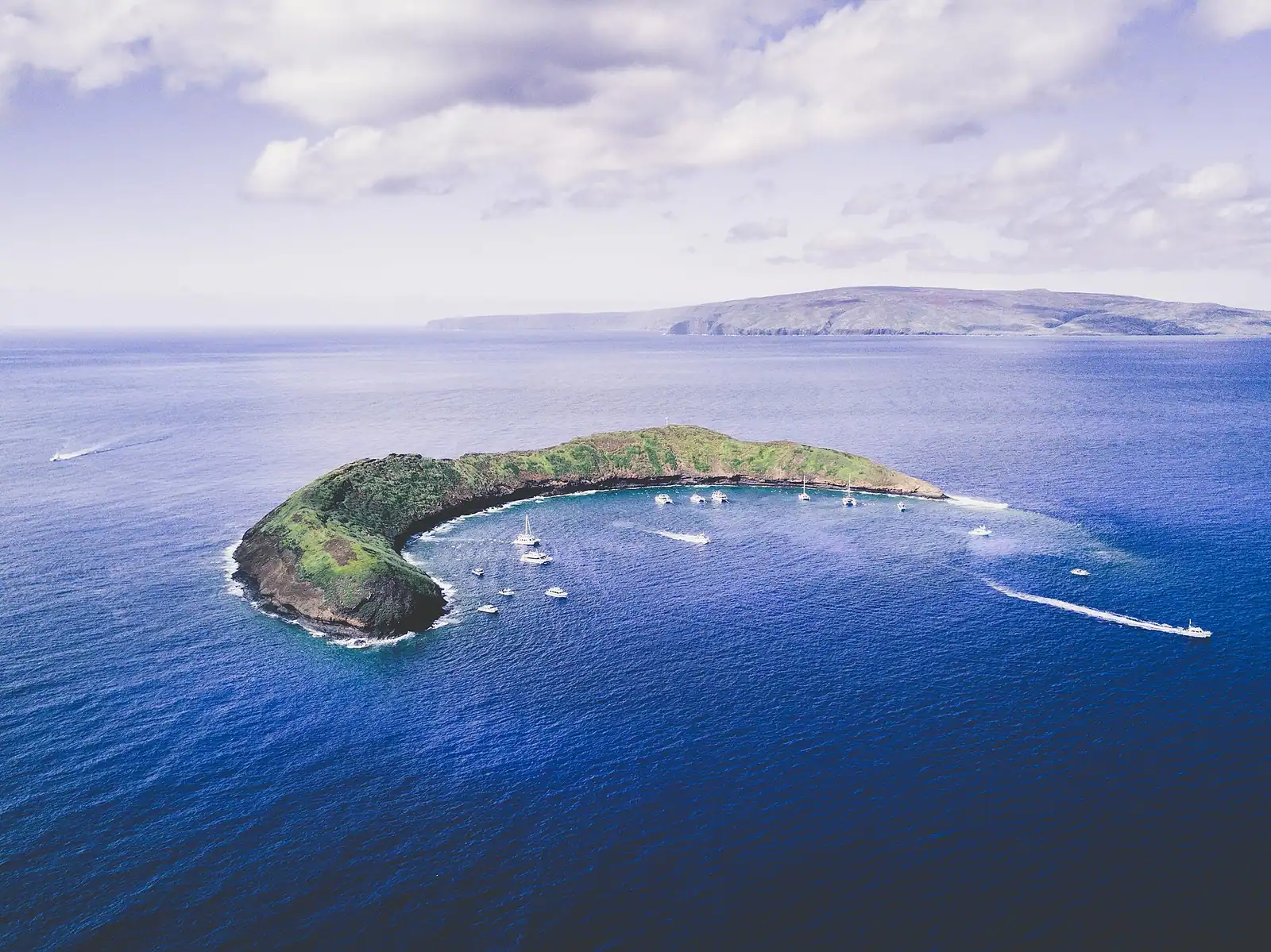
    Molokini Crater

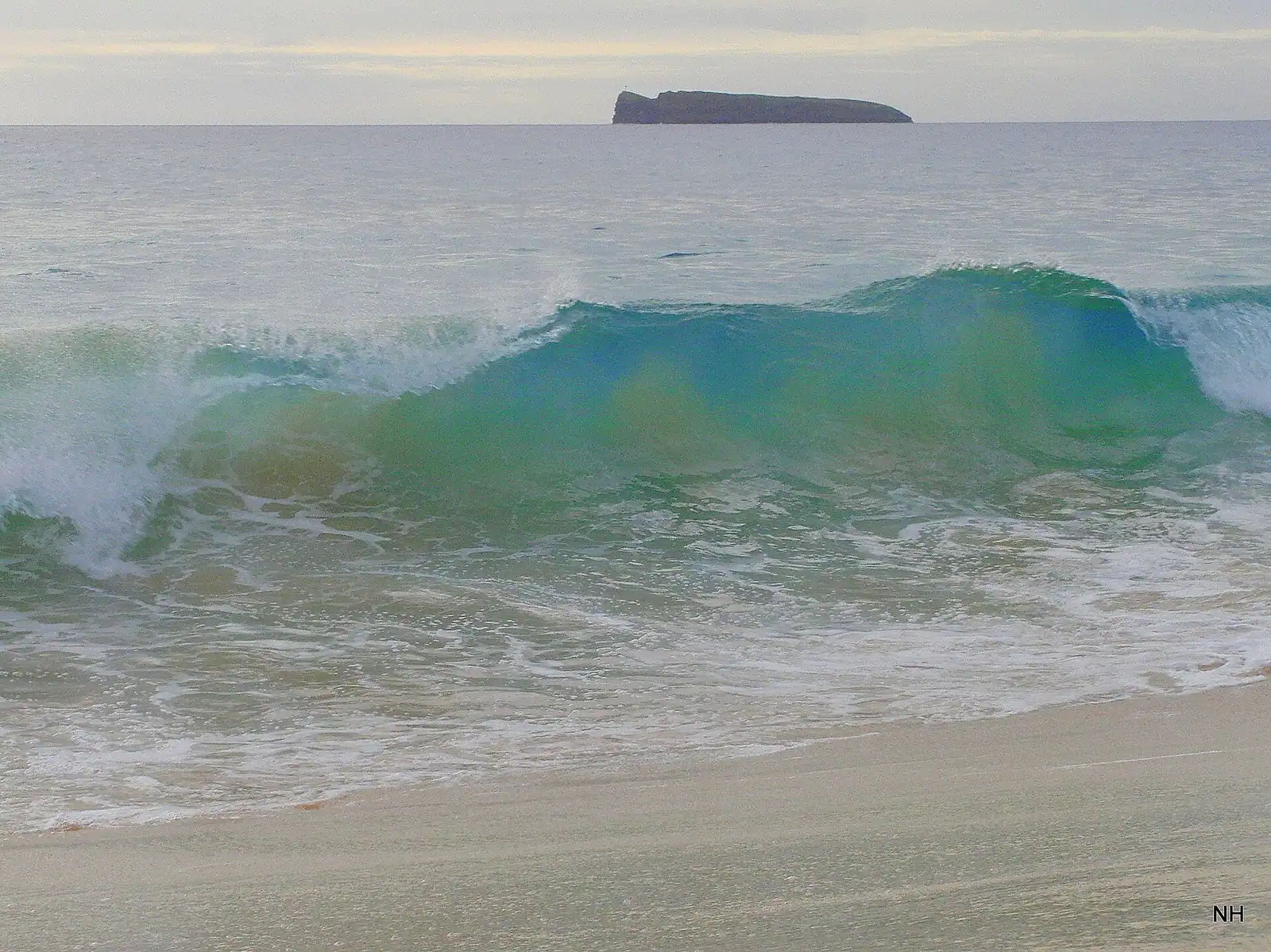
    A sunken crescent of volcanic rock three miles offshore, with water clear enough to see the bottom from the deck.

    4–6 hoursNo entry fee to the conservation district itself; access is entirely through paid boat charters, which on Maui sit at the premium end of the market.

Kāʻanapali1

  • A long curve of pale sand meeting clear turquoise water under a bright sky, with low green headland beyond

    Beach

    Kāʻanapali Beach

    Free

    Three miles of public sand, a lava headland called Puʻu Kekaʻa, and free beach parking the resorts are legally required to keep.

    2–7 hoursFree. Public beach access and the mandated resort stalls cost nothing; Whalers Village charges for parking with validation.

Keʻanae1

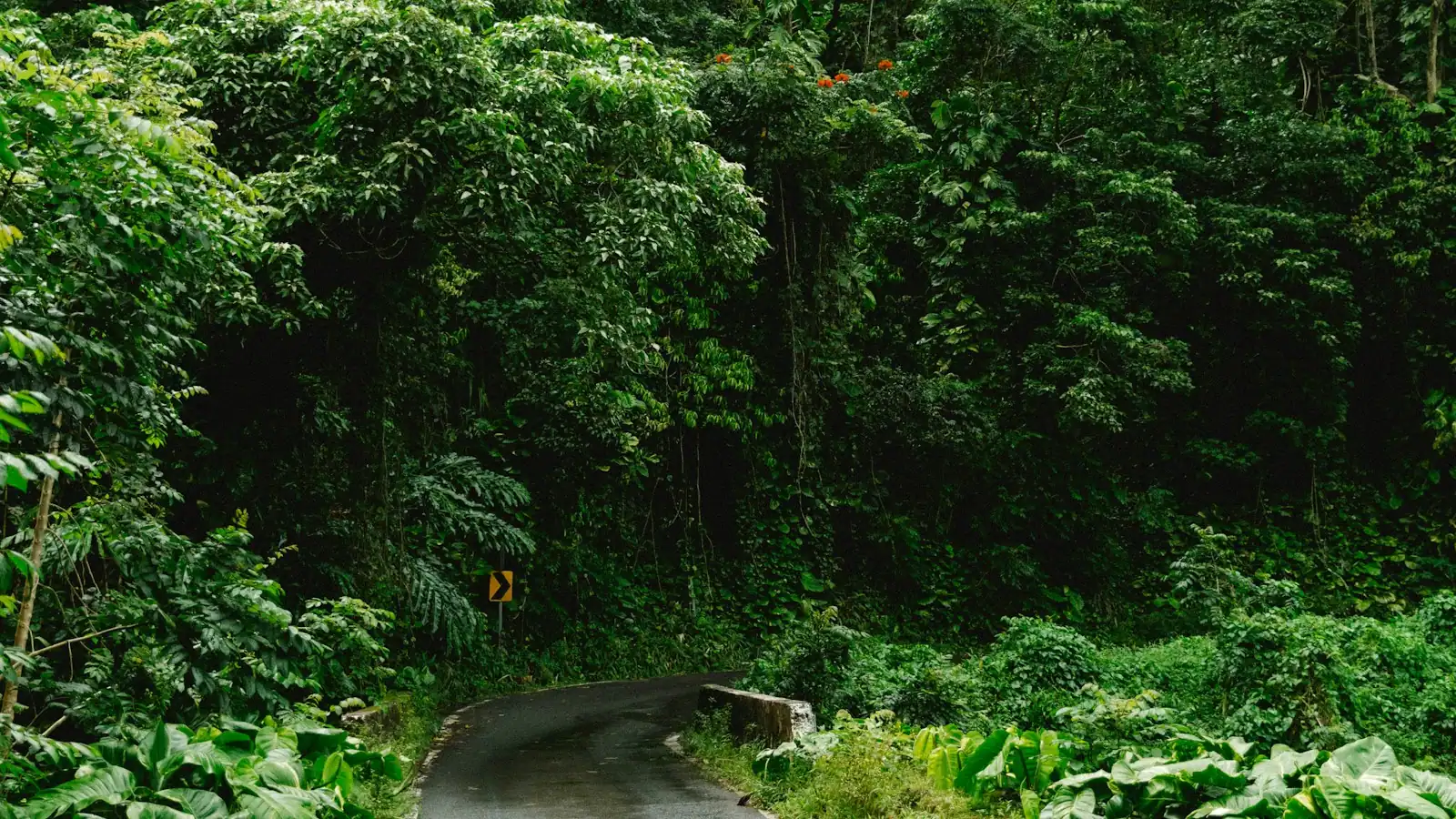
  • A narrow road curving through dense green rainforest

    Landmark

    The Road to Hāna

    Free

    Sixty-four miles, 620 curves and 59 bridges — and a road that several hundred people use to get to work.

    8–12 hoursThe road itself is free. Several stops along it charge for parking or entry.

Lahaina1

  • A green sea turtle swimming over shallow coral in clear water

    Historic site

    Olowalu

    Free

    A reef that reseeds coral across four islands, a cliff of petroglyphs, and the site of a massacre that changed Hawaiian history.

    1–3 hoursFree. No charge for the shoreline, the reef or the petroglyph trail.

Makawao1

  • Low wooden false-front storefronts along a quiet small-town street under a cloudy sky

    Neighbourhood

    Makawao Town

    Free

    Hawaiian cowboy country at 1,600 feet, where two streets of false-front storefronts meet and the Fourth of July means a rodeo.

    1–3 hoursFree to visit. Parking is free on the street.

Mākena1

  • A wide, empty stretch of coarse gold sand curving away beneath a bare reddish volcanic hill

    Beach

    Mākena Beach (Big Beach / Oneloa)

    Free

    Two-thirds of a mile of undeveloped gold sand backed by a cinder cone, with a shorebreak that puts people in hospital every year.

    1.5–5 hoursBeach access is free; non-residents pay to park at the state park kiosks.

Nāpili1

  • A short crescent of pale sand backed by palms, with low rocky points at either end

    Beach

    Nāpili Bay

    Free

    A quiet condo-fronted crescent with turtles on both rocky sides, no facilities, and street parking that is gone before seven.

    1.5–4 hoursFree. Shoreline access is public; there is simply very little parking and no county facilities.

Waikapū1

  • A still lagoon reflecting steep green mountain ridges under scattered cloud

    Park

    Maui Tropical Plantation

    Free

    A working farm at the mouth of Waikapū Valley where the grounds are free and the mountain behind it does most of the work.

    1–2.5 hoursFree to enter the grounds and park. The tram tour, ziplines and food are charged separately.

Where everything is in Maui

Every pin is also a link in the index beside it, so the list works before the map loads.

Every place shown on this map is also listed below as a link, grouped by area.

All 34 places in Maui

Hāna7

Kula5

Wailuku4

Pāʻia3

Kapalua2

Kīhei2

Wailea2

Haʻikū1

ʻAlalākeiki Channel, off Mākena1

Kāʻanapali1

Keʻanae1

Lahaina1

Makawao1

Mākena1

Nāpili1

Waikapū1

Guided ways to see Maui

Nothing on this island announces itself. These are the trips that put the places above into an order that makes sense — and the operators who can get you inside the gates.

Booking through these earns us a commission from Viator. You pay the same, and payment did not decide what is listed.

Editor's Pick

The attraction worth building a day around

Why we chose it

Haleakalā's summit district earns the alarm clock, but the guided version removes the two things that spoil it: the 3am drive on switchbacks in the dark and the parka nobody packed. Operators hold the entry permit, supply the cold-weather gear, and hand the descent to a driver who has done it a few hundred times.

Spacious beautiful yacht with plenty of space for everyone to relax

Involves Animals

Maui: Molokini and Turtles Luxury Yacht Snorkel (opens in a new tab)

Editor's PickFree cancellationLikely to sell out
629 reviews

We are a family-owned Maui company with over 40 years of experience on Hawaiian waters. Our expert Captains and crew bring decades of…

5 hours

Prices checked

from $318
Best for Families

The stop that works with under-tens

Why we chose it

Māʻalaea's aquarium is the one attraction on Maui that is genuinely indoors, genuinely air-conditioned and genuinely holds a small child's attention for two hours. The walk-through reef tunnel and the humpback exhibit also make the following day's snorkel trip land, because the fish have names by then.

Molokini Island

Short term availability

Maui Snorkeling Adventure to Molokini and Turtle Town (opens in a new tab)

Best for FamiliesFree cancellationInstant confirmation
2.5K reviews

Visit Maui’s famous snorkeling and diving destinations Molokini Crater and Turtle Town (or Coral Gardens) on a snorkeling catamaran…

5–6 hours

Prices checked

from $159.95
Small Group

For the Hāna attractions without the driving

Why we chose it

Waiʻānapanapa, Kahanu Garden, Wailua Falls and the Pipiwai Trail are strung along 60 miles of one-lane bridges. A small-group van carries the park reservation, knows which pullouts are legal and which are somebody's driveway, and lets the passenger who usually navigates actually look out of the window.

Best Value

The cheapest ticket to the best view

Why we chose it

The $30 national park vehicle pass covers three days and both districts of Haleakalā, which means a sunset at the summit and a Pipiwai Trail hike near Hāna on the same pass. Split across a car of four, it is the lowest cost per hour of anything on this island, and the sunset run needs no reservation.

Top Rated

The view that has no road to it

Why we chose it

The interiors of the West Maui Mountains, behind ʻĪao, have amphitheatre headwalls and waterfalls that no trail reaches. A 45-minute flight from Kahului heliport is the only way in, and the morning departures get clear air before cloud builds on the windward wall. Expect $300 upwards a seat.

Explore by what you want to do

The directory lists places. These pages plan days.

  • Late afternoon light on the coastline of Maui with volcanic rock shelves in the foreground and the West Maui Mountains behind

    Guide hub

    Things to Do on Maui

    Maui is two volcanoes joined by a low, windy isthmus, and almost every planning mistake visitors make comes from forgetting that. The western half…

  • A catamaran at anchor inside the crescent rim of Molokini crater off the south coast of Maui in early morning light

    Guide hub

    Tours on Maui

    Maui is the most expensive place to book an activity in this network, and it is not close. The typical bookable tour here runs a little over $200 a…

  • Winter surf breaking on the north shore of Maui under clearing trade-wind cloud with the slopes of the West Maui Mountains behind

    Plan your trip

    The Best Time to Visit Maui

    Maui does not really have seasons in the way most destinations do. Kahului's average high runs about 80°F in January and about 88°F in August, an…

  • A two-lane road curving along the Maui coastline between lava rock and the sea with the slopes of Haleakalā rising behind

    Plan your trip

    Getting Around Maui

    The short answer is that you need a rental car on Maui, and this page exists to explain the exceptions rather than to pretend there are many. The…

  • Early morning light on a crescent of gold sand backed by black lava rock on Maui's leeward coast, with the island of Lānaʻi on the horizon

    Guide hub

    Maui Beaches

    Every beach on Maui is public. Hawaiʻi law puts the shoreline below the upper reach of the waves in public trust, and coastal landowners, including…

  • A narrow asphalt road curving between dense green rainforest

    Things to do

    The Road to Hāna on Maui

    The Hāna Highway is not the road to a place. It is the place. Highway 36 becomes Highway 360 a few miles past Pāʻia, and from there it runs roughly…

Longer reads

  • An empty two-lane road running toward a distant volcanic slope

    Guide

    Do You Need a Car on Maui?

    Almost everyone needs one. The island is 727 square miles with a volcano in the middle, and the public bus does not go to a single thing you flew here for.

    10 min readKealoha Nakamura

  • A two-lane road curving along a green coastal headland above open ocean

    Guide

    A First-Timer's Guide to Maui

    Featured

    Maui is bigger than the map suggests and three of its headline sites now need a reservation booked before you leave home. Get those two things right and the rest of the week arranges itself.

    10 min readKealoha Nakamura

  • A steep green valley wall under low cloud with a stream running through it

    Guide

    Visiting Maui Respectfully

    Featured

    Maui asks more of its visitors than most places, and it asks for specific things rather than good intentions. Here is what residents have actually said they want.

    12 min readMarcus Reyes

Common questions

What are the top attractions on Maui?

Haleakalā National Park, for the 10,023 ft summit and the crater basin; the Road to Hāna and the Kīpahulu district at the end of it, with the Pipiwai Trail and Waimoku Falls; Molokini Crater for snorkelling; ʻĪao Valley State Monument in Wailuku; and the beaches, particularly Kapalua Bay, Kāʻanapali, Wailea and Mākena. Three of those now require an advance reservation for non-residents.

Which Maui attractions need a reservation?

Three, and all three sell out. Haleakalā's summit needs a sunrise permit from recreation.gov for any vehicle entering between 3am and 7am, released 60 days ahead. ʻĪao Valley State Monument requires an advance booking for non-residents, with parking and per-person entry charged. Waiʻānapanapa State Park near Hāna uses timed entry, released 30 days ahead at midnight Hawaiʻi time, with slots reduced by roadwork since July 2026.

Can you visit Lahaina and the banyan tree?

Partly. Front Street reopened to vehicles between Pāpalaua and Shaw Streets on 1 August 2026, and more than a dozen businesses have returned to it. Banyan Court Park remains closed, with designated viewing points at the edge of the park; arborists are still assessing internal damage to the tree and the county does not expect general access before 2028. Please do not photograph the burn zone, empty lots or rebuilt homes.

Is ʻĪao Valley worth visiting?

Yes, with the right expectation. It is a short paved walk rather than a hike, and the payoff is Kūkaʻemoku, a 1,200 ft pinnacle in a rainforest amphitheatre ten minutes from Wailuku. It is also where Kamehameha I defeated Maui's forces at Kepaniwai in 1790, which makes it a burial ground and a place of real significance. Go early, before the valley clouds in, and book the non-resident reservation ahead.

How long does the Pipiwai Trail take?

Allow two and a half to three and a half hours. It is roughly four miles round trip with about 800 feet of climb from the Kīpahulu visitor centre, past a large banyan and through a bamboo forest, ending at the base of Waimoku Falls, which drops around 400 feet. The trail is often muddy and has stream crossings that can become impassable after upstream rain. It is covered by the same $30 park pass as the summit.

Are Maui's beaches public if a resort is in front of them?

Yes. Hawaiʻi law makes the shoreline public to the high-water mark and requires resorts to provide public access and parking. Wailea, Kāʻanapali, Kapalua and Mākena all have signed public access routes and public lots. The practical limit is capacity: the small lots at Ulua, Mokapu and Kapalua fill by mid-morning. Chairs and umbrellas set out by a hotel are still hotel property.

Is Molokini Crater worth the money?

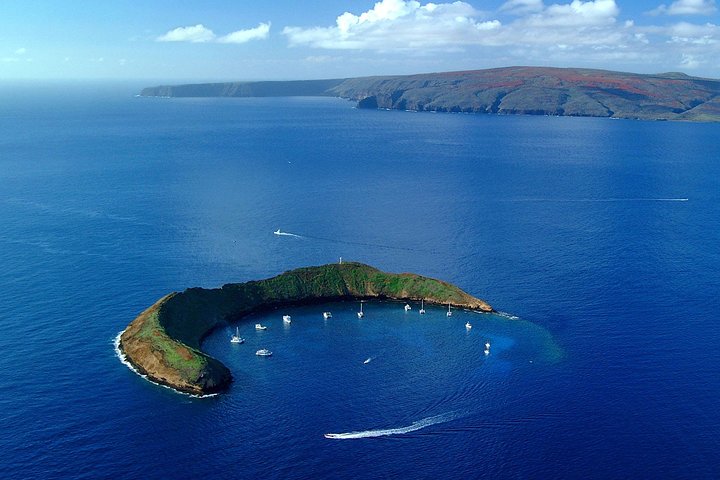
In the morning, yes. Molokini is a crescent of drowned volcanic crater about three miles off the Mākena coast and a Marine Life Conservation District, with visibility inside the arc regularly over 100 feet. Boats leave from Māʻalaea Harbor and the Kīhei boat ramp, and the crossing takes 30 to 50 minutes. Afternoon trips cost less because the trade winds have filled in and both the ride and the water are rougher.

What can you see on Maui in one day?

Pick one region and stay in it. A good single day is ʻĪao Valley in the morning, lunch in Wailuku, and the Wailea or Kāʻanapali coast in the afternoon for a swim and sunset. Alternatively, a sunset run to Haleakalā's summit, which needs no reservation, with an early dinner Upcountry on the way back. What does not fit into one day is Hāna, and nothing about the Hāna road rewards hurrying.

Is the Nākālele Blowhole safe to visit?

It is safe to look at from a distance and genuinely dangerous up close. The blowhole sits in undercut lava on the north coast of West Maui, and people have been pulled into it and killed. The scramble down from the highway pullout is steep, unmarked and slippery. Stay well back from the rim, keep hold of children, and do not stand between the hole and the sea to time a photograph.

What is there to do on Maui in the rain?

Maui Ocean Center at Māʻalaea is the one reliable indoor half-day. Beyond it: the Maui Arts and Cultural Center in Kahului, the Bailey House Museum and the Market Street shops in Wailuku, the tram and mill buildings at Maui Tropical Plantation, tasting rooms Upcountry at Maui Wine and the lavender farm, and the simple fact that the south and west coasts are usually dry when the north and east are not. Drive to the other side.