Skip to content
Menu

Booking through these earns us a commission from Viator. You pay the same, and payment did not decide what is listed.

Search

All Tours

Maui Helicopter Tours

Last updated

Every Maui helicopter tour leaves Kahului Heliport. Which route to pick, what a flight costs, Haleakalā airspace rules and how tours route past Lahaina.

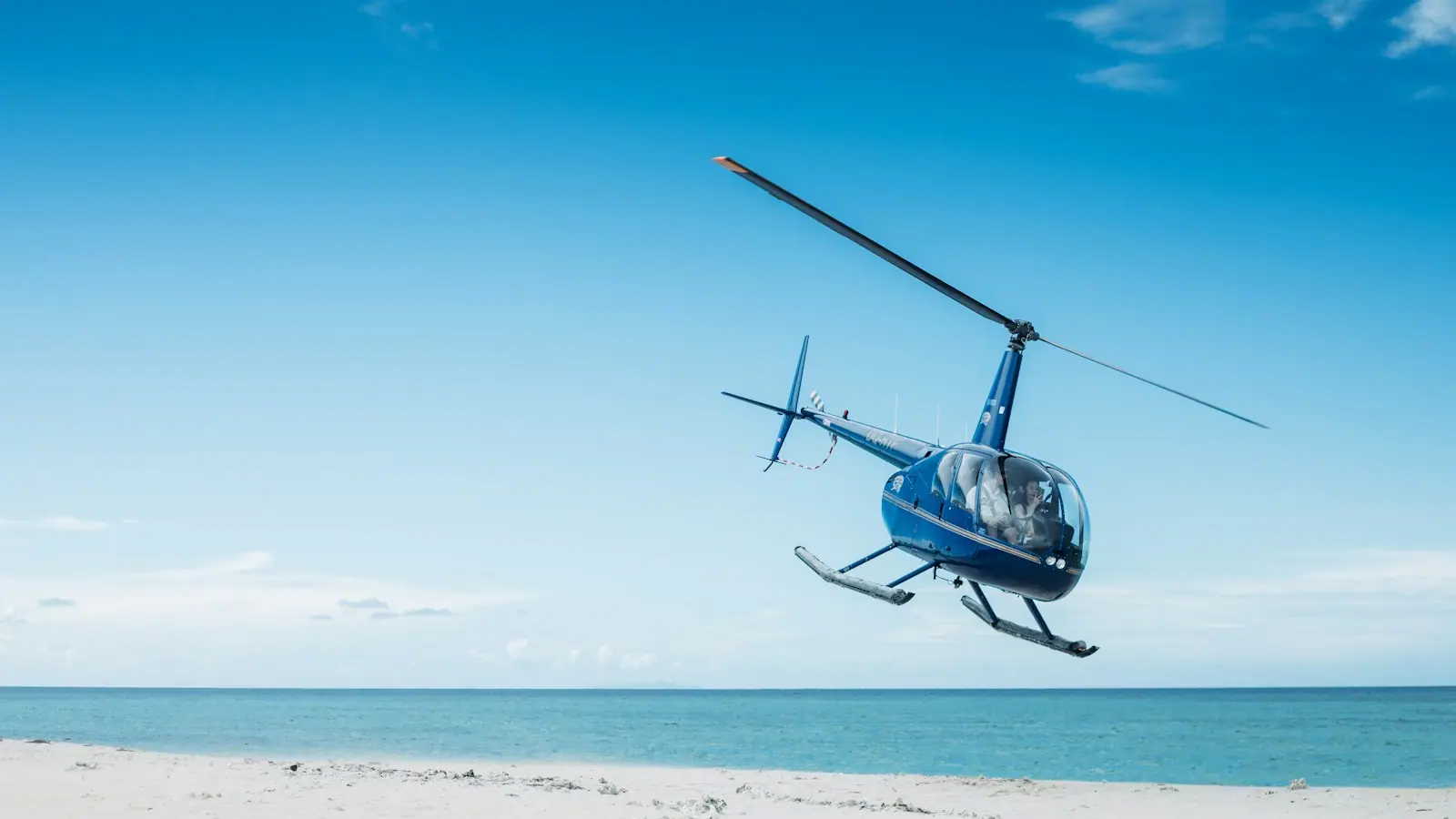
A tour helicopter in flight low over a coastline

Maui has one heliport, and it is at Kahului Airport. Every tour flight on this island leaves from there, which simplifies planning enormously and means that wherever you are staying, the day begins with a drive to the central plain. From that single pad the operators fly essentially four shapes of trip, and choosing between them is most of the decision.

The case for spending this kind of money on a flight is specific to Maui rather than generic. Large parts of this island genuinely cannot be reached any other way. The interior of Mauna Kahālāwai, the eroded West Maui Mountains, is a set of near-vertical amphitheatres draining a summit at Puʻu Kukui that receives rainfall measured in hundreds of inches a year, and it holds waterfalls that no trail goes near. The north shore of Molokaʻi, twenty minutes across the channel, has sea cliffs among the tallest in the world and Kahiwa Falls dropping something on the order of 1,750 feet, the highest in the state. The Hāna coast looks different at 2,000 feet from how it looks through a windscreen at 20mph. Fifty minutes in the air shows you a version of this island that a fortnight on the ground will not.

The case against is equally specific. It is the most expensive hour on Maui by a distance, on an island whose typical activity already runs around $200 a head. The weather cancels flights regularly and the refund is your money back, not your morning. And there is a real safety record behind Hawaiʻi air tours that is worth informing yourself about rather than discovering afterwards; the questions to ask are further down this page.

Two things that marketing photography will not tell you. First, you do not fly into Haleakalā's crater. The park's air tour management plan restricts commercial flights to a single one-way route across the southern part of the park at minimum altitudes of 2,000 feet above ground over land and 3,000 feet over water, and it deliberately avoids the crater basin, which holds some of the lowest recorded natural sound levels of any national park in the country. Second, the standard West Maui circuit passes over Lahaina. If you would rather not look down on the site of the August 2023 wildfire from a sightseeing seat, ask the operator how they route before you book, and consider an East Maui itinerary instead.

Our picks

The ones we would book

  • Editor's Pick

    Best all-round Maui flight

    Why we chose it

    The 45-minute West Maui and Molokaʻi circuit is the route that earns its price: the waterfall amphitheatres inside the West Maui Mountains, then the channel crossing to sea cliffs that rise thousands of feet straight out of the water. Book the first departure of the morning for the calmest air, and ask the operator how the itinerary routes past Lahaina before you commit.

What you actually see from the air

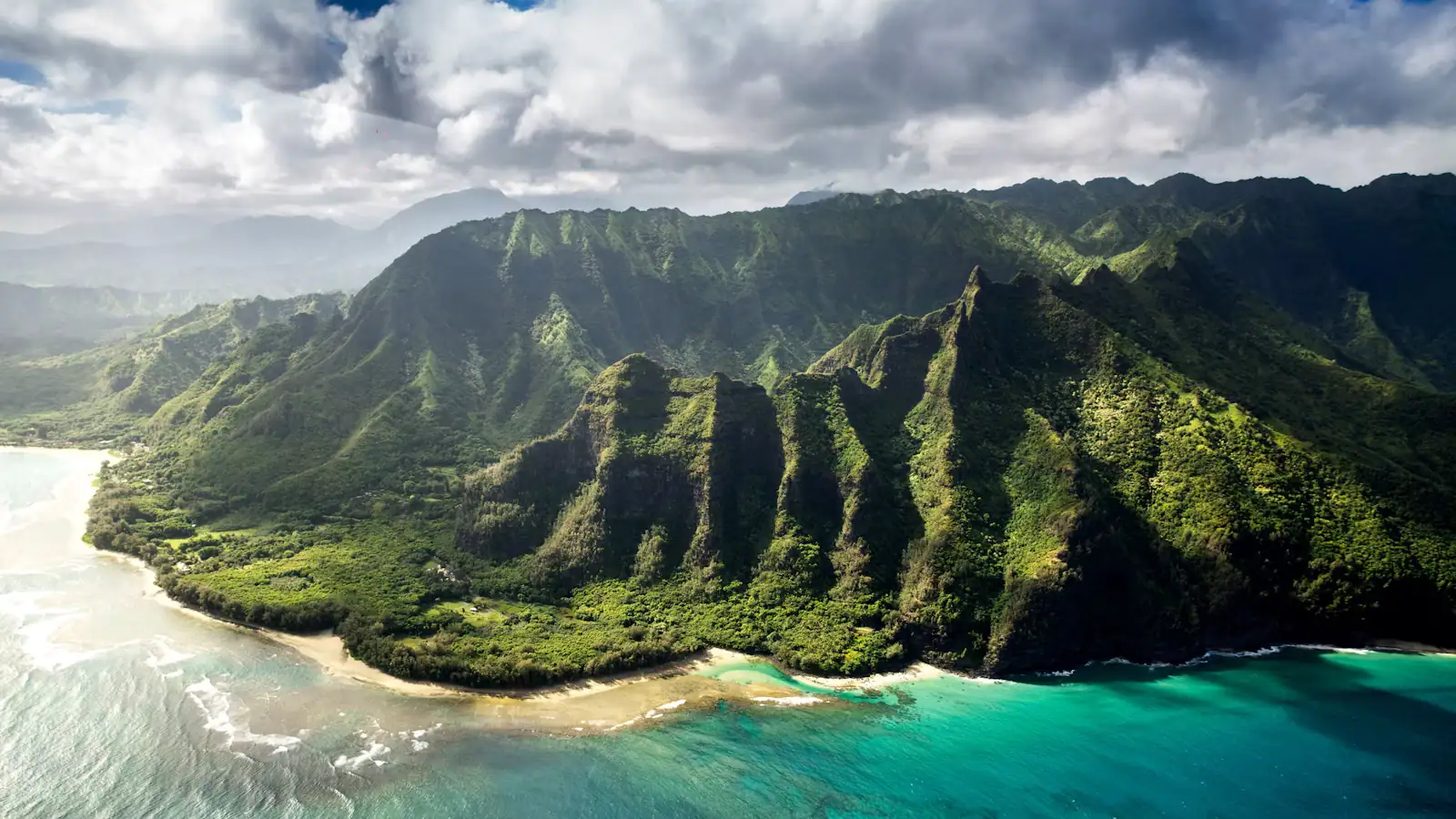
The West Maui interior is the reason most first-timers book. Once you cross the isthmus the terrain folds into a series of green amphitheatres with waterfalls stacked down them, the so-called Wall of Tears below Puʻu Kukui among them. On a wet week there are more falls than you can count; after a dry spell there are noticeably fewer, and no operator controls that.

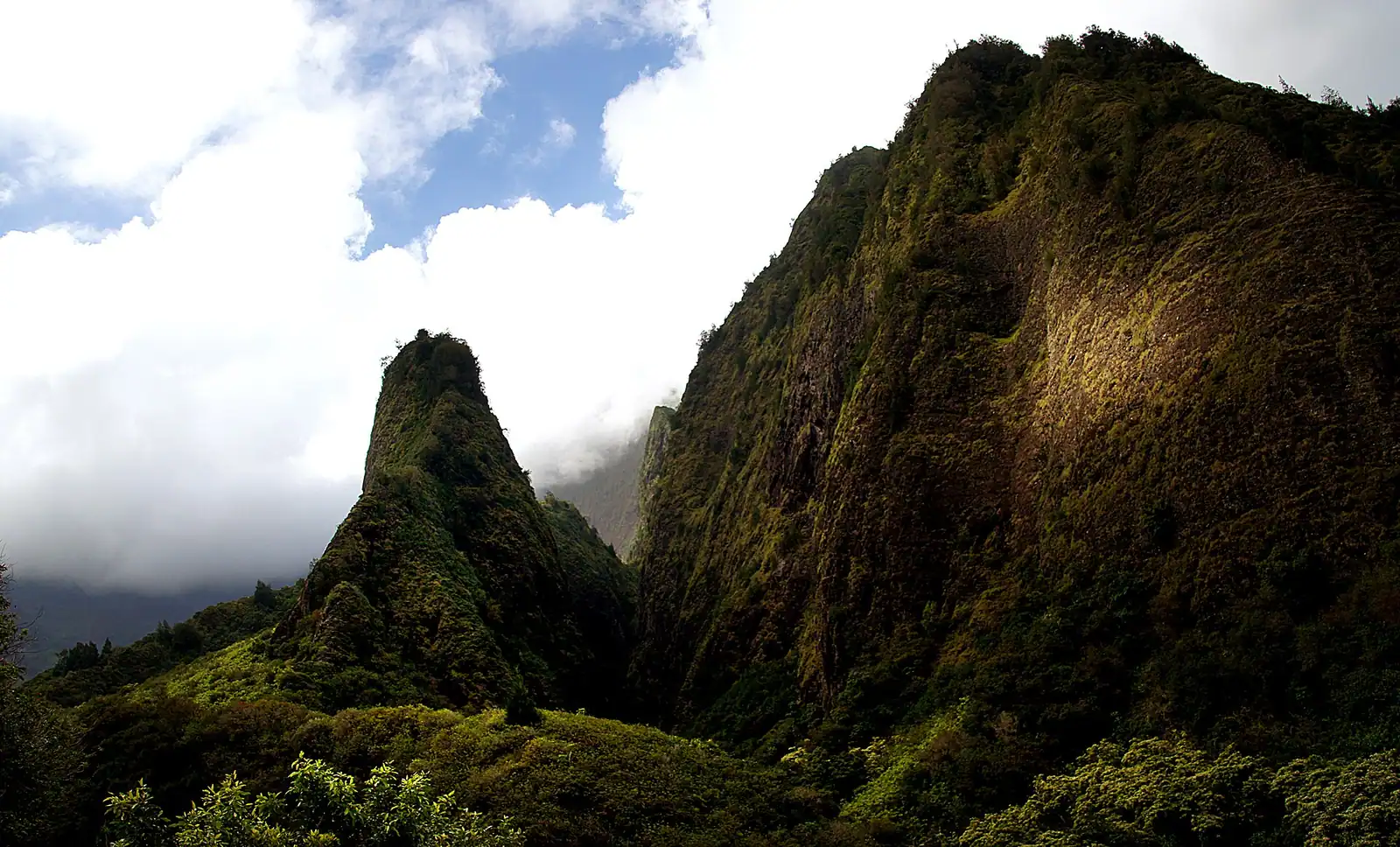
ʻĪao Valley and the Wailuku side open up beneath you in a way the ground-level monument cannot show, though the airspace around the valley is constrained.

Molokaʻi's north shore, about a fifteen-minute crossing, is the most dramatic thing on any Maui itinerary: a wall of sea cliffs rising thousands of feet straight out of the Pacific, the Kalaupapa peninsula below them, and Kahiwa Falls coming off the top in a single enormous thread. Channel crossings are the bumpiest part of any flight.

East Maui and Hāna gives you the windward coast, the rainforest gulches, the sea cliffs around Nāhiku and, on the longer circuits, the Kīpahulu side and Waimoku Falls from above. If you have driven the Hāna road, this is the better half of the island from the air.

Haleakalā is seen from the southern flank at altitude rather than from inside. You get the scale of the volcano, the cinder-cone landscape and the Kaupō Gap, not a hovering shot over the crater floor.

Sit on the right side if you can. Most operators assign seats by weight and balance rather than preference, which is a safety requirement and not negotiable.

When to fly

When to go

Fly early. The first departures of the morning, usually from around 7am, give you the calmest air, the clearest visibility and the lowest chance of a weather cancellation. By early afternoon the trade winds have built and cloud has piled up against the windward slopes of both mountains, which is where the waterfalls are.

Book the flight for early in your trip, not the last day. Cancellations for weather are routine, particularly on the East Maui routes, and an operator will usually offer you another slot. That only helps if you still have days left.

Allow about two and a half hours door to door for a 45-minute flight. Check-in is typically an hour before departure because every passenger is weighed and the aircraft is loaded to a balance plan, and the Kahului Heliport is not somewhere you can arrive five minutes late. Add the drive: about ten minutes from Kahului, half an hour from Kīhei, close to an hour from Kāʻanapali or Wailea in morning traffic.

Season matters less than the week's weather. Winter brings more rain, which means more waterfalls and more cancellations. Summer is drier and steadier, and the West Maui falls can be visibly thinner. Neither is a reason to choose a month.

One scheduling conflict worth flagging: an air tour is not affected by diving the way the Haleakalā summit road is, because the cabin stays at low altitude, but check with your dive operator if you are flying the same day.

What a Maui helicopter tour costs

What it costs

This is the top of the Maui price range, and the island already carries the highest typical activity price of any destination in this network. Bands, to be confirmed at booking.

  • 30 to 35 minute West Maui flight: roughly $200 to $300 per person.
  • 45 minute West Maui and Molokaʻi: commonly $250 to $400. Discounted advance rates are frequently well below the walk-up rate, so book online.
  • 45 to 60 minute East Maui, Hāna and Haleakalā: roughly $300 to $450.
  • 65 to 90 minutes, or a flight with a ranch landing: $400 to $700.
  • Doors-off premium: typically $50 to $100 on top.
  • Front seat upgrade: around $50 where it is offered.
  • Private charter: priced per aircraft and usually four figures.

Costs that catch people out. Fuel surcharges are sometimes quoted separately from the headline fare. Weight policies are standard across the industry: passengers over a stated threshold, often somewhere around 250 to 300 pounds, are usually required to purchase an additional comfort seat, and every operator takes a declared weight at booking and an actual weight at check-in. Nobody enjoys this and every operator does it, because the aircraft is loaded to a balance plan.

Also worth knowing: fly-drive combinations that pair a Hāna flight with a ground tour, or a flight with a boat trip, generally run $500 and up per person.

Safety questions, weather, and who this suits

Hawaiʻi air tours have a safety record that has drawn repeated federal scrutiny, including accidents on several islands over the years and long-running recommendations about weather minimums, terrain avoidance and flight data recording. This is not a reason not to fly. It is a reason to book like an informed adult.

Useful questions before you pay: is the aircraft single-engine or twin-engine; does it carry floats for over-water legs; what are the operator's stated weather minimums and who makes the go or no-go call; and how long has the company been flying on Maui. An operator that answers those crisply is telling you something. So is one that does not.

Weather cancels flights, and a good operator cancels more than a bad one. Take the refund and rebook rather than pressing to fly on a marginal morning.

Who it suits. Anyone whose mobility limits what they can reach on the ground gets more from this than almost anybody, because the West Maui interior and the Molokaʻi cliffs are otherwise unreachable. Photographers get a lot from doors-off. People who have driven the Hāna road get the most from the East Maui route, because they recognise everything.

Who should think twice. Anyone with significant motion sickness, since the channel crossing is bumpy and you cannot get off. Small children, who are usually subject to minimum age and weight rules and rarely enjoy the noise. Anyone uneasy in small aircraft, for whom fifty minutes is a long time. And anyone for whom the price is genuinely painful, because on Maui $350 also buys a Molokini morning and a whale trip with change.

Book it

Everything else we track

We could not find tours matching this right now

Nothing came back for Maui helicopter. Operators add and retire experiences constantly, so this list changes week to week. Try a broader category, or come back in a day or two.

The four routes, compared

How they compare

RouteTypical lengthRoughlyBest forTrade-off
West Maui scenic30 to 35 min$200 to $300A first taste, tight budgets, nervous flyersShort, and it is over before you settle
West Maui and Molokaʻi45 min$250 to $400Most people; sea cliffs and waterfalls in oneIncludes an open-channel crossing; passes over Lahaina
East Maui, Hāna and Haleakalā45 to 60 min$300 to $450Anyone who has driven the Hāna road, or who would rather not overfly LahainaCloud on the windward side cancels more often
Circle island, or with a landing65 to 90 min$400 to $700The full picture; ranch landings on the Haleakalā slopesHighest price; the landing eats flight time

A few structural things to weigh. Doors-off flights are offered by at least one Maui operator and typically carry a premium of $50 to $100; they are dramatically better for photography and dramatically colder and louder, and they come with restrictions on loose items. A front seat upgrade, where offered, is usually around $50 and is worth it for the forward view through the bubble window.

Aircraft type matters more than route. Ask whether the flight is on a single-engine or twin-engine machine, whether it is fitted with floats for the over-water legs, and whether the operator flies with the doors on for that particular itinerary.

And check where the tour actually goes rather than what it is called. Two operators can sell a "West Maui and Molokaʻi" flight and route them differently, including how and whether they pass Lahaina.

What to wear and bring

What to bring

Cabins are small and the rules around loose items are strict, especially doors-off.

  • Dark clothing. Light colours reflect off the bubble windows and ruin photographs. Every aerial photographer on this island wears black.
  • A layer. Cabins are air-conditioned and altitude is cooler; doors-off at 100 knots is genuinely cold.
  • No hats, scarves or loose jewellery on doors-off flights. They will not let you board with them, and anything that leaves the aircraft is a rotor strike risk.
  • A camera with a wrist strap, and lens hood removed. Phones must be tethered on doors-off flights, and some operators prohibit them entirely.
  • Sunglasses, and mineral sunscreen if you are waiting outside; Maui County requires zinc oxide or titanium dioxide.
  • Motion sickness medication taken well before, particularly for the Molokaʻi channel crossing, which is where most people feel it.
  • Photo ID. You will be weighed and checked in by name.
  • Nothing in your pockets on doors-off flights, including phones, wallets and keys. Lockers are provided.

Leave behind: large bags, which will not board; drones, which are separately prohibited near whales and over most of the park; and any expectation of choosing your seat, since seating is assigned for weight and balance.

Lahaina, the park and the people underneath

Before you book

Lahaina. The August 2023 wildfire destroyed the historic town and killed about a hundred people, and much of that ground is a rebuilding community and, for many families, the place where someone died. Standard West Maui circuits route along that coastline. Nothing about that is illegal, and operators fly at altitude, but if you would rather not look down on it from a sightseeing seat, ask before you book how the flight routes and whether an East Maui itinerary is available instead. If you do fly over it, the reasonable thing is not to photograph it.

Haleakalā airspace. Commercial air tours over the national park operate under an air tour management plan that permits a single one-way west-to-east route across the southern portion of the park, with minimum altitudes of 2,000 feet above ground over land and 3,000 feet over water, and an annual cap on the number of flights. It deliberately keeps tours away from the crater basin, which is one of the quietest measured places in the national park system. So no operator flies into the crater, and any implication otherwise is marketing.

Statewide minimums. Hawaiʻi air tours operate under a special federal aviation rule that generally prohibits flying below 1,500 feet above the surface without specific authorisation, in part so an aircraft has room to reach a safe landing after an engine failure.

Noise. Air tour noise is a live and contested issue on Maui, and the people raising it are residents in Hāna, Kīpahulu and Upcountry rather than visitors. That is worth holding in mind when you choose a route and an hour.

On the ground

Where to go

Every place below has its own page — hours, parking, what it costs and what to expect when you get there.

  • Bare volcanic cinder cones on a high crater floor under early morning light

    Park

    Haleakalā National Park

    A 10,023-foot volcano with a reservation system at the gate and a second district four hours away on the far side of the island.

    3–8 hoursAround $30 per private vehicle, valid three days and covering both districts. Sunrise entry needs a separate $1 reservation.

  • A narrow road curving through dense green rainforest

    Landmark

    The Road to Hāna

    Free

    Sixty-four miles, 620 curves and 59 bridges — and a road that several hundred people use to get to work.

    8–12 hoursThe road itself is free. Several stops along it charge for parking or entry.

  • A mountain ridge standing above an unbroken layer of cloud at first light

    Viewpoint

    Puʻu ʻUlaʻula (Haleakalā Summit)

    The highest point on Maui, 10,023 feet up, where the horizon curves and the clouds are a thousand feet below your feet.

    1.5–4 hoursCovered by the Haleakalā National Park entrance fee, around $30 per vehicle for three days. Sunrise entry needs a separate $1 reservation.

  • A tall narrow waterfall dropping down a dark cliff face into forest

    Water feature

    Waimoku Falls

    Four hundred feet of water down a sheer lava wall, two miles up a rainforest valley and reachable no other way.

    0.5–1 hoursCovered by the Haleakalā National Park entrance fee, around $30 per vehicle for three days.

  • A sharp green ridge rising steeply out of a densely vegetated valley

    Historic site

    ʻĪao Valley State Monument

    A green spire 1,200 feet above the valley floor, in a place Hawaiians remember as a battlefield rather than a viewpoint.

    0.5–1.5 hoursNon-residents pay a per-vehicle parking fee plus a per-person entry fee, both booked in advance. Hawaiʻi residents with state ID are free.

  • Low two-storey storefronts along a quiet main street with shopfront awnings

    Neighbourhood

    Wailuku Town

    Free

    Maui's county seat — antique shops, an 1833 mission house and a 1928 theatre, three miles below the mouth of ʻĪao Valley.

    1.5–4 hoursFree to visit the town. Museum admission and theatre tickets are charged separately.

  • A plume of seawater bursting upward from a hole in dark coastal rock

    Water feature

    Nākālele Blowhole

    Free

    A lava vent on Maui's northernmost point that fires seawater skyward — and a place where standing in the wrong spot has killed people.

    0.5–1.5 hoursFree. No entrance fee and no parking charge.

  • A still lagoon reflecting steep green mountain ridges under scattered cloud

    Park

    Maui Tropical Plantation

    Free

    A working farm at the mouth of Waikapū Valley where the grounds are free and the mountain behind it does most of the work.

    1–2.5 hoursFree to enter the grounds and park. The tram tour, ziplines and food are charged separately.

  • A single waterfall falling into a rock pool in a narrow fern-covered gully

    Water feature

    Wailua Falls

    Free

    Eighty feet of water beside the road south of Hāna, and the only serious Maui waterfall you can see without leaving the car.

    10–40 minutesFree. No entry fee, no reservation and no parking charge.

Straight answers

Questions people actually ask

How much is a helicopter tour on Maui?

Roughly $200 to $300 for a 30 to 35 minute West Maui flight, $250 to $400 for the standard 45-minute West Maui and Molokaʻi circuit, $300 to $450 for the East Maui and Hāna route, and $400 to $700 for 65 to 90 minutes or a flight including a ranch landing. Doors-off adds $50 to $100 and a front seat upgrade around $50. Advance online rates are often well below walk-up prices, and fuel surcharges are sometimes quoted separately.

Where do Maui helicopter tours leave from?

All of them leave from the Kahului Heliport at Kahului Airport on the central north shore, so wherever you are staying the day starts with a drive to the middle of the island. Allow about ten minutes from Kahului, half an hour from Kīhei and close to an hour from Kāʻanapali or Wailea in morning traffic, plus a check-in an hour before departure for weighing and briefing.

Can you fly into the Haleakalā crater by helicopter?

No. Haleakalā National Park's air tour management plan permits commercial air tours only on a single one-way west-to-east route across the southern part of the park, at minimum altitudes of 2,000 feet above ground over land and 3,000 feet over water, with an annual cap on flights. The route deliberately avoids the crater basin, which holds some of the quietest recorded natural sound levels in the national park system.

Do Maui helicopter tours fly over Lahaina?

The standard West Maui circuits pass along that coastline, yes. The August 2023 wildfire destroyed the historic town and killed about a hundred people, and the ground below is a community rebuilding rather than a sight. If you would rather not look down on it, ask your operator how the flight routes before you book and whether an East Maui, Hāna and Haleakalā itinerary is available instead. If you do fly over, do not photograph it.

What time of day is best for a Maui helicopter tour?

The first departures, usually from around 7am. Morning air is calmest, visibility is best and the chance of a weather cancellation is lowest, because trade winds build and cloud stacks against the windward slopes through the day. Book the flight for early in your trip rather than the last morning, since weather cancellations are routine and rebooking only helps if you have days left.

Are Maui helicopter tours safe?

They are commercially operated under federal rules that set minimum altitudes and weather standards, but Hawaiʻi air tours have a safety record that has drawn repeated federal scrutiny. Book informed: ask whether the aircraft is single or twin-engine, whether it carries floats for over-water legs, what the operator's weather minimums are and who makes the go or no-go call. Take a weather cancellation as good judgement rather than an inconvenience.

Is a helicopter tour on Maui worth it?

It depends on what else you would spend the money on. The argument for it is that the interior of the West Maui Mountains and the north shore of Molokaʻi cannot be reached any other way, and neither can be seen from a road or a trail. The argument against is that $350 also buys a Molokini morning and a whale trip with change. If mobility limits what you can do on foot, the flight buys you more than it buys most people.

Why do helicopter operators weigh passengers?

Because the aircraft is loaded to a weight and balance plan, and seats are assigned from it. Every operator takes a declared weight at booking and an actual weight at check-in, and passengers over a stated threshold, often somewhere around 250 to 300 pounds, are usually required to buy an additional comfort seat. It is standard across the industry and it is the reason you cannot choose which side of the cabin you sit on.