Skip to content
Menu

Booking through these earns us a commission from Viator. You pay the same, and payment did not decide what is listed.

Search

Historic site

Kahanu Garden & Piʻilanihale Heiau

Last updated

A dry-stacked stone platform the size of a city block, the largest heiau in Polynesia, standing in a hala forest above the Hāna coast.

Photo: Joel BradshawCC0

Turn off the Hāna Highway a few miles short of town, follow ʻUlaʻino Road through hala forest until the pavement breaks up and a stream crosses the road, and on the far side you arrive at 464 acres that hold something without parallel in the Pacific.

Piʻilanihale Heiau is a stone platform roughly 341 by 415 feet — about three acres — with a seaward face rising in five stepped terraces to a height of around fifty feet. Every stone is dry-stacked basalt, set without mortar, carried and fitted by hand. It is the largest heiau in Hawaiʻi and the largest ancient structure in Polynesia. The main terrace is thought to date to the fourteenth century; the wings were added and the site rededicated in the sixteenth, in the era of Piʻilani, the chief who unified Maui and whose name the structure carries — Piʻilanihale, the house of Piʻilani. The same chief is credited with the alaloa, the paved trail that ringed the island, which is why the highway on the other side of Maui still bears his name.

It was declared a National Historic Landmark in 1964. It is also, importantly, not a ruin that stopped mattering. The heiau is cared for by the Hāna community and the Kahanu family, whose land this has been since the nineteenth century, and it is treated as a living sacred place. Visitors view it from a designated path. You do not walk on it, and nobody should want to.

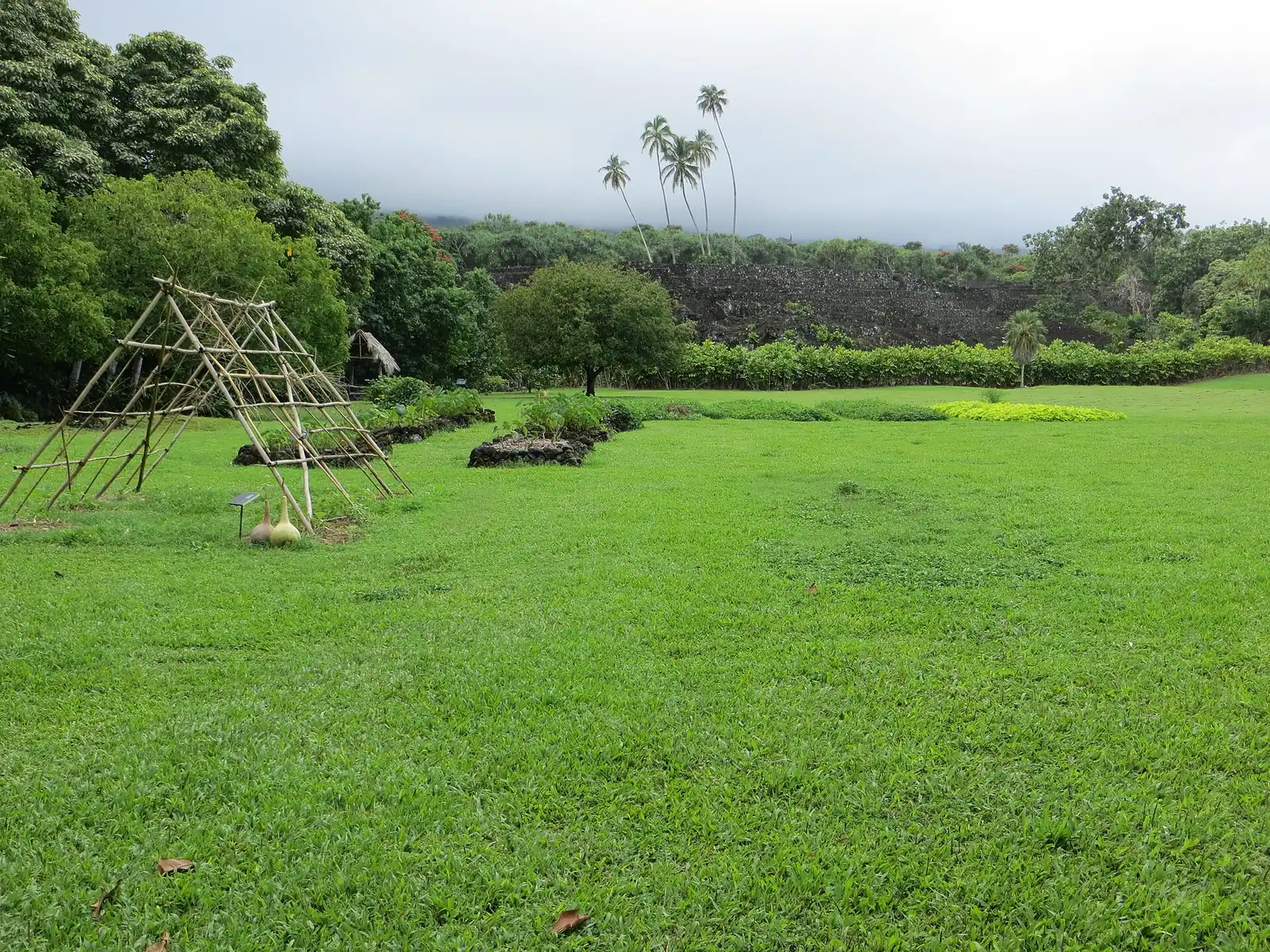
The garden around it is run by the National Tropical Botanical Garden and is a serious collection in its own right. It holds the world's largest breadfruit collection — around 150 ʻulu varieties gathered from more than seventeen Pacific island groups — alongside a canoe garden of the plants Polynesian voyagers carried with them: kalo, niu, kō, ʻawa, maiʻa, ʻōlena. Around the edges stands one of the last undisturbed hala forests in Hawaiʻi, and beyond that the black lava shoreline at Kalahu Point.

It is open weekdays only, and the drive in has a stream ford. Plan accordingly.
Getting there and parking

Heading towards Hāna on the Hāna Highway, watch for mile marker 31 and take the turn onto ʻUlaʻino Road shortly after it. Follow the road for roughly a mile and a half.

The pavement deteriorates and there is a stream ford before the entrance. Depth-marker poles stand in the crossing: if water is flowing above them, do not attempt it — turn round and come back another day. Streams on this coast rise within minutes in rain.

The garden entrance is on the right after the ford. Parking is on site and free. Do not drive further down ʻUlaʻino Road past the garden; it is private and residents have asked visitors to stop here.

From Pāʻia allow around two and a half hours of driving, plus whatever you stop for. Arrive well before last entry.

Standing in front of Piʻilanihale

Photographs do not convey the scale. The seaward wall is a stepped face of fitted basalt that runs for hundreds of feet and rises to roughly the height of a five-storey building, and the whole thing was built without mortar, without wheels and without draft animals. Stones were moved by people, from the shoreline and from the surrounding land, over generations.

Archaeologists read the construction in phases. A fourteenth-century core, then major expansion and rededication in the sixteenth century, when Maui was consolidated under Piʻilani and his son Kihapiʻilani. A heiau of this size was a statement of authority as much as a religious structure — the seat of a chiefly line, a place of ritual, and an assertion visible from the ocean.

What it was used for specifically is not something a visitor page should assert with confidence; interpretations differ, and this is the community's history to tell. The garden's guided tour is where you get that account from people entitled to give it.

Two things to hold in mind while you look. First, this is not an abandoned monument — it has active cultural significance today. Second, the flat area in front of the wall is where you stand; the structure itself is not walked on, climbed or entered. Follow the marked route and the staff's instructions without needing to be asked twice.

How to visit respectfully

Kahanu Garden is a cultural site on family land, opened to visitors on terms. Honour them.

  • Stay on the marked paths. The route is laid out to keep people off the heiau and off areas that are not for visitors.
  • Do not climb on, enter or touch the heiau walls. Stone structures like this are structurally fragile and culturally serious. Both reasons are sufficient on their own.
  • Do not move, stack or remove stones anywhere on the property. Stacked-rock cairns and rocks wrapped in leaves are a modern visitor invention, not a Hawaiian practice, and they damage archaeological sites.
  • Do not leave offerings unless you have been invited to, and know what you are doing.
  • No drones.
  • Photograph the landscape; be thoughtful about the heiau. Nothing prohibits a picture, but a site like this asks for a different register than a selfie.
  • Keep your voice down. Sound carries across the platform and other visitors are there for the same reason you are.

If a member of staff asks you to do something differently, they are not being officious. They are the reason the site is open at all.

The breadfruit collection and the canoe garden

The botanical side of Kahanu is easy to undersell and genuinely important.

The breadfruit collection is the largest in the world: roughly 150 varieties of ʻulu gathered from more than seventeen island groups across Polynesia, Micronesia and Melanesia, plus material from Indonesia, the Philippines and the Seychelles. It underpins the Breadfruit Institute's work on a tree that produces enormous quantities of starch with almost no inputs, and which is being taken seriously as a food-security crop across the tropics. Standing in an orchard of it, with the varieties labelled, makes the argument better than any leaflet.

The canoe garden holds the plants Polynesian settlers carried in their voyaging canoes because they could not survive at the far end without them: kalo, niu, ʻulu, kō, maiʻa, ʻawa, ʻōlena, ipu. Seeing them grown together reframes them from "tropical plants" into cargo, chosen deliberately, thousands of miles from home.

Around the property stands one of the last undisturbed hala forests in the islands — Pandanus tectorius, with its prop roots and its long leaves that were woven into mats and sails. Walk through it and you understand why the road in is named for the hala groves it passes.

Allow at least an hour. An hour is the garden's own stated minimum and it is not padding.

Hours, tickets and the stream crossing

Kahanu operates on a weekday schedule that catches people out. It has been open Monday to Friday, mid-morning to mid-afternoon, with a last entry an hour before closing, and closed at weekends — which is precisely when most visitors do the Hāna drive. Check before you build a day around it.

Two ticket types. A self-guided visit — recently around $18 for adults, roughly $10 for Hawaiʻi residents with ID, free for children twelve and under and for Hāna residents. And a guided tour, historically one morning a week, at around $30 for adults, with reservations required and a habit of selling out. Take the guided option if the day works; the interpretation is the difference between seeing a wall and understanding one.

Reservations are made through the National Tropical Botanical Garden's site. Treat prices and days as indicative and confirm current details.

Then the road. ʻUlaʻino Road leaves the Hāna Highway just past mile marker 31. After roughly a mile the pavement breaks up and you reach a stream ford. Marker poles show the depth. If water is running above them, turn round — East Maui streams rise fast and flash flooding is the real hazard here, not the potholes. Beyond the garden entrance the road is private, and residents have asked visitors not to continue.

Tours that visit Kahanu Garden

Operators run these trips past Kahanu Garden, or stop there as part of a longer route. We list what the booking data supports — not everything that mentions the name.

Booking through these earns us a commission from Viator. You pay the same, and payment did not decide what is listed.

Shared departurespriced per seat, best value for one or two

  • Maui: Lahaina ATV Adventure

    Low Supplier Cancellation Rate

    Maui: Lahaina ATV Adventure (opens in a new tab)

    Free cancellation
    1.8K reviews

    You’ll have the chance to drive, or simply be a passenger in one of today’s most advanced 4 seater off-road vehicles, the Canam sport max…

    2 hours

    Prices checked

    from $202.55
  • Maui Atlantis Submarine Adventure

    Excellent Quality

    Maui Atlantis Submarine Adventure (opens in a new tab)

    Free cancellation
    815 reviews

    All riders must be 36 inches or taller to participate/ride submarine. Dive 100 feet below the surface and experience Maui’s marine…

    2 hours

    Prices checked

    from $144.36Usually $160.41

Private and small-group optionsoften cheaper per head for a family or a group of six

Near Kahanu Garden

Straight-line distances, so allow more on the road — the island is long and has one main parkway.

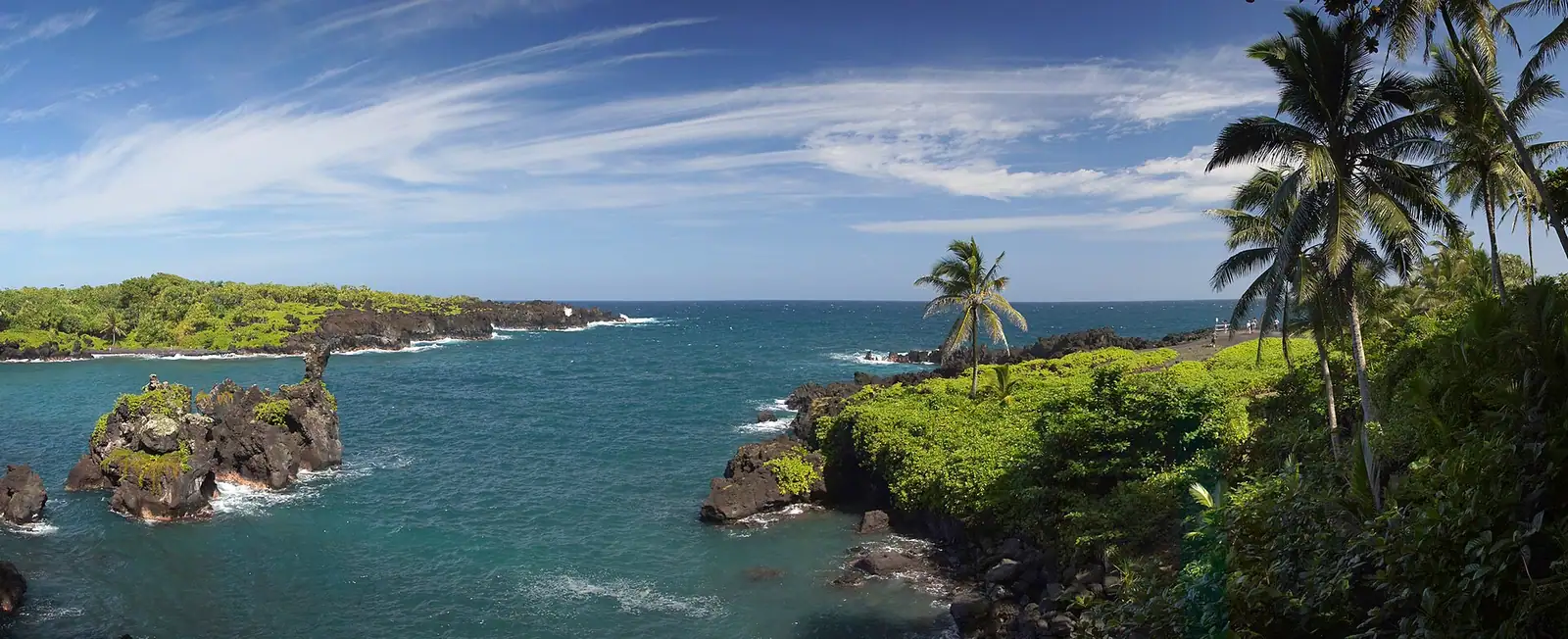
  • A sheltered bay with dark sand, a small pier and a steep green headland behind

    Beach

    Hāna Bay

    Free

    The one reliably calm swim on the Hāna coast, under the cinder cone where Queen Kaʻahumanu was born in 1768.

    1–2.5 hoursFree. Parking is free.4.5 mi away

  • Dark volcanic sand and black rock at the edge of a small ocean cove

    Park

    Waiʻānapanapa State Park

    Black basalt sand, freshwater caves and an ancient coastal trail, three miles before Hāna — and you cannot get in without booking ahead.

    1–2.5 hoursNon-residents pay per-vehicle parking plus a per-person entry fee, both by advance reservation. Hawaiʻi residents with state ID are free.2.4 mi away

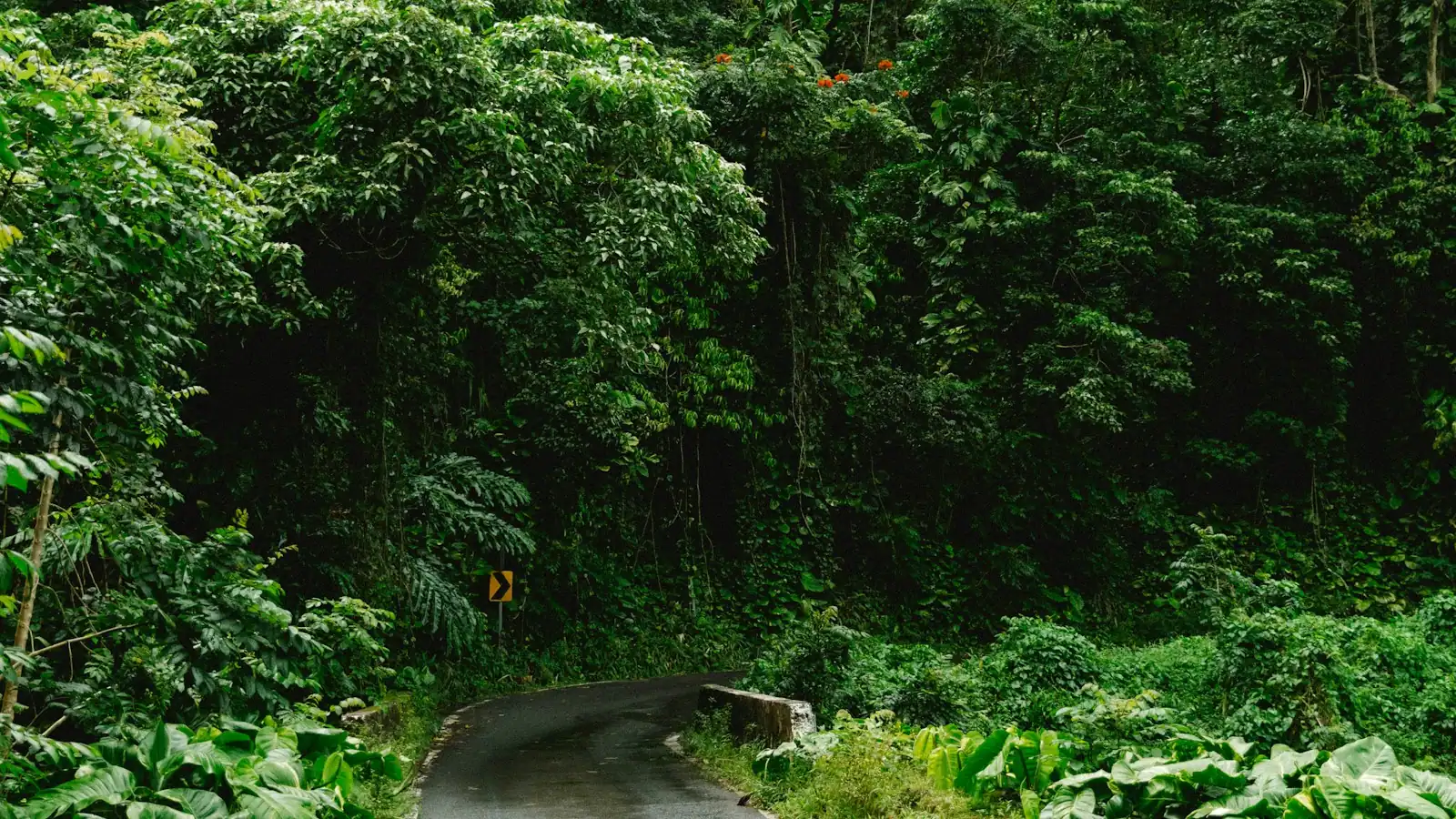
  • A narrow road curving through dense green rainforest

    Landmark

    The Road to Hāna

    Free

    Sixty-four miles, 620 curves and 59 bridges — and a road that several hundred people use to get to work.

    8–12 hoursThe road itself is free. Several stops along it charge for parking or entry.8.2 mi away

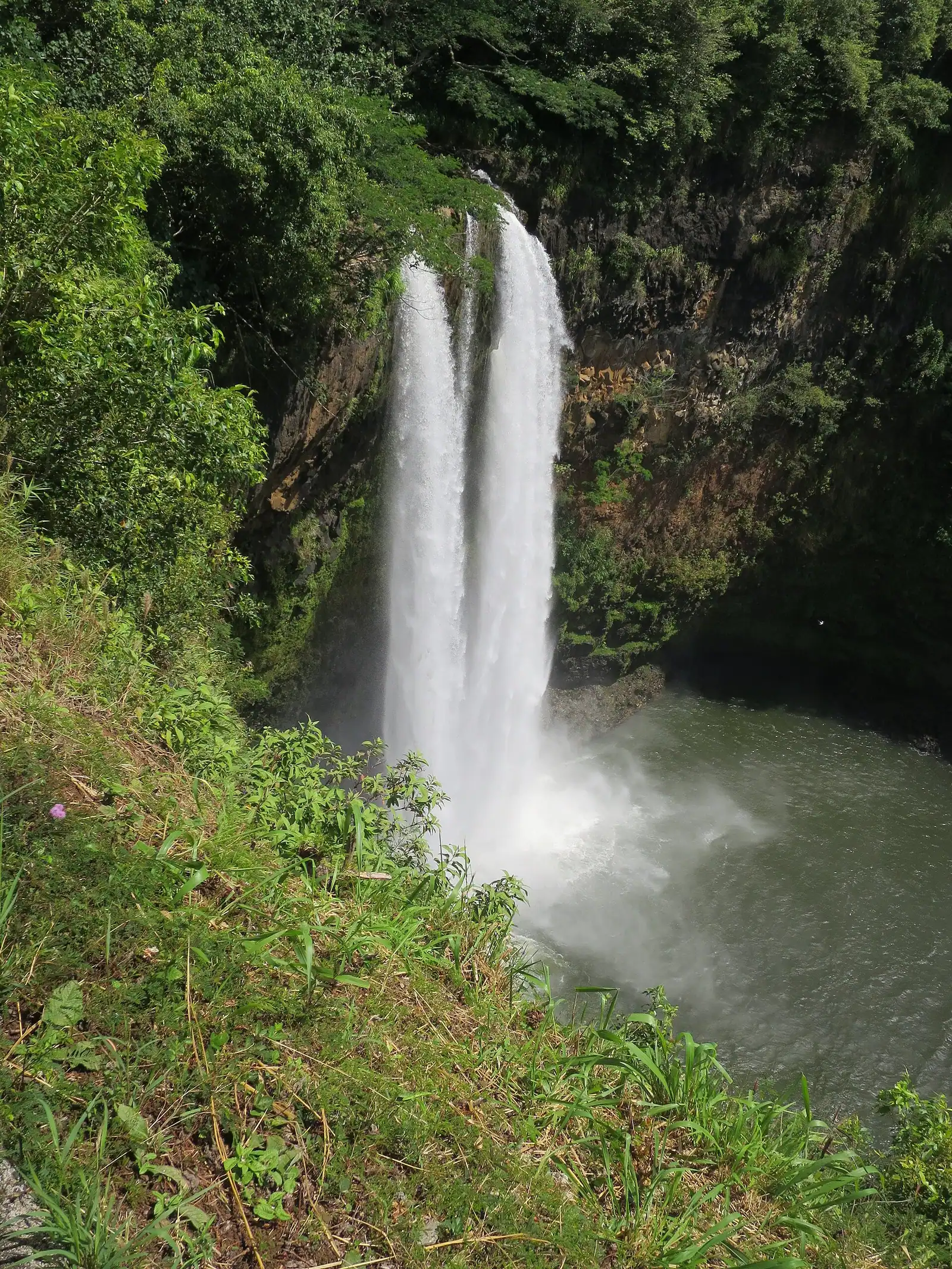
  • A single waterfall falling into a rock pool in a narrow fern-covered gully

    Water feature

    Wailua Falls

    Free

    Eighty feet of water beside the road south of Hāna, and the only serious Maui waterfall you can see without leaving the car.

    10–40 minutesFree. No entry fee, no reservation and no parking charge.6.5 mi away

Kahanu Garden: common questions

What is Piʻilanihale Heiau?

A dry-stacked basalt platform roughly 341 by 415 feet — about three acres — whose seaward face rises in five stepped terraces to around fifty feet. It is the largest heiau in Hawaiʻi and the largest ancient structure in Polynesia. The core is thought to date to the fourteenth century, with major expansion in the sixteenth under the Maui chief Piʻilani, whose name it carries. It was made a National Historic Landmark in 1964.

Can you walk on Piʻilanihale Heiau?

No, and you should not want to. The heiau is a sacred site cared for by the Hāna community and the Kahanu family, and visitors view it from a marked path at ground level. Do not climb the walls, enter the platform, move or stack stones anywhere on the property, or fly a drone. Staff will direct you; follow their instructions. Access to the site at all depends on visitors behaving this way.

How much does Kahanu Garden cost and when is it open?

A self-guided visit has run at around $18 for adults, about $10 for Hawaiʻi residents with ID, and free for children twelve and under and for Hāna residents. A guided tour, offered on a limited weekly schedule, has been around $30 with reservations required. The garden is open weekdays only and closed at weekends, which surprises visitors doing the Hāna drive on a Saturday. Confirm current hours and book ahead.

How do you get to Kahanu Garden?

Take the Hāna Highway towards Hāna and turn onto ʻUlaʻino Road just past mile marker 31, then follow it about a mile and a half. The pavement breaks up and there is a stream ford before the entrance, with depth-marker poles in the crossing. If water is running above the poles, turn round — these streams rise fast. Do not continue past the garden; the road beyond is private.

Why is the breadfruit collection at Kahanu Garden significant?

It is the largest in the world: around 150 ʻulu varieties collected from more than seventeen Pacific island groups plus Indonesia, the Philippines and the Seychelles. Breadfruit yields large amounts of starch from a long-lived tree with very low inputs, which makes it a serious candidate crop for food security across the tropics, and the collection underpins that research. Alongside it, a canoe garden holds the plants Polynesian voyagers carried with them.