Skip to content
Menu

Booking through these earns us a commission from Viator. You pay the same, and payment did not decide what is listed.

Search

Plan your trip

Getting Around Maui

Last updated

Getting around Maui: whether you need a rental car, what Maui Bus actually covers, the roads your contract excludes, parking costs and Hāna Highway etiquette.

A two-lane road curving along the Maui coastline between lava rock and the sea with the slopes of Haleakalā rising behind

The short answer is that you need a rental car on Maui, and this page exists to explain the exceptions rather than to pretend there are many. The island is 48 miles across at its widest, its two halves are separate volcanoes joined by a low isthmus, and the things people fly here for are strung along its edges. Kahului Airport sits in the middle of the isthmus. From it, Kīhei is about thirty minutes, Wailea thirty-five, Kāʻanapali fifty to seventy depending on traffic, Haleakalā's summit around ninety minutes of climbing, and Hāna two and a half hours if you never stop, which you will.

Maui Bus exists, is genuinely inexpensive, and is a real service for people who live here. It runs fixed routes at a $2 fare per boarding with a $4 day pass, and two routes serve the airport. What it does not do is take visitors where visitors want to go. There is no bus to Haleakalā. There is no bus to Hāna. There is no route to Molokini's departure harbours at a useful hour, to the trailheads, to Honolua Bay, to ʻĪao Valley or to the Upcountry farms. There are no transfers between routes, so a two-bus journey costs two fares, and the airport routes run roughly every ninety minutes with a one-medium-bag limit. A car-free Maui trip is possible if you base yourself in one resort area and book tours with hotel pickup. It is not a general-purpose plan.

Three things about the roads are worth knowing before you pick up the keys. First, West Maui has effectively one road in and out. The Honoapiʻilani Highway runs along the Pali between Māʻalaea and Lahaina and it closes for rockfall, accidents and brush fire, occasionally for hours. If you are staying in Kāʻanapali or Kapalua, build a little slack into any plan that involves crossing to the other side of the island.

Second, two of Maui's most spectacular drives are excluded by most rental agreements. The Kahekili Highway around the north of West Maui is genuinely one lane with no guardrail in places. The unpaved southern section of the Piʻilani Highway beyond Kīpahulu, sometimes called the back road from Hāna, has variable surfaces and washes out. Read the contract. The exclusion is not decorative, and a recovery bill on Maui is not small.

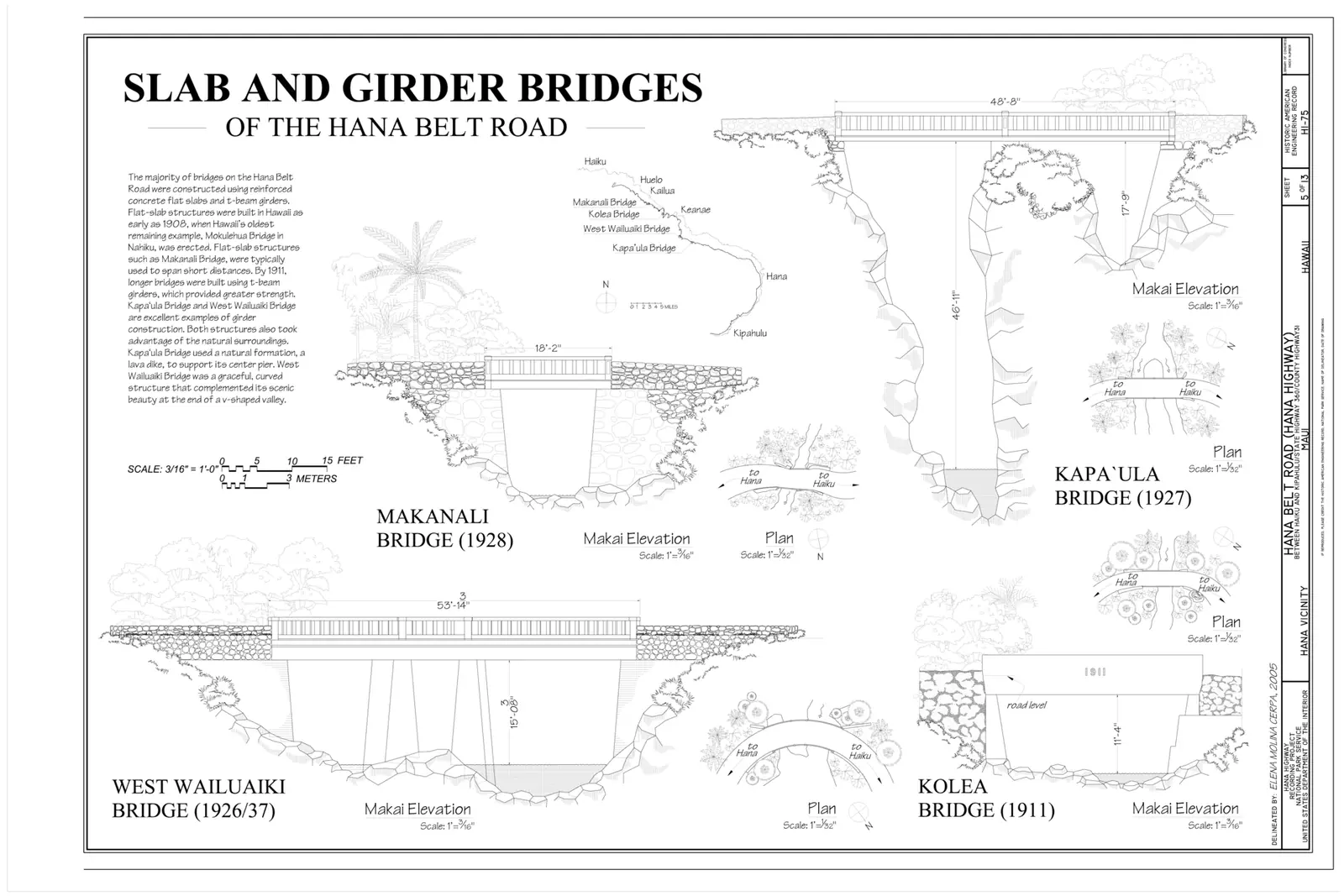
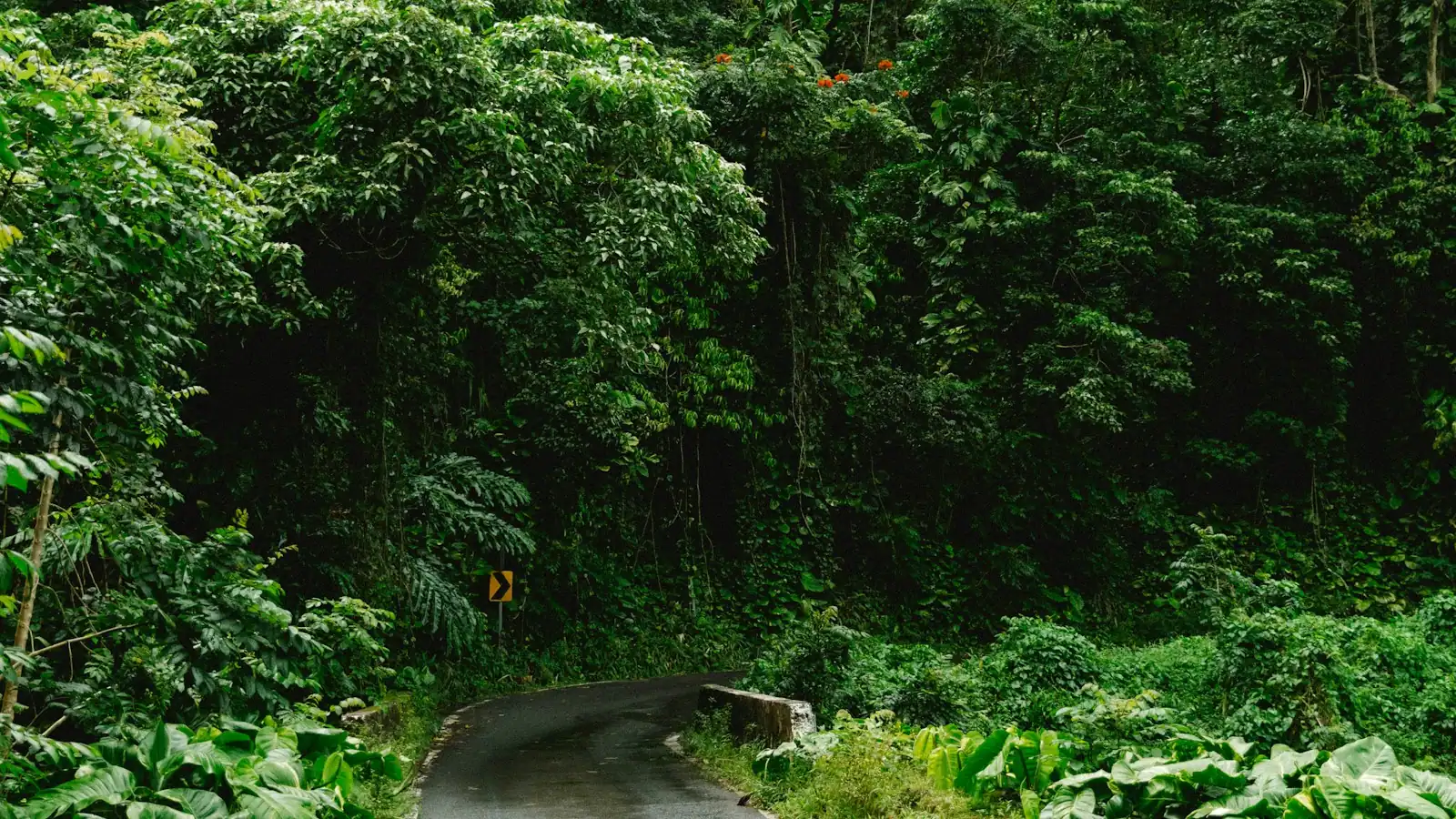
Third, the Hāna Highway is a residential road that happens to be beautiful, and the etiquette there is real and noticed. Roughly 600 curves, 59 bridges with most of them one lane, and people who need to get to work along all of it. Pull over and let local traffic through, take turns at the bridges, and park only in actual pullouts.

Fuel is expensive by mainland standards and the supply thins east of Pāʻia, which is the last reliable petrol station before Hāna. Charge points for electric vehicles exist in the main towns and resorts and are sparse everywhere else. Plan around both.
Our picks

The ones we would book

  • Accessible

    Best option if you would rather not drive

    Why we chose it

    A tour with hotel pickup removes the two hardest drives on Maui at once. The Hāna Highway's 600 curves and the 3am Haleakalā climb are the trips visitors most regret driving themselves, and an operator with a permit and a van solves parking, reservations and the descent in one booking.

    Maui Pineapple Farm Tour in Haliimaile

    Low Supplier Cancellation Rate

    Maui Pineapple Farm Tour in Haliimaile (opens in a new tab)

    AccessibleFree cancellation
    3.1K reviews

    We welcome you to the one and only Maui Pineapple Tour! Situated in the historic town of Hali'imaile, this unique tour offers an insiders…

    1–2 hours

    Prices checked

    from $99.48
  • Best Value

    Cheapest way to see the island without a car

    Why we chose it

    A shared full-day circle tour with pickup costs less than two airport rideshares to West Maui and covers ground the bus network simply does not reach. Worth pairing with a two-day partial car rental rather than a full week, which is the sensible middle path on an island where parking is charged nightly.

  • Small Group

    Best for the road you should not drive yourself

    Why we chose it

    The Hāna Highway rewards a driver who does it weekly: knowing which pullouts are legal, which bridges have sight lines, and when to yield to local traffic. A small-group van also carries the Waiʻānapanapa reservation, which is the part most self-drivers discover they needed at the gate.

  • Best Private Tour

    When a private driver beats a rental car

    Why we chose it

    From around $800 for a Hāna day, a private driver stops making sense at two and starts making sense at five or six. You get your own departure time, stops chosen for your group, and nobody in the family spending eleven hours steering through 59 one-lane bridges instead of looking at the coast.

The roads, named, and what each one is like

Honoapiʻilani Highway, Route 30. The only practical road between central Maui and the west side, running around the Pali between Māʻalaea and Lahaina with the channel on one side and cliff on the other. Whales are visible from the pullouts in season, which is why Papawai Point exists. It closes occasionally for rockfall, accidents and brush fire, and when it does West Maui is effectively cut off. The Lahaina bypass takes some through traffic around the town.

Piʻilani Highway, Route 31. The fast road down the south shore behind Kīhei to Wailea and Mākena. Unlit in stretches and worth taking slowly after dark.

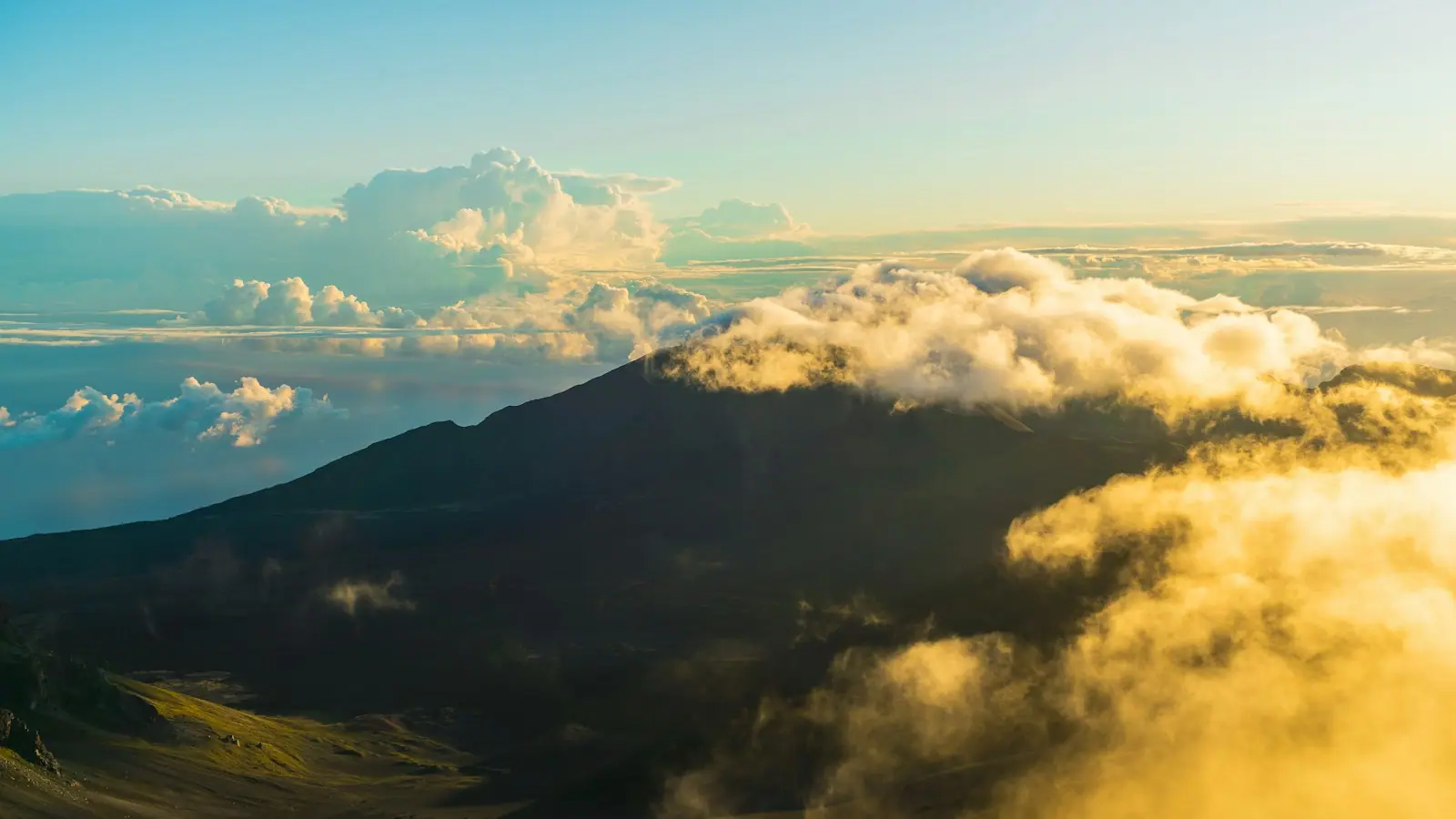
Haleakalā Highway, Routes 37, 377 and 378. The climb from the isthmus to the summit: about ninety minutes, more than thirty switchbacks on the final section, and 10,023 feet of gain. Cyclists, cattle and cloud are all normal on it. Coming down, use a low gear rather than the brakes, which overheat.

Hāna Highway, Route 360. Roughly 64 miles from Kahului with about 600 curves and 59 bridges, most of them one lane. It is not technically difficult and it is relentlessly demanding of attention. Two and a half hours each way without stops.

Kahekili Highway, Route 340. The route around the north of West Maui past Nākālele. Extraordinary, and genuinely one lane with no guardrail in places, with blind corners above a long drop. Most rental contracts exclude it. Two hours of concentration, not a scenic loop.

The southern Piʻilani Highway beyond Kīpahulu. The back road from Hāna around the south flank of Haleakalā to ʻUlupalakua. Surfaces vary, sections are unpaved, it washes out, and most rental agreements prohibit it.

Route 380 and 311 through Kahului. The island's only real traffic. Commute times in and out of Kahului, and the stretch past the airport, back up on weekday mornings and late afternoons.

Renting on Maui, honestly

What it costs

Bands rather than quotes, and rates on Maui move sharply with season and availability.

Book early. Rental availability on Maui has been tight at times, and prices respond hard to scarcity. Six months out for a peak-season trip is not excessive. Off-airport suppliers are sometimes materially cheaper and involve a shuttle.

You do not need a Jeep. Every road you are permitted to drive is paved and two-wheel drive is entirely sufficient, including to the Haleakalā summit and all the way to Kīpahulu. A convertible is a pleasant indulgence and a genuinely poor idea for Hāna in the rain.

Read the excluded-roads clause. The Kahekili Highway around north West Maui and the unpaved southern Piʻilani beyond Kīpahulu are commonly prohibited, and driving them voids cover. Recovery from either is expensive and slow.

Fuel. Petrol on Maui runs well above mainland averages. Fill up in Kahului or Kīhei rather than in the resort towns, and always fill in Pāʻia before the Hāna Highway. Hāna has fuel, at limited hours and a premium.

Electric vehicles. Charging exists in Kahului, Kīhei, Wailea and the Kāʻanapali resorts and is sparse elsewhere. The climb to Haleakalā's summit eats range and gives a useful amount back on the descent through regeneration, but do not attempt it on a marginal charge.

Resort parking. Wailea and Kāʻanapali hotels commonly charge for parking nightly, on top of the room. Check before booking a week; it adds up to a meaningful number.

Car seats. Hawaiʻi requires appropriate restraints for young children. Rental agencies supply them at a daily rate that will exceed the cost of the seat within a fortnight, so families on longer trips often bring their own.

Maui Bus: what it covers and what it does not

Maui County runs a fixed-route bus network that is inexpensive, reliable within its coverage, and built for residents rather than visitors. Fares and routes change, so confirm the current network before relying on it.

Fares. Around $2 per boarding, with a day pass at roughly $4 and a monthly pass near $45. There are no transfers, so a journey requiring two buses costs two fares, which means the day pass pays for itself on the second boarding.

Airport service. Two routes stop at Kahului Airport, and neither runs to a resort area directly. You take one of them to the Kahului Transit Center and change there for the Kīhei or the West Maui route. The airport routes run roughly every ninety minutes and limit passengers to one medium suitcase, duffel or carry-on, which rules them out for a family with a week's luggage.

Where it goes. The useful corridors are Kahului to Wailuku, Kahului to Kīhei and down the south shore, Kahului to Lahaina and up to Kāʻanapali, plus Upcountry and Haʻikū routes. Within those corridors it is a genuine option, particularly for a day in Wailuku or a trip along the Kīhei strip.

Where it does not go. Haleakalā. Hāna. Honolua Bay. Waiheʻe Ridge. ʻĪao Valley. The Kīhei boat ramp at a 6:30am departure time. Most beaches worth driving to. Kapalua Bay. The Upcountry farms.

Practical advice. If you are car-free, use the bus for town days and book activities with hotel pickup for everything else. If you are considering a partial car rental, the bus makes a two-or-three-day rental viable in a way it would not otherwise be.

Maui also has a county paratransit service for eligible riders with disabilities, which requires registration in advance. Check the county's current requirements well before travelling.

Airports, shuttles and getting from the plane to the room

Kahului Airport, OGG, is the only meaningful gateway. It handles mainland direct flights, inter-island service and the rental car centre, and it sits on the isthmus roughly in the middle of the island. Expect thirty minutes to Kīhei, thirty-five to Wailea, fifty to seventy to Kāʻanapali, and two and a half hours to Hāna.

Kapalua Airport, JHM, at the north end of West Maui, takes small inter-island aircraft only and is useful mainly if you are staying in Kapalua or Kāʻanapali and connecting through Honolulu.

Hāna Airport, HNM, is a single strip with very limited service. Flying in and renting a car in Hāna is a real, if niche, way to do the east side without the drive.

Rental car centre. Off-site from the terminal, reached by shuttle. Queues at peak arrival times are real; if you land on a Saturday afternoon alongside three mainland widebodies, budget an hour.

Shared shuttles run from OGG to the main resort areas at a per-person rate and are a reasonable option for two people going to Wailea or Kāʻanapali. They are less economical for four, at which point a rideshare or taxi is comparable.

Rideshare has a designated pickup area at OGG. Supply is generally fine on arrival and thinner late at night.

One arrival-day tip that saves a whole evening. Buy groceries in Kahului before driving to your base. The supermarkets on the isthmus are cheaper and better stocked than anything in the resort towns, and it means you are not driving out again at nine at night. If you are heading west, do it before you get on the Honoapiʻilani Highway.

Parking, fees and the small lots that fill first

What it costs

Confirm current rates; these move. Parking is the main hidden cost of a Maui week.

  • Resort parking. Wailea and Kāʻanapali hotels commonly charge nightly for self-parking, with valet more again. Over a week this is a real number and is often not quoted in the room rate.
  • Free public beach lots. Hawaiʻi requires shoreline access and public parking at developments, so there are free public stalls at Wailea, Ulua, Mokapu, Polo, Kāʻanapali and Kapalua. They are small. Ulua, Mokapu and Kapalua Bay fill by about 8:30am, and Kāʻanapali's access lots by mid-morning.
  • Kīhei. Kamaʻole I, II and III and Kalama Park all have free lots of a decent size, which is one of several reasons Kīhei suits families.
  • Māʻalaea Harbor. A paid lot, and it fills for the 7am boat departures. Arrive earlier than the check-in time suggests.
  • Haleakalā National Park. $30 per private vehicle for three days, covering the summit and Kīpahulu. The summit car park at the Puʻu ʻUlaʻula overlook is small and full well before sunrise; rangers direct overflow to the visitor centre lot below.
  • ʻĪao Valley State Monument. Roughly $10 per vehicle plus about $5 per non-resident, reservation required in advance.
  • Waiʻānapanapa State Park. Around $10 per vehicle plus about $5 per non-resident, with a timed entry slot required, released 30 days out.
  • Hāna Highway private stops. Several popular waterfall and farm stops on private land charge for parking. Carry small notes.

The single best parking strategy on Maui is to be early. Almost every capacity problem on this island disappears before nine in the morning.

Accessibility, beach wheelchairs and step-free options

Local tips

Maui handles mobility better than many island destinations, but the good options need arranging in advance.

Beach wheelchairs. Maui County and several resorts operate beach wheelchair programmes at the main parks, and some independent equipment hire firms deliver mobility gear to accommodation for the week. Numbers are limited at every site, so reserve well ahead rather than turning up. Confirm the current arrangements with the county or your hotel before travelling.

Haleakalā summit. The road is paved to the top and the visitor centres have accessible parking and restrooms. The Puʻu ʻUlaʻula overlook at the very summit involves steps and a short climb; the view from the Haleakalā Visitor Center below it is nearly as good and considerably more accessible. The altitude is the bigger consideration: 10,023 feet affects anyone with cardiac or respiratory conditions, and the park says so explicitly.

Boat trips. Māʻalaea Harbor has proper docks and several operators can accommodate limited mobility with notice. The Kīhei boat ramp loadings involve wading from the sand and are not suitable. Ask specifically when booking rather than relying on a general accessibility statement.

Beaches with the easiest access. Kamaʻole I, II and III in Kīhei, Kalama Park, Kāʻanapali via the paved beach walk, and the Wailea coastal path, which runs about a mile and a half past five beaches on a flat paved surface with resort access points.

Step-free attractions. Maui Ocean Center is fully accessible. Maui Tropical Plantation's tram is boardable. The lower section of ʻĪao Valley is paved, though the main viewpoint involves a long flight of steps.

Paratransit. Maui County operates a door-to-door service for eligible riders, which requires registration and advance booking. Start that process well before you fly.

Book it

Everything else we track

Booking through these earns us a commission from Viator. You pay the same, and payment did not decide what is listed.

  • Maui: Lahaina ATV Adventure

    Low Supplier Cancellation Rate

    Maui: Lahaina ATV Adventure (opens in a new tab)

    Free cancellation
    1.8K reviews

    You’ll have the chance to drive, or simply be a passenger in one of today’s most advanced 4 seater off-road vehicles, the Canam sport max…

    2 hours

    Prices checked

    from $202.55
  • Maui Atlantis Submarine Adventure

    Excellent Quality

    Maui Atlantis Submarine Adventure (opens in a new tab)

    Free cancellation
    815 reviews

    All riders must be 36 inches or taller to participate/ride submarine. Dive 100 feet below the surface and experience Maui’s marine…

    2 hours

    Prices checked

    from $144.36Usually $160.41

Do you actually need a car? The case either way

How they compare

Rent a carGo without
Works ifYou want Haleakalā, Hāna, Upcountry, Honolua, Waiheʻe Ridge or any trailheadYou are staying one week in Kāʻanapali or Wailea and booking tours with pickup
Daily costRental plus fuel plus resort parking, often charged nightlyBus fares, occasional rideshare, tour pickup included
The catchParking at beaches and resorts, and traffic through Kahului at commute timesTwo routes serve the airport roughly every 90 minutes, no transfers, one bag
Deal-breakerNoneNo bus to the summit, Hāna, the harbours, ʻĪao or most beaches worth driving to

Rent one if your itinerary includes any of the island's headline experiences on your own schedule, or if you are travelling with children and need groceries, car seats and the ability to leave a beach when somebody melts down.

You can skip it if you are staying inside one resort area for a short trip, you are booking every activity with hotel pickup, and you are content to eat where you are staying. Some visitors rent a car for two or three days of a week rather than the whole stay, which is the sensible middle path and usually cheaper than it sounds.

Rideshare works around Kahului, Kīhei, Wailea and the Kāʻanapali corridor and thins out noticeably late at night, Upcountry and anywhere east of Pāʻia. A one-way from the airport to West Maui is expensive enough that two of them approach a day's car rental. Do not plan a Hāna day around it.

How to drive here without being the problem

Before you book

Maui's driving culture is calmer than most of the mainland and its patience with visitors is finite. These are the things residents actually notice.

Let people pass. If there is a line behind you, pull into the next safe pullout and let it through. On the Hāna Highway this is the single most important rule, because people live along it and are trying to get to work, to school and to the store.

One-lane bridges. There are 59 bridges on the road to Hāna and most are single lane. The convention is that a group of five or six cars crosses, then yields to the other side. Watch what the car in front does, and do not sit on the bridge waiting for a private invitation.

Do not park in driveways. Every year residents along the Hāna coast deal with cars blocking their access and people walking across their land to reach a waterfall. Use marked pullouts only. If there is no pullout, the stop is not for you.

Do not honk. Horn use is rare here and reads as aggression rather than information. A shaka out of the window when someone lets you in is the local currency.

Lahaina. Do not drive through residential streets to look, do not photograph or film the burn zone, and do not fly a drone over it. About a hundred people died in the 2023 fire, and residents have asked repeatedly. Front Street reopened to traffic between Pāpalaua and Shaw Streets in August 2026, and several side streets remain closed for harbour work and construction. Stay behind every barrier.

Speed. Limits here are low and enforced, and the roads are not built for making up time. The Haleakalā descent in particular punishes hurry: use a low gear, and if your brakes start to smell, pull over and let them cool.

Night driving. Much of Maui outside the towns is unlit, including the upper Piʻilani Highway and the Haleakalā road. Deer and cattle are a real hazard Upcountry.

On the ground

Where to go

Every place below has its own page — hours, parking, what it costs and what to expect when you get there.

  • Bare volcanic cinder cones on a high crater floor under early morning light

    Park

    Haleakalā National Park

    A 10,023-foot volcano with a reservation system at the gate and a second district four hours away on the far side of the island.

    3–8 hoursAround $30 per private vehicle, valid three days and covering both districts. Sunrise entry needs a separate $1 reservation.

  • A narrow road curving through dense green rainforest

    Landmark

    The Road to Hāna

    Free

    Sixty-four miles, 620 curves and 59 bridges — and a road that several hundred people use to get to work.

    8–12 hoursThe road itself is free. Several stops along it charge for parking or entry.

  • A long curve of pale sand meeting clear turquoise water under a bright sky, with low green headland beyond

    Beach

    Kāʻanapali Beach

    Free

    Three miles of public sand, a lava headland called Puʻu Kekaʻa, and free beach parking the resorts are legally required to keep.

    2–7 hoursFree. Public beach access and the mandated resort stalls cost nothing; Whalers Village charges for parking with validation.

  • Dark volcanic sand and black rock at the edge of a small ocean cove

    Park

    Waiʻānapanapa State Park

    Black basalt sand, freshwater caves and an ancient coastal trail, three miles before Hāna — and you cannot get in without booking ahead.

    1–2.5 hoursNon-residents pay per-vehicle parking plus a per-person entry fee, both by advance reservation. Hawaiʻi residents with state ID are free.

  • Low wooden storefronts with painted signs along a small-town main street

    Neighbourhood

    Pāʻia Town

    Free

    A two-street sugar town that surfers took over, and the last place to buy petrol, coffee and a picnic before the Road to Hāna.

    1–3 hoursFree to visit. You pay for what you buy, and parking is free but scarce.

  • A wide golden beach with calm water and palm trees under bright morning sun

    Neighbourhood

    Kīhei

    Free

    Six miles of beach, three lifeguarded parks and the best free whale watching on Maui, plus a wind that arrives every afternoon.

    2–8 hoursFree. All the beach parks are public with free parking.

  • A sharp green ridge rising steeply out of a densely vegetated valley

    Historic site

    ʻĪao Valley State Monument

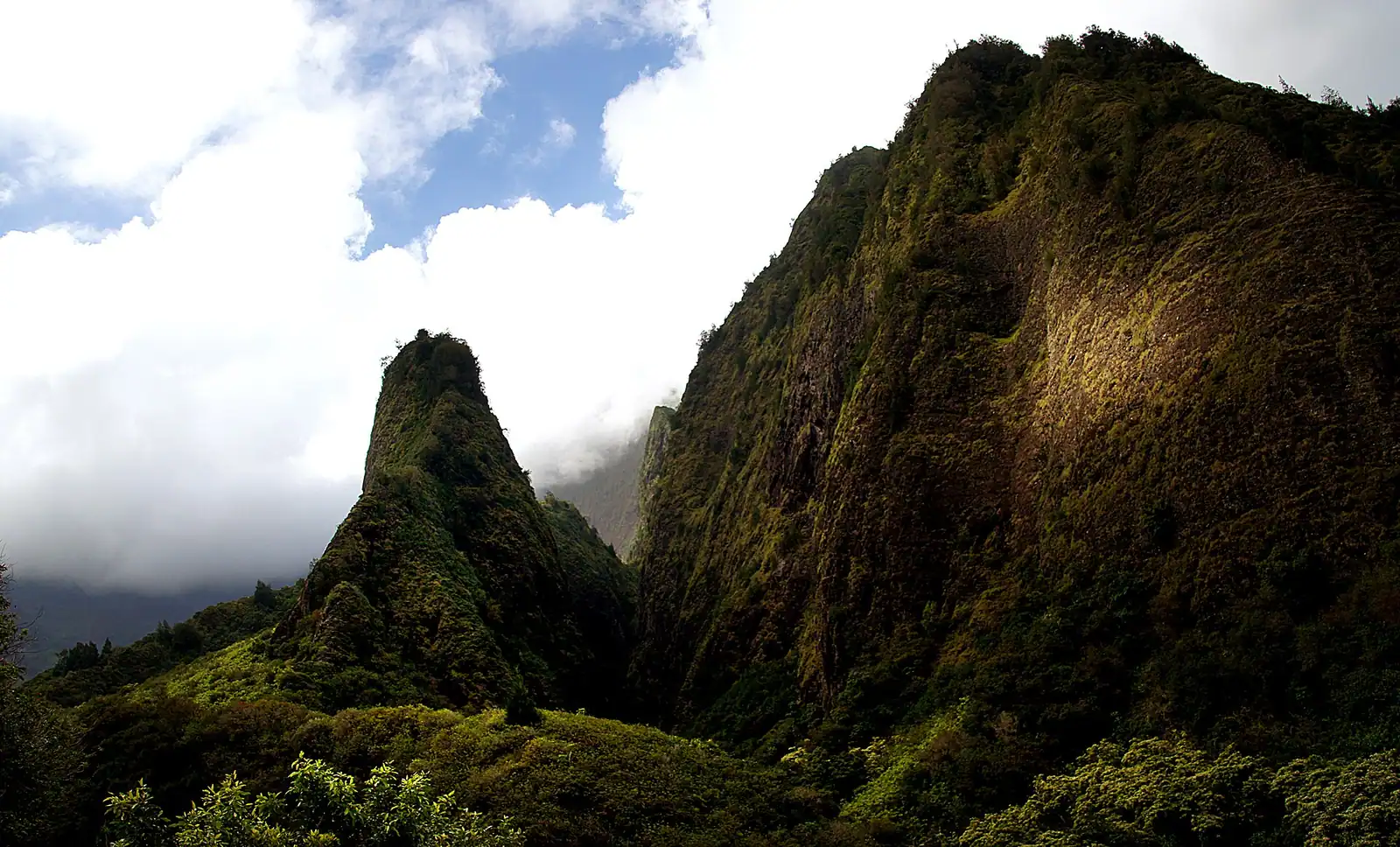
    A green spire 1,200 feet above the valley floor, in a place Hawaiians remember as a battlefield rather than a viewpoint.

    0.5–1.5 hoursNon-residents pay a per-vehicle parking fee plus a per-person entry fee, both booked in advance. Hawaiʻi residents with state ID are free.

  • Low two-storey storefronts along a quiet main street with shopfront awnings

    Neighbourhood

    Wailuku Town

    Free

    Maui's county seat — antique shops, an 1833 mission house and a 1928 theatre, three miles below the mouth of ʻĪao Valley.

    1.5–4 hoursFree to visit the town. Museum admission and theatre tickets are charged separately.

  • A plume of seawater bursting upward from a hole in dark coastal rock

    Water feature

    Nākālele Blowhole

    Free

    A lava vent on Maui's northernmost point that fires seawater skyward — and a place where standing in the wrong spot has killed people.

    0.5–1.5 hoursFree. No entrance fee and no parking charge.

Straight answers

Questions people actually ask

Do you need a rental car on Maui?

For most itineraries, yes. Maui Bus is cheap and reliable within the Kahului, Wailuku, Kīhei and Kāʻanapali corridors, but there is no service to Haleakalā, Hāna, ʻĪao Valley, Honolua Bay, most trailheads or the harbours at the hour boats leave. The airport routes run roughly every 90 minutes with a one-bag limit. Going car-free works only if you stay in one resort area and book tours with hotel pickup.

How much does Maui Bus cost?

Around $2 per boarding, with a day pass at roughly $4 and a monthly pass near $45. There are no transfers, so a two-bus journey costs two fares and the day pass pays for itself on the second boarding. Two routes serve Kahului Airport and neither goes directly to a resort area; you change at the Kahului Transit Center. Airport routes limit passengers to one medium bag. Confirm current fares before relying on them.

How long does it take to drive across Maui?

From Kahului Airport: about 30 minutes to Kīhei, 35 to Wailea, 50 to 70 to Kāʻanapali depending on traffic, roughly 90 minutes to the Haleakalā summit, and two and a half hours to Hāna without stops. Kīhei to Kāʻanapali is about 45 minutes via the Honoapiʻilani Highway, which is the only road into West Maui and closes occasionally for rockfall, accidents and brush fire.

Which Maui roads are excluded by rental car contracts?

Commonly two. The Kahekili Highway, Route 340, around the north of West Maui past Nākālele, which is genuinely one lane with no guardrail in sections. And the unpaved southern stretch of the Piʻilani Highway beyond Kīpahulu, the back road from Hāna around the south flank of Haleakalā. Driving either usually voids your cover, and recovery on Maui is expensive. Read the agreement rather than assuming.

Do you need a 4WD or a Jeep on Maui?

No. Every road you are permitted to drive under a standard rental agreement is paved, including the full climb to Haleakalā's 10,023 ft summit and the Hāna Highway all the way to Kīpahulu. Two-wheel drive is sufficient everywhere. A convertible is a pleasant indulgence on the south shore and a poor choice for a rainy Hāna day, when you want a roof and good wipers.

How much is parking on Maui?

Free at most public beach lots, because Hawaiʻi requires shoreline access and public parking at developments, and the lots at Wailea, Ulua, Kapalua and Kāʻanapali are free but small and fill by mid-morning. Resort self-parking in Wailea and Kāʻanapali is commonly charged nightly on top of the room. Māʻalaea Harbor is a paid lot. Haleakalā is $30 per vehicle for three days, and the two state parks around $10 per vehicle plus per-person entry.

What are the rules on the Road to Hāna?

It is a residential road, not an attraction, and the etiquette is noticed. Pull over and let local traffic pass. At the one-lane bridges, five or six cars cross and then yield to the other side. Park only in marked pullouts, never in a driveway or on private land. Do not honk. Leave Pāʻia with a full tank, take motion-sickness tablets before the first curve, and start early so you are not driving the curves in the dark.

Is rideshare reliable on Maui?

Within the Kahului, Kīhei, Wailea and Kāʻanapali corridors during the day, generally yes. It thins noticeably late at night, Upcountry and anywhere east of Pāʻia. A one-way from the airport to West Maui is expensive enough that two of them approach a day's car rental. Kahului Airport has a designated rideshare pickup area. Do not plan a Hāna day, a summit sunrise or a 6:30am boat departure around it.

Are there beach wheelchairs on Maui?

Yes. Maui County and several resorts operate beach wheelchair programmes at the main beach parks, and independent hire companies deliver mobility equipment to accommodation. Numbers are limited at every location, so reserve in advance rather than turning up. Confirm current arrangements with the county or your hotel. The flattest accessible shorelines are the Wailea coastal path, the Kāʻanapali beach walk and the Kamaʻole parks in Kīhei.