Skip to content
Menu

Booking through these earns us a commission from Viator. You pay the same, and payment did not decide what is listed.

Search

Park

Waiʻānapanapa State Park

Last updated

Black basalt sand, freshwater caves and an ancient coastal trail, three miles before Hāna — and you cannot get in without booking ahead.

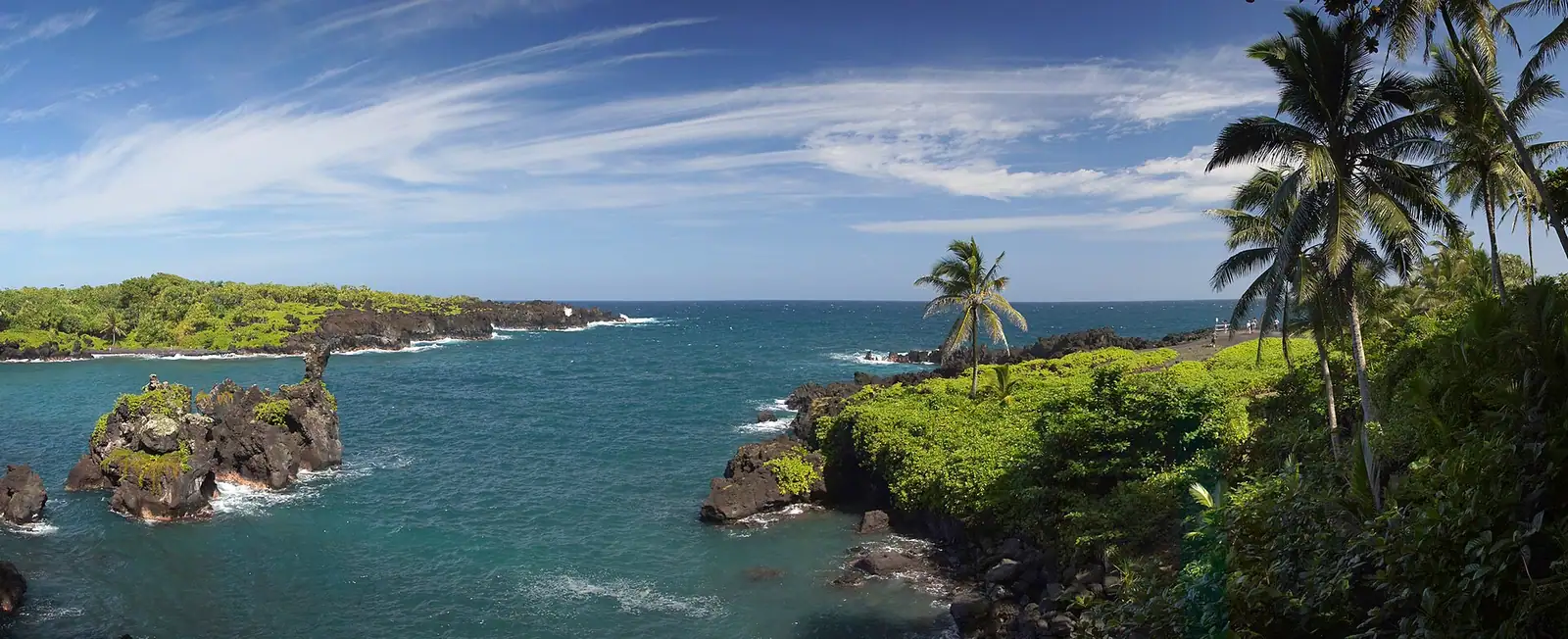
Pāʻiloa Beach is the reason most people come, and it is genuinely unlike anywhere else on the Hāna coast. The sand is not dark brown; it is black, coarse and glassy underfoot, made when lava from Haleakalā ran into the sea here and shattered on contact. It sits in a small cove between two low basalt headlands, backed by hala trees, with a sea arch offshore and a blowhole that fires when the swell is in the right direction. It is small. On a busy slot you will be sharing a beach the size of a tennis court with forty other people.

The park is bigger than the beach, and most visitors never see the rest of it. Waiʻānapanapa means glistening fresh water, and the name refers to the freshwater pools inside the lava tubes just inland of the beach, reached by a short paved path and a set of steps. In tradition these caves are where the chiefess Popoʻalaea hid from her husband Kaʻakea, and was found when he saw the reflection of her feather kāhili in the water. Certain times of year the pools turn red as tiny ʻōpaeʻula shrimp swarm in them. The story and the shrimp have been told together for a very long time.

Running north and south from the beach is Ke Ala Loa o Maui, a surviving stretch of the King's Highway, the coastal route developed under the sixteenth-century chief Piʻilani. Walking it north across the lava towards Pākaulua Point takes you past the arch, blowholes, sea stacks and pandanus groves, and there is almost never anyone on it. Along it and in the dunes are burial sites. Stay on the marked path, do not walk on the dunes, and do not build anything.

The practical headline: since 2021 non-residents have needed an advance timed reservation, and there is no way to buy one at the gate. Reservations release 30 days ahead at midnight Hawaiʻi time, one day at a time, and popular slots go. Book it before you plan anything else about your Hāna day.

Getting there and parking

Turn off the Hāna Highway (Route 360) onto Waiʻānapanapa Road just past mile marker 32, roughly three miles before Hāna town, and follow it down to the coast. From Pāʻia it is about two and a quarter hours without stops, and realistically three to four hours with them. From Kahului allow the same again plus twenty minutes.

The entrance kiosk checks your reservation and ID. Have the booking open on your phone before you arrive, because there is no signal to load it at the gate.

Parking is in a single lot above the beach with a short walk down to the sand and a separate path to the caves. It is sized to the reservation system, so you will have a space if you have a booking and arrive on time.

The state park sits inside a rental-car-friendly stretch of paved highway; no special vehicle is needed. Guided Hāna tours include it and carry their own access.

The reservation, and how the time slots work

All non-resident visitors need an advance reservation at gostateparks.hawaii.gov. There is no same-day purchase, nothing is sold at the entrance, and vehicles without a booking are turned away at the kiosk having just driven three hours.

The rules that catch people:

  • Slots are released 30 days out, one day at a time, at midnight Hawaiʻi time. Mid-morning slots on weekends go first.
  • Arrive within the first 30 minutes of your slot. Turn up an hour late and entry can be refused. On a road where a bridge queue can cost you twenty minutes, build in slack.
  • Parking is charged per time slot — roughly $10 per vehicle — and the non-resident entry fee is about $5 per person on top. Children three and under are free.
  • You can book consecutive slots to stay longer, which is worth doing if you intend to walk the Piʻilani Trail as well as see the beach.
  • Hawaiʻi residents with valid state ID enter free without a reservation.
  • No refunds for weather. It rains here often and hard, and that is not grounds for a refund.
  • Cancellations generally need three days' notice; changes are possible until midnight the day before if space exists.

Commercially guided Hāna tours hold their own permitted access, so if the slots are gone, a tour is the fallback.

The beach is beautiful and the water is not gentle

Pāʻiloa is a pocket beach open to the full north-east swell with no reef in front of it. There is no lifeguard. The shore shelves steeply, the shorebreak lands hard on coarse sand and rock, and rip currents run out of the cove regularly. People are injured here, and drownings have occurred.

What that means in practice. On a calm summer morning with little swell, a careful wade or a short swim close in is reasonable for confident adults. Most other days it is not, and on a big winter swell the water should be looked at rather than entered. Watch it for five minutes before committing. If the waves are breaking directly onto the sand rather than rolling, stay out.

The sand itself is a hazard people underestimate: black basalt absorbs heat and by midday it can be too hot for bare feet. Wear sandals down and carry them.

Two other things. Do not take the sand. It is removed by the bucketload every year and the beach does not replenish quickly, and the state asks visitors plainly not to. And keep back from the blowhole and the wet rock around it — the shelf is slick, the surge is unpredictable, and the ledge you are standing on to get the photo is where the water lands.

Beyond the beach: the lava tubes and the King's Highway

The caves are a five-minute walk from the car park on a paved path, down a flight of steps into a collapsed lava tube holding clear, cold fresh water. The light is low and green and the air is noticeably cooler. Swimming in the pools has been discouraged and at times prohibited — it is a sensitive cultural site and the water quality is not managed — so treat it as somewhere to look rather than get in. The ʻōpaeʻula, the tiny red shrimp that turn the pools red at intervals through the year, are the detail worth waiting a minute in silence for.

The Piʻilani Trail, part of Ke Ala Loa o Maui, runs along the top of the sea cliffs in both directions from the beach. North towards Pākaulua Point is the better walk: black lava underfoot, hala and naupaka, arches and stacks in the water below, and the blowhole. It is rough, uneven and unshaded — sturdy shoes, not flip-flops — and the surface is sharp ʻaʻā in sections. Half an hour out and back gets you clear of everybody.

Along the trail sit burial sites, Ohala Heiau, and old habitation terraces. They are marked where marking is appropriate and unmarked where it is not. Stay on the trail, keep off the dunes and the stone platforms, and take nothing.

The park also has cabins and a campground, booked separately and well in advance. Staying the night is the only way to have the beach at dawn.

Fitting it into the Hāna day

Waiʻānapanapa is at mile marker 32, about three miles short of Hāna town, so it lands naturally in the late morning or early afternoon of an out-and-back Hāna drive. That is also why the 10am–1pm slots sell first.

The contrarian booking is the first slot at 7am. You reach it having left Pāʻia around 5:30, which means driving the first half of the Hāna Highway in early light with almost no traffic, and you get the beach close to empty. The trade-off is skipping the northern stops on the way out and picking them up on the way back, which is a better order anyway — Twin Falls and Hoʻokipa both work well in the afternoon.

The other useful slot is late, around 4pm, on a day you have gone all the way to Kīpahulu for the Pīpīwai Trail. You come back north, drop into the park as the day-trippers are leaving, and get the light on the black sand at its best. Just be honest with yourself about then driving the 620 curves home in the dark.

Budget 60 to 90 minutes for beach plus caves, or two hours if you want the trail as well. A single slot is often not quite enough for all three, which is what the consecutive-slot option is for.
Tours that visit Waiʻānapanapa

Operators run these trips past Waiʻānapanapa, or stop there as part of a longer route. We list what the booking data supports — not everything that mentions the name.

Booking through these earns us a commission from Viator. You pay the same, and payment did not decide what is listed.

Shared departurespriced per seat, best value for one or two

  • Maui: Lahaina ATV Adventure

    Low Supplier Cancellation Rate

    Maui: Lahaina ATV Adventure (opens in a new tab)

    Free cancellation
    1.8K reviews

    You’ll have the chance to drive, or simply be a passenger in one of today’s most advanced 4 seater off-road vehicles, the Canam sport max…

    2 hours

    Prices checked

    from $202.55
  • Maui Atlantis Submarine Adventure

    Excellent Quality

    Maui Atlantis Submarine Adventure (opens in a new tab)

    Free cancellation
    815 reviews

    All riders must be 36 inches or taller to participate/ride submarine. Dive 100 feet below the surface and experience Maui’s marine…

    2 hours

    Prices checked

    from $144.36Usually $160.41

Private and small-group optionsoften cheaper per head for a family or a group of six

Near Waiʻānapanapa

Straight-line distances, so allow more on the road — the island is long and has one main parkway.

  • A sheltered bay with dark sand, a small pier and a steep green headland behind

    Beach

    Hāna Bay

    Free

    The one reliably calm swim on the Hāna coast, under the cinder cone where Queen Kaʻahumanu was born in 1768.

    1–2.5 hoursFree. Parking is free.2.4 mi away

  • A long dry-stacked wall of fitted dark volcanic stone rising in stepped terraces

    Historic site

    Kahanu Garden & Piʻilanihale Heiau

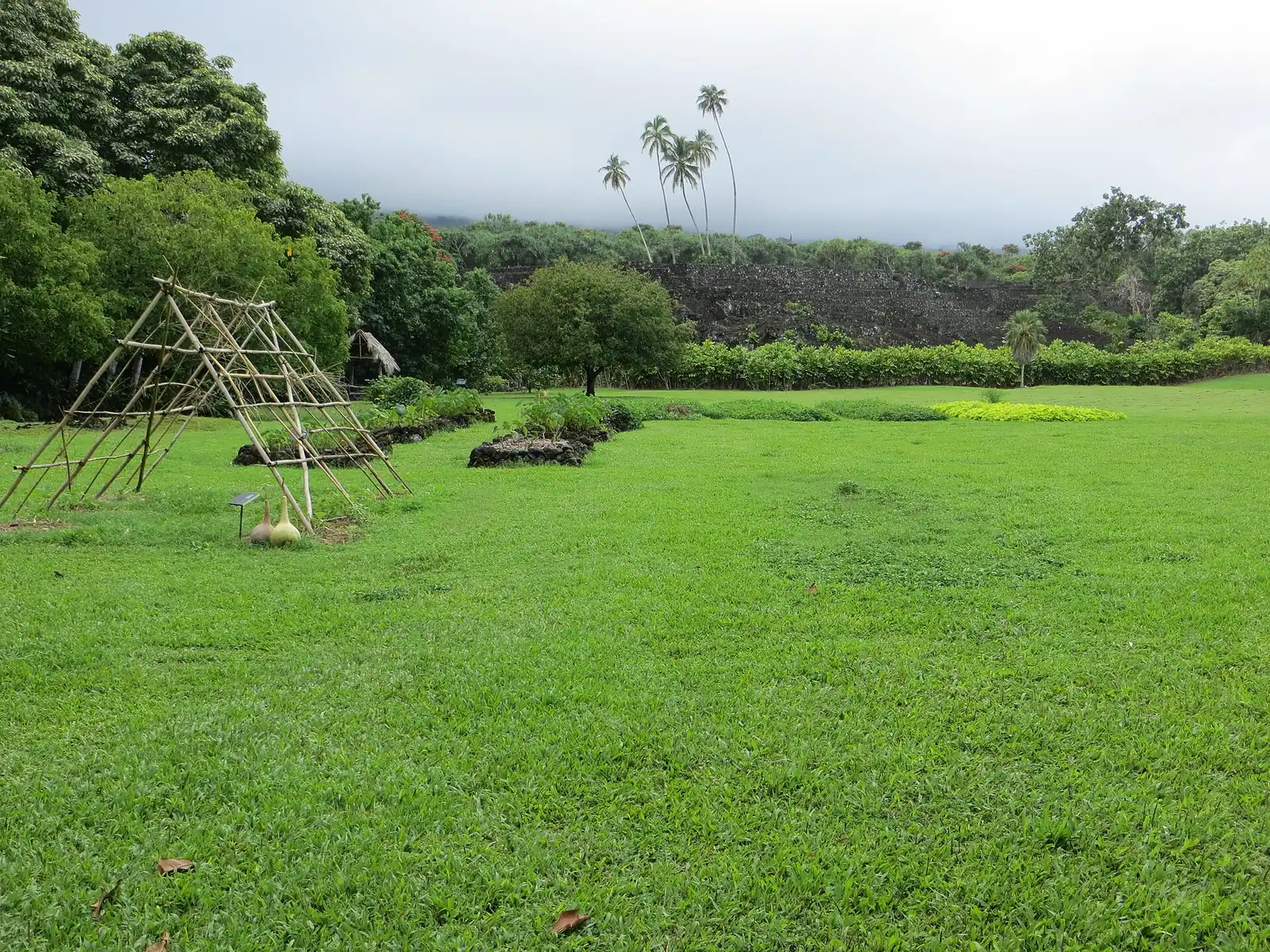
    A dry-stacked stone platform the size of a city block, the largest heiau in Polynesia, standing in a hala forest above the Hāna coast.

    1–2.5 hoursAround $18 per adult for a self-guided visit; roughly $30 for the guided tour. Children 12 and under free.2.4 mi away

  • A narrow road curving through dense green rainforest

    Landmark

    The Road to Hāna

    Free

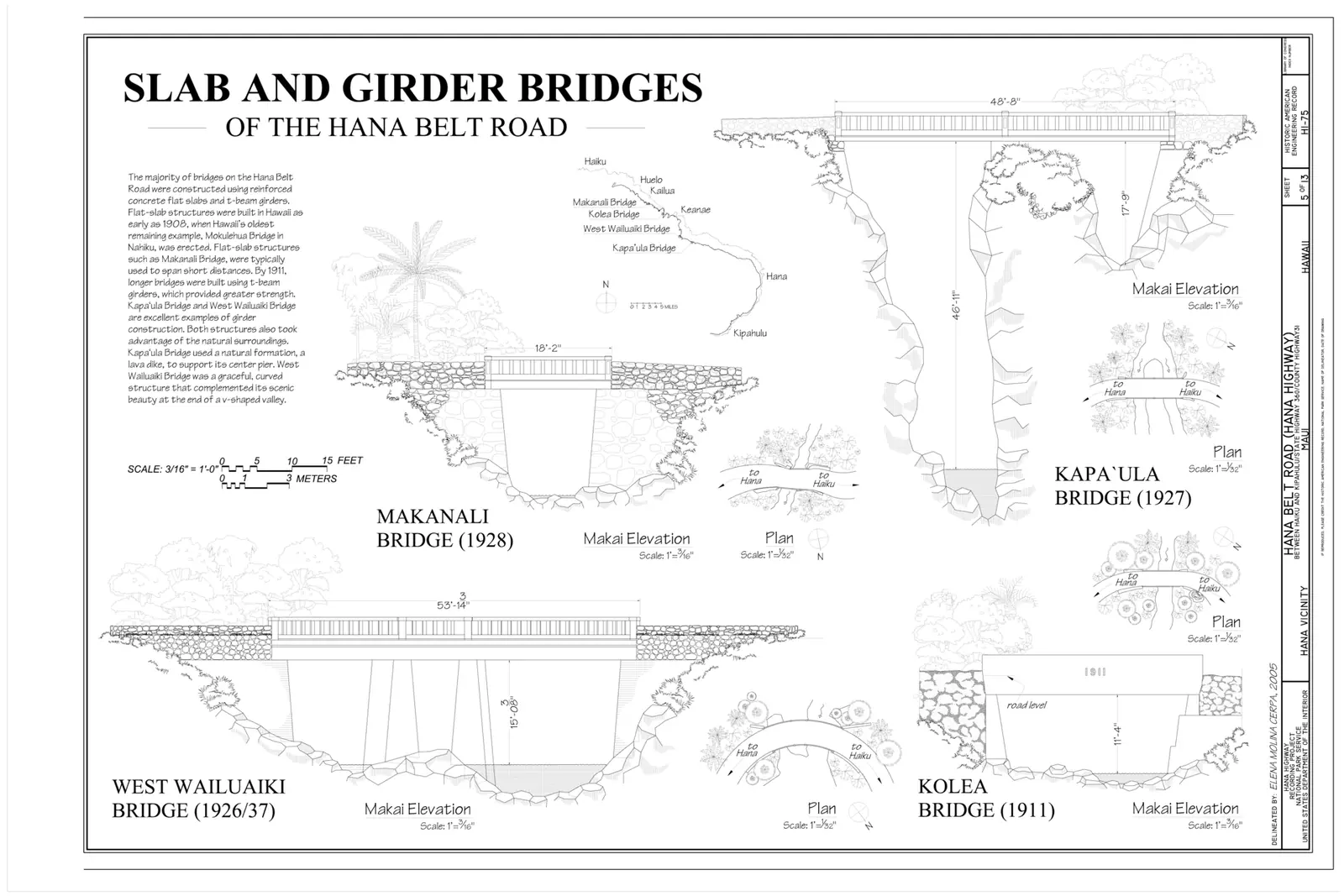
    Sixty-four miles, 620 curves and 59 bridges — and a road that several hundred people use to get to work.

    8–12 hoursThe road itself is free. Several stops along it charge for parking or entry.10.5 mi away

  • A single waterfall falling into a rock pool in a narrow fern-covered gully

    Water feature

    Wailua Falls

    Free

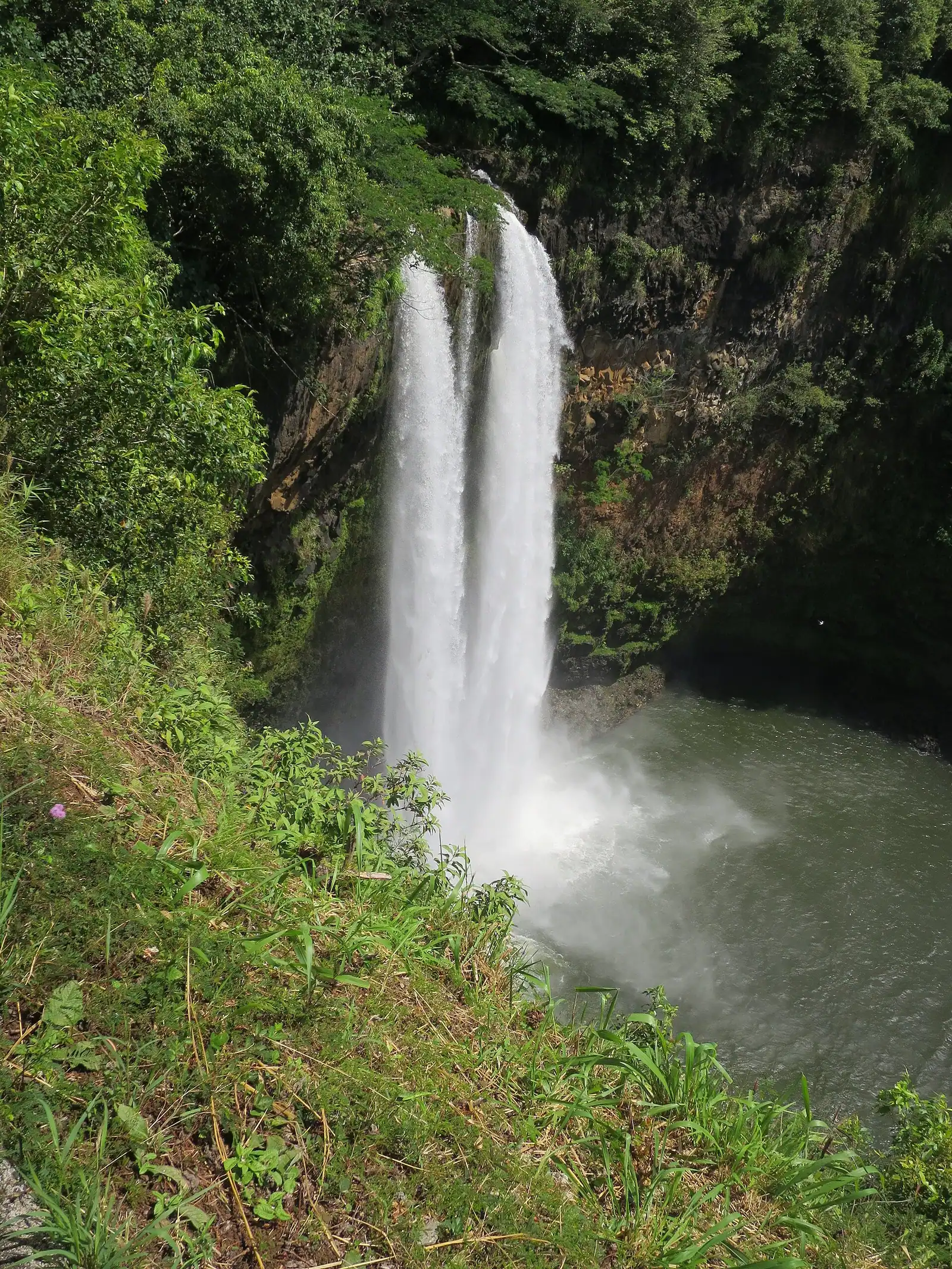
    Eighty feet of water beside the road south of Hāna, and the only serious Maui waterfall you can see without leaving the car.

    10–40 minutesFree. No entry fee, no reservation and no parking charge.5.6 mi away

Waiʻānapanapa: common questions

Do you need a reservation for Waiʻānapanapa State Park?

Yes, if you are not a Hawaiʻi resident. Entry and parking are booked in advance at gostateparks.hawaii.gov for a specific time slot. Reservations release 30 days ahead, one day at a time, at midnight Hawaiʻi time. Nothing is sold at the gate and there are no same-day bookings, so visitors without one are turned away after a three-hour drive. Arrive within the first 30 minutes of your slot or entry can be refused.

Can you swim at the black sand beach at Waiʻānapanapa?

Sometimes, and carefully. Pāʻiloa is a small unprotected cove with no lifeguard, a steep shore entry, a hard shorebreak and rip currents that run out of the bay. On a calm summer morning a confident swimmer can get in close to shore. On most winter days, and any day with real swell, the honest answer is no. Watch the water for five minutes first, and if the waves are slamming onto the sand rather than rolling, stay out.

How long do you need at Waiʻānapanapa?

Sixty to ninety minutes covers the beach and the lava tube caves at a relaxed pace. Add another thirty to forty-five minutes if you want to walk the Piʻilani Trail north along the sea cliffs towards the arch and blowhole, which is the part almost nobody does and the part you will have to yourself. A single time slot can be tight for all three, so consider booking two consecutive ones.

Why is the sand black at Waiʻānapanapa?

Because it is shattered basalt rather than ground-up coral or shell. Lava from Haleakalā reached the sea in the Hāna district and the molten rock fractured explosively on contact with cold water, producing coarse black fragments that the surf has since worked into sand. It is much coarser underfoot than pale sand, it holds heat and can be too hot for bare feet by midday, and it does not replenish quickly — which is why the state asks visitors not to take any.

What else is there to see at Waiʻānapanapa besides the beach?

The freshwater lava tube caves inland of the beach, tied to the story of the chiefess Popoʻalaea and periodically turned red by swarms of tiny ʻōpaeʻula shrimp. The Piʻilani Trail, a surviving stretch of the ancient King's Highway, running along the cliffs past a sea arch, blowholes and stacks. Ohala Heiau and old habitation terraces. And burial sites in the dunes, which is why staying on the marked paths matters here more than at a normal beach park.