Skip to content
Menu

Booking through these earns us a commission from Viator. You pay the same, and payment did not decide what is listed.

Search

Things to Do

Maui with Kids

Last updated

Family activities on Maui by age band: which beaches have lifeguards, which boat trips suit small children, and why Haleakalā sunrise is not a kids' day.

Children playing in shallow calm water on a gently shelving south Maui beach with palms and a lifeguard tower behind

Maui is an excellent family island with two conspicuous exceptions, and it saves a lot of disappointment to name them first. Sunrise at Haleakalā means a 2am or 3am pickup, an hour and a half of switchbacks, and standing at 10,023 feet in near-freezing wind with roughly a third less oxygen than at sea level. The Road to Hāna is a 10 to 12 hour day on about 600 curves and 59 one-lane bridges. Both are extraordinary. Neither is a day with a five-year-old, and every family that tries anyway learns the same lesson in the same car park.

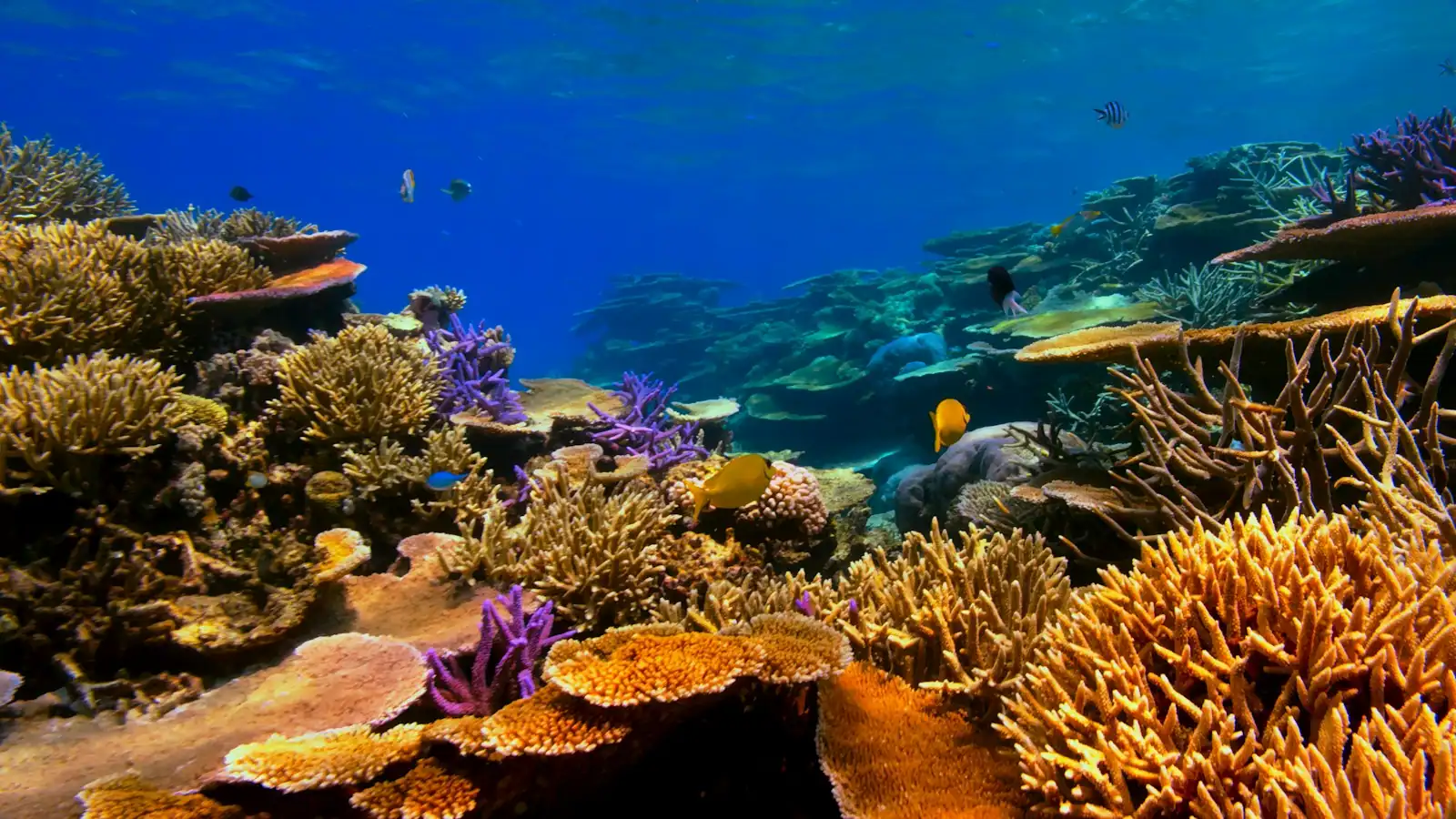
What Maui does have for children is better than almost anywhere else in the country. The south shore between Kīhei and Wailea is a run of gently shelving, west-facing beaches with lifeguards, restrooms, showers and grass, sheltered from the trade winds by the bulk of Haleakalā behind them. The water sits between about 74 and 80 degrees all year. The snorkelling at Ulua and Kapalua Bay is shallow enough that a seven-year-old can stand up and take the mask off when it gets overwhelming, which is the actual test of a first snorkel. And Maui Ocean Center at Māʻalaea is a real indoor half-day rather than a gift shop with fish in it.

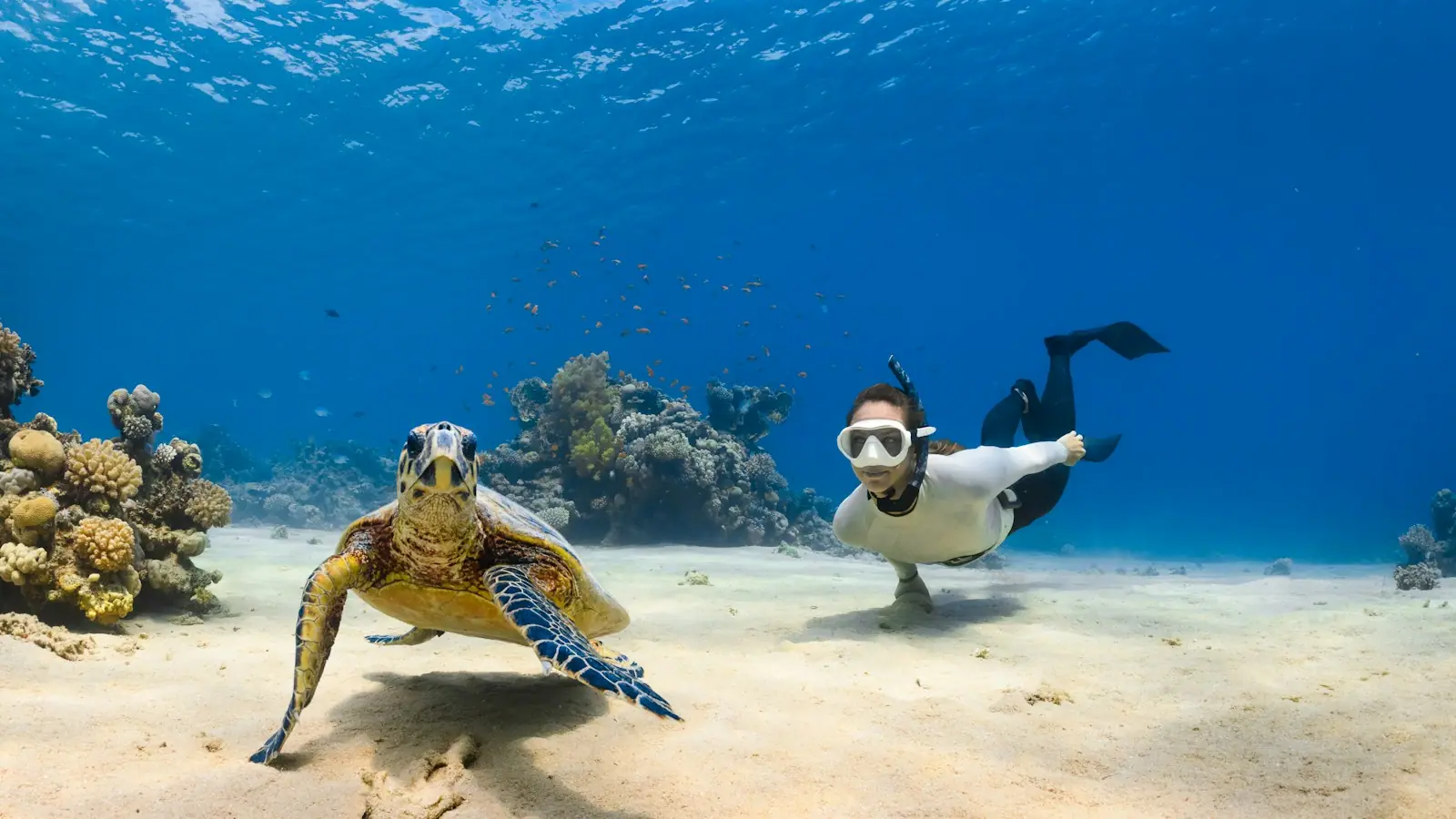
The other thing in Maui's favour is that the island's wildlife performs on a schedule children can understand. Green sea turtles haul out on the east end of Hoʻokipa Beach most afternoons and sit there being enormous, and volunteers rope off a respectful distance and explain why. Between December and April the humpbacks are close enough to the shore that you can watch them breaching from a car park at Papawai Point without paying anybody. There are few destinations where the free wildlife outperforms the ticketed version this consistently.

Where it gets expensive is the same place it gets expensive for everyone. Maui's median bookable activity sits a little over $200 a person, and many operators price children only modestly below adults because the fuel and the crew cost the same. A family of four on a Molokini catamaran is a $500 to $700 morning. That is worth knowing before you build a week around boat trips rather than around beaches, and it is why the free list matters more here than on a cheaper island.

Three practical constraints shape everything below. Maui County requires mineral-only sunscreen, zinc oxide or titanium dioxide, and with children that is a packing decision rather than a shopping one. The time difference is a genuine five or six hours from the East Coast, which means small children will wake at 4am for the first three days and fall asleep in restaurants for the first five; plan early dinners and lean into it. And the sun at 20 degrees north is considerably stronger than it feels in the trade wind, which catches out families from temperate places every week of the year.

Our picks

The ones we would book

  • Best for Families

    Best boat trip with children aboard

    Why we chose it

    A mid-morning catamaran snorkel with shade over most of the deck, a real restroom, a swim step rather than a ladder and crew carrying flotation vests and boogie boards. The large boats board from the dock at Māʻalaea instead of wading off the sand at the Kīhei ramp, which matters enormously with a four-year-old and a bag.

    Maui Pineapple Farm Tour in Haliimaile

    Low Supplier Cancellation Rate

    Maui Pineapple Farm Tour in Haliimaile (opens in a new tab)

    Best for FamiliesFree cancellation
    3.1K reviews

    We welcome you to the one and only Maui Pineapple Tour! Situated in the historic town of Hali'imaile, this unique tour offers an insiders…

    1–2 hours

    Prices checked

    from $99.48
  • Best Value

    Cheapest two hours that children remember

    Why we chose it

    A whale watch between December and April, $50 to $120 a head against an island median around $203. Two hours is exactly the length a six-year-old can sustain on a boat, and the ʻAuʻau Channel holds the densest humpback breeding population in the country, so the sighting does not ride on the operator's skill.

    Akialoa Mā’alaea Sunset Sail

    Low Last Minute Supplier Cancellation Rate

    Akialoa Mā’alaea Sunset Sail (opens in a new tab)

    Best ValueFree cancellationInstant confirmation
    37 reviews

    Witness the stunning sunsets of Maui from the comfort of a luxury sailing catamaran. The Akialoa Sunset Sail offers a two-hour journey…

    2 hours

    Prices checked

    from $108.11
  • Best for Beginners

    Best first snorkel for a nervous swimmer

    Why we chose it

    A guided coastal snorkel from the Kīhei or Wailea side, in water shallow enough to stand up in when the mask floods. Guides fit the gear properly, which is the actual reason first snorkels fail, and the sheltered south shore stays calm long after the crater has chopped up. Far better than Molokini as a first attempt.

    Spacious beautiful yacht with plenty of space for everyone to relax

    Involves Animals

    Maui: Molokini and Turtles Luxury Yacht Snorkel (opens in a new tab)

    Best for BeginnersFree cancellationLikely to sell out
    629 reviews

    We are a family-owned Maui company with over 40 years of experience on Hawaiian waters. Our expert Captains and crew bring decades of…

    5 hours

    Prices checked

    from $318
  • Small Group

    Best way to do Hāna with a car-sick child

    Why we chose it

    A small-group van hands 600 curves and 59 one-lane bridges to a driver who does them weekly, and puts both parents in seats where they can look out of the window. Good operators carry the Waiʻānapanapa reservation, stop at real pullouts rather than residents' driveways, and turn back before anyone melts down.

  • Editor's Pick

    The afternoon that costs nothing

    Why we chose it

    Hoʻokipa Beach Park from mid-afternoon: green sea turtles hauling out on the east end with volunteers explaining the 10-foot rule, and windsurfers directly below the lookout on any trade-wind day. Free, no booking, and consistently the thing children describe first when they get home.

Which beach to actually drive to

The south shore is the family coast, and the reason is geography rather than marketing. Haleakalā's western flank shelters Kīhei and Wailea from the trade winds, so the water is calmer there than anywhere else on the island for most of the year.

Kamaʻole Beach Park I, II and III in Kīhei are the workhorses: lifeguards, restrooms, outdoor showers, grass for a picnic and a gentle shelf. Kamaʻole III has the playground and the most shade, which decides it for most people with toddlers. Kalama Park further north has a playground, ball fields and a skate park, and is the place to burn off a jet-lagged 6am.

Ulua Beach in Wailea is the best easy snorkel on the island for a nervous first-timer, with a rocky point at the north end and sand to stand on the whole way out. The lot is small and full by about 8:30am. Keawakapu is the long soft-sand swim and the sunset beach, with showers at both ends.

On the west side, Kapalua Bay is a protected crescent with a reef on both arms, restrooms and showers, and is the single best place on Maui to put a mask on a child for the first time. The car park is tiny. Nāpili Bay next door is calmer still in summer and has turtles, but no facilities and only street parking. Kāʻanapali Beach has everything and fills by mid-morning; the beach walk along it is flat, paved and stroller-friendly for about a mile and a half each way.

On the north shore, Baldwin Beach Park near Pāʻia has a sheltered cove at the western end that everyone calls Baby Beach, walled off by a reef shelf, with lifeguards and restrooms. The main stretch of Baldwin has a strong shorebreak and is not for small children.

And the one to admire rather than swim at: Mākena Big Beach. The shorebreak dumps straight onto a steep sand face and puts fit adults in hospital every year. It is a wonderful place to sit and a terrible place to let a child play in the wash.

Boats, snorkels and the free wildlife

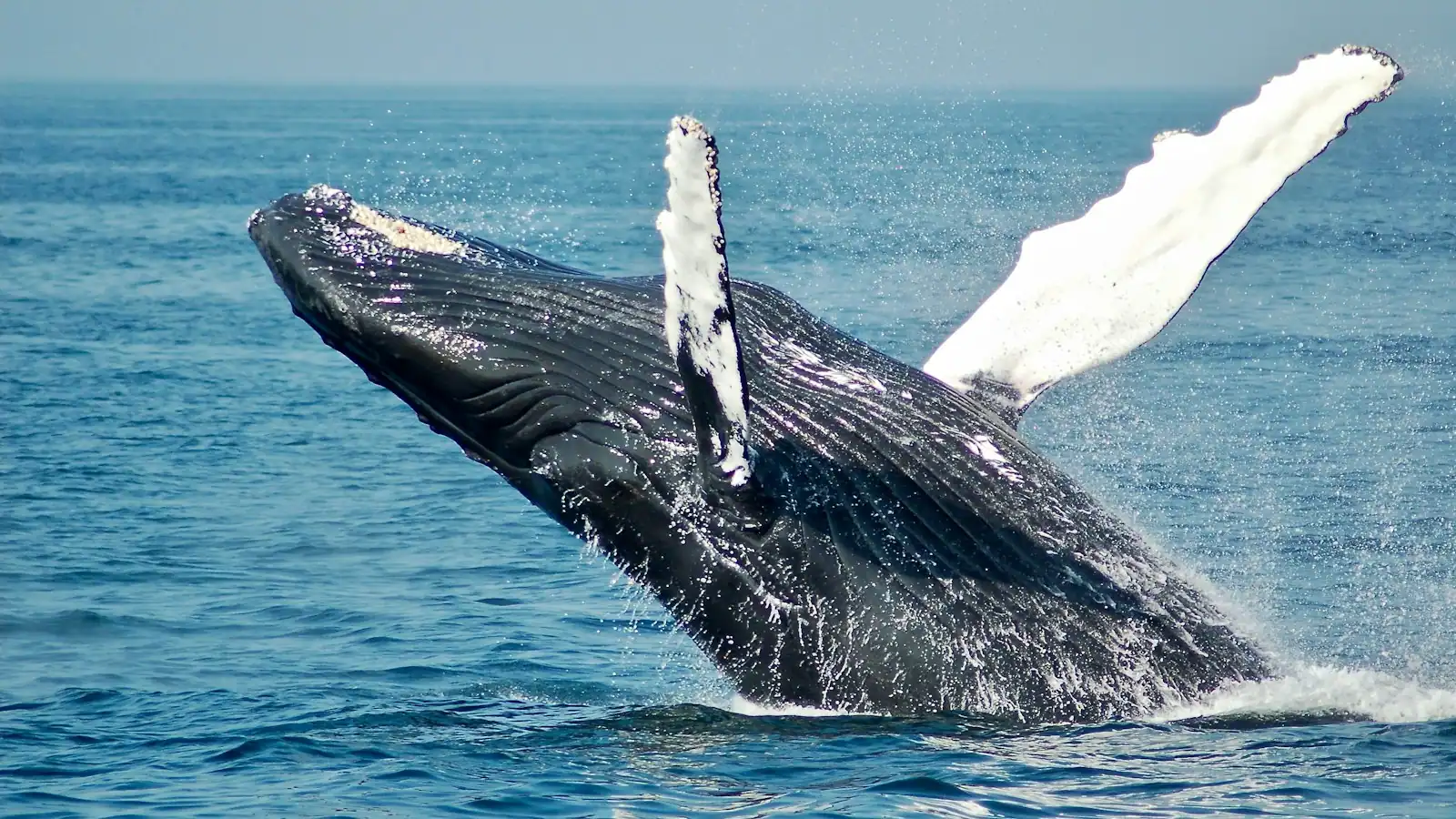
The best-value family morning on Maui between December and April is a two-hour whale watch, usually $50 to $120 a head against an island median closer to $203. Humpbacks come to the shallow ʻAuʻau Channel between Maui, Lānaʻi, Molokaʻi and Kahoʻolawe to breed and calve, and it is the densest concentration in the United States. Two hours is also about the limit of a six-year-old's patience on a boat, which makes the format and the attention span line up neatly for once. Federal law keeps boats 100 yards off, so bring binoculars if you have them.

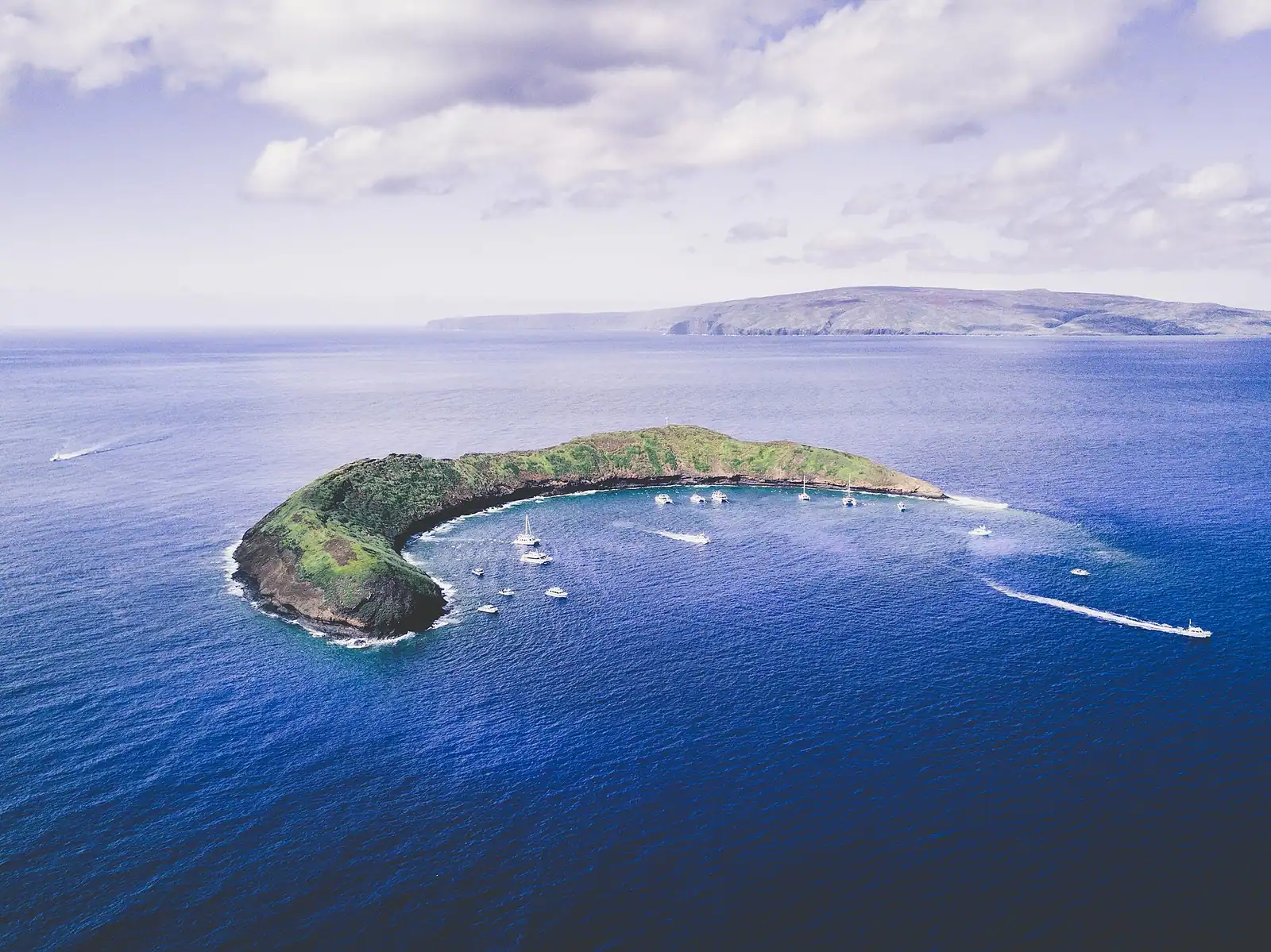
For Molokini, take the large catamaran rather than the small fast boat. Shade over most of the deck, a real restroom, a swim step instead of a ladder, and crew who carry flotation vests and boogie boards for children who will not put their face in the water. Book the earliest departure: the trades fill in by late morning and a queasy child two miles offshore is a long way from a good day. Dock boarding at Māʻalaea is easier with small children than the wade-off-the-sand loadings at the Kīhei ramp.

The free version is better than it has any right to be. Green sea turtles haul out on the east end of Hoʻokipa Beach Park most afternoons, usually from mid-afternoon onwards, and volunteers rope the area and explain the 10-foot rule. The lookout above the beach also puts windsurfers and kitesurfers directly below you on a trade-wind day, which is a free hour children will actually watch. In whale season, Papawai Point and the Pali pullouts on the Honoapiʻilani Highway are roadside whale watching with no ticket at all.

One rule to teach before anyone gets in: ten feet from a turtle, fifty feet from a monk seal, and more if a seal has a pup. Both are protected under federal and state law, and the fines are not nominal.

The wet-afternoon and too-hot plan

Local tips

Maui gives you two reliable escapes, and they point in opposite directions.

When it rains, drive to the other side. Maui's weather is a local phenomenon rather than an island-wide one. The windward north and east sides catch the trades and the rain; Kīhei, Wailea and Kāʻanapali are dry most of the year. A wet morning in Pāʻia is very often a sunny afternoon in Kīhei, thirty-five minutes away.

When it is too hot, drive up. Kula sits around 3,000 feet and runs roughly fifteen degrees cooler than the coast. Aliʻi Kula Lavender has a hillside and a view, Kula Botanical Garden is a well-kept eight acres, and Surfing Goat Dairy is a working farm that lets children feed goats, which is a better afternoon than it sounds.

The genuinely indoor options. Maui Ocean Center at Māʻalaea is the big one: a walk-through reef tunnel, a humpback exhibit that makes a whale watch land properly afterwards, and two hours that hold a small child. The Hawaiian Islands Humpback Whale National Marine Sanctuary visitor centre at Kalepolepo in Kīhei is free, has scopes on the deck and sits beside the stone walls of the ancient Koʻieʻie fishpond, which is a real archaeological site a six-year-old can walk around. The Maui Arts and Cultural Center in Kahului runs family programming. Maui Tropical Plantation at Waikapū has a covered tram through working orchards.

The two-hour gap plan. Shave ice, the Kāʻanapali beach walk, a bookshop in Wailuku or Pāʻia, and the aquarium gift shop are the honest answer to a squall that will pass. Most rain on the leeward side does.

Haleakalā and Hāna with children: the honest version

When to go

Both are possible with children. Neither is easy, and the modifications matter.

Haleakalā. Go at sunset instead. It needs no reservation, the light on the crater is nearly as good, the drive is in daylight in both directions, and nobody is woken at 2am. If you are set on sunrise, the permit is required for any vehicle arriving between 3am and 7am and releases 60 days ahead at 7:00am Hawaiʻi time. Pack genuine winter clothing, because dawn at the summit is regularly in the 30s Fahrenheit with wind. Altitude affects children as it affects adults; headaches and nausea at 10,000 feet are common, and the descent is the cure. Do not go up within 24 hours of any scuba diving, including a child's discovery dive.

The Road to Hāna. The full round trip in a day is the problem, not the road. Three ways to make it work. Turn around at Keʻanae or at Waiʻānapanapa, which gets you the best of the coastline in six hours instead of eleven. Book a small-group van so a parent is not driving 600 curves with a car-sick child behind them. Or stay a night in Hāna, which is the version everybody who has done it recommends and almost nobody plans for.

Whichever you choose: leave Pāʻia with a full tank and more water than you think, take motion-sickness tablets 45 minutes before the first curve rather than at the tenth, and remember that people live on this road. Pull over and let local traffic through, take turns at the one-lane bridges, and park only in real pullouts.

One firm rule. Do not do the summit and Hāna on consecutive days. A 2am start followed by an eleven-hour drive is how a family holiday turns into an endurance event.

What a family week actually costs

What it costs

Bands rather than quotes, and worth confirming before you book. Maui is expensive and children are not discounted the way they are elsewhere.

  • Molokini snorkel, family of four: roughly $500 to $700 on a shared catamaran. Child pricing is usually only $20 to $40 below adult, because the boat costs what it costs.
  • Whale watch, family of four in season: about $180 to $350. The best-value booking of the week by a distance.
  • Luau, family of four: $500 to $900 depending on the show and the seating tier. Children's tickets are genuinely cheaper here, often around half.
  • Maui Ocean Center: upper end of US aquarium pricing, with a modest saving for booking online. Budget a couple of hours minimum.
  • Haleakalā: $30 per vehicle for three days plus $1 for the sunrise permit, regardless of how many children are in the car. The cheapest per-head experience on the island.
  • State parks: ʻĪao Valley and Waiʻānapanapa each charge roughly $10 per vehicle plus about $5 per non-resident, with small children free. Both need booking ahead.
  • Beaches: free everywhere, with free public parking at most of them.

Where families overspend: two boat trips in one week when one plus a free Hoʻokipa afternoon would have been better remembered. Where they underspend: renting snorkel gear by the week from a shop rather than paying per trip, and hiring a prescription mask if anyone wears glasses, which is the single best twenty dollars of a Maui holiday.

Book it

Everything else we track

Booking through these earns us a commission from Viator. You pay the same, and payment did not decide what is listed.

Sharing, or having it to yourselves

Most of what is bookable here sells two ways, and the cheaper one is not always the cheaper one. A shared departure is priced per person; a private booking is priced for the party, so the arithmetic flips somewhere around four to six people — and it is the only version where you pick the time. Check the party size each listing actually covers before you decide.

  • Book a seat

    A shared departure, priced per person. The cheapest way to do this for one or two people.

    'Alihilani Lahaina Sunset Sail

    Short term availability

    'Alihilani Lahaina Sunset Sail (opens in a new tab)

    Free cancellationInstant confirmation
    199 reviews

    We pride ourselves on sailing, so enjoy the natural sounds as we turn of our motors and raise our sails. Our spacious catamarans make for…

    2–3 hours

    Prices checked

    from $117.30
  • Book the whole thing

    Priced for the party rather than the seat, and you choose the departure time.

    Epic Waterfall Adventure, the Best of Maui

    Short term availability

    Epic Waterfall Adventure, the Best of Maui (opens in a new tab)

    Free cancellationPrivate tour
    352 reviews

    Only tour company on Maui that offers optional cliff jumping into Waterfalls, go pro photography, and videography! This personalized…

    3–4 hours

    Prices checked

    from $179.40Usually $299

What works, by age band

How they compare

AgeThe reliable dayGood boat tripSkip
Under 3Kamaʻole I or Kalama Park in Kīhei, shade and a playground, home for a napA 2-hour whale watch in season, nothing longerMolokini, Hāna, the summit, ziplines
3 to 5Baby Beach at Baldwin, Ulua for the first mask, Maui Ocean CenterShort coastal snorkel from Kīhei, whale watchAnything with a pre-dawn start
6 to 9Ulua and Kapalua Bay snorkelling, Hoʻokipa turtles, Maui Tropical Plantation tramMorning Molokini on a large catamaran with shadeRoad to Hāna as a full-day drive
10 to 13Ziplines, a surf lesson, boogie boarding at Kamaʻole, the Pipiwai TrailMolokini, snuba, an introductory dive where age allowsSunrise summit unless they are genuinely keen
14+Doors-off helicopter, surf lessons, Sliding Sands descent, Honolua in summerAnything on the waterNothing, really

Two notes on the table. Zipline courses usually set a minimum age around eight and a minimum weight around 80 pounds, and they check, so confirm before booking for a small ten-year-old. And the Pipiwai Trail at Kīpahulu is four miles round trip with 800 feet of climb, which a reasonably fit nine-year-old manages happily and a five-year-old does not.

The four conversations to have before anyone gets wet

Before you book

Maui's hazards are specific and mostly avoidable, and they are worth saying out loud to children rather than assuming.

Shorebreak. Mākena's Big Beach and the main stretch of Baldwin both dump waves directly onto a steep sand face with no reef to soften them, and both produce spinal, shoulder and collarbone injuries in adults every year. The rule is simple: if the wave is breaking on the sand rather than out on a reef, nobody plays in it. Swim at Kamaʻole, Ulua, Keawakapu, Kapalua or Nāpili.

Rip currents and unguarded beaches. Many of Maui's best beaches have no lifeguard, including Nāpili, Honolua and Kapalua. Swim where there is a tower if you can. Hawaiʻi's drowning statistics for visitors are grim and they concentrate among people snorkelling alone in unfamiliar conditions.

Flash floods. The waterfalls and pools on the Hāna side respond to rain falling miles upstream in weather you cannot see from the pool. The Kīpahulu pools at ʻOheʻo Gulch are closed to swimming more often than they are open, for exactly this reason. Obey the closure signs, and get out of a stream if the water darkens or starts carrying leaves.

Sun. You are at 20 degrees north and the trade wind will lie to you about it. Mineral-only sunscreen is a legal requirement in Maui County, zinc oxide or titanium dioxide, so pack it rather than assuming you will buy it. Rash guards do more for a child than any lotion. Reapply after every swim, and remember the tops of feet and the backs of knees, which is where the holiday-ruining burn happens.

And the altitude one. At 10,023 feet the air holds roughly a third less oxygen. Children complain of headaches and tiredness before adults notice anything. If someone is unwell at the summit, the treatment is to drive down, immediately, and it works within minutes.
On the ground

Where to go

Every place below has its own page — hours, parking, what it costs and what to expect when you get there.

  • A long dry-stacked wall of fitted dark volcanic stone rising in stepped terraces

    Historic site

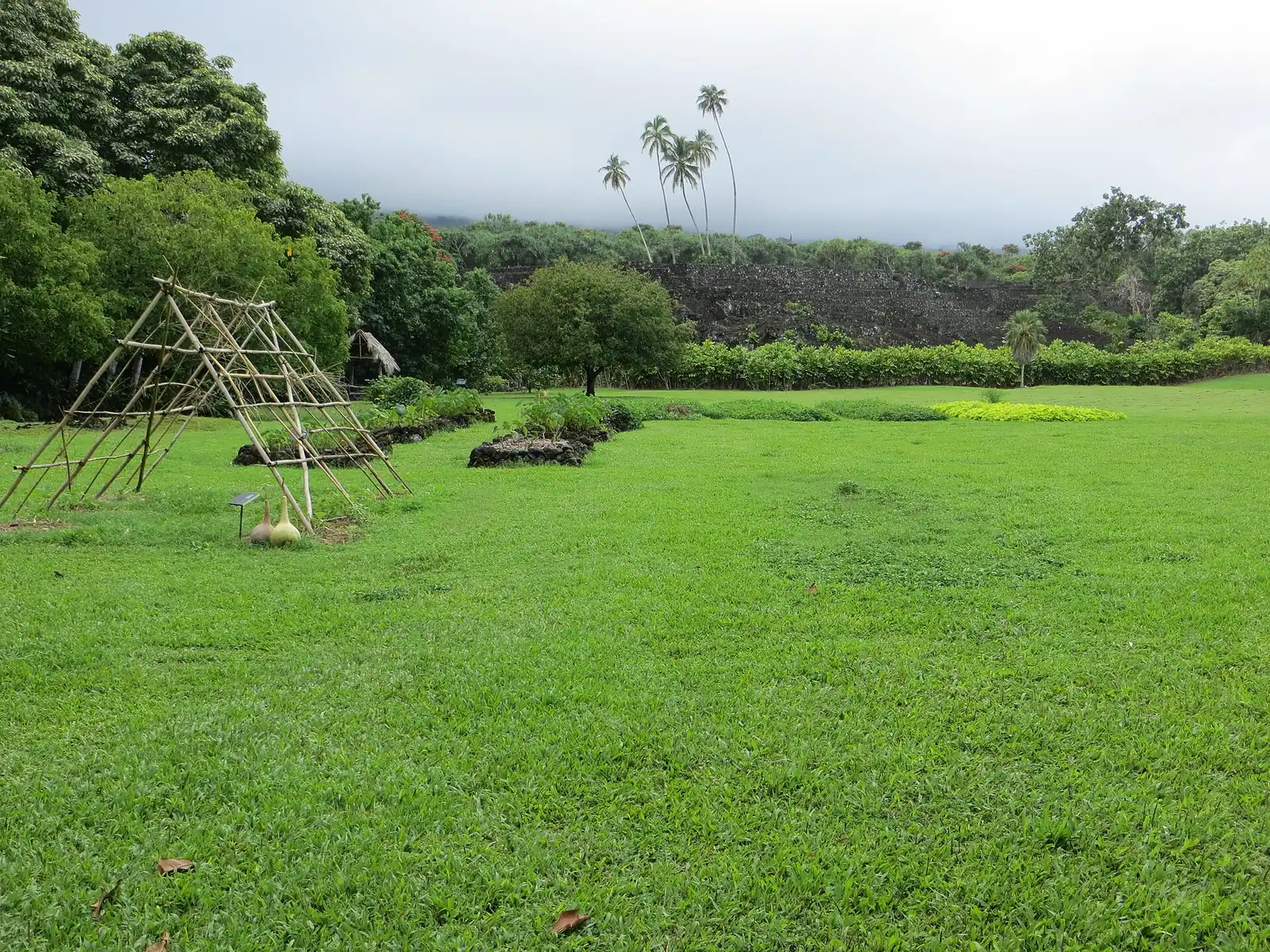
    Kahanu Garden & Piʻilanihale Heiau

    A dry-stacked stone platform the size of a city block, the largest heiau in Polynesia, standing in a hala forest above the Hāna coast.

    1–2.5 hoursAround $18 per adult for a self-guided visit; roughly $30 for the guided tour. Children 12 and under free.

  • A long curve of pale sand meeting clear turquoise water under a bright sky, with low green headland beyond

    Beach

    Kāʻanapali Beach

    Free

    Three miles of public sand, a lava headland called Puʻu Kekaʻa, and free beach parking the resorts are legally required to keep.

    2–7 hoursFree. Public beach access and the mandated resort stalls cost nothing; Whalers Village charges for parking with validation.

  • A windsurfer carving off the top of a breaking wave with spray behind the sail

    Beach

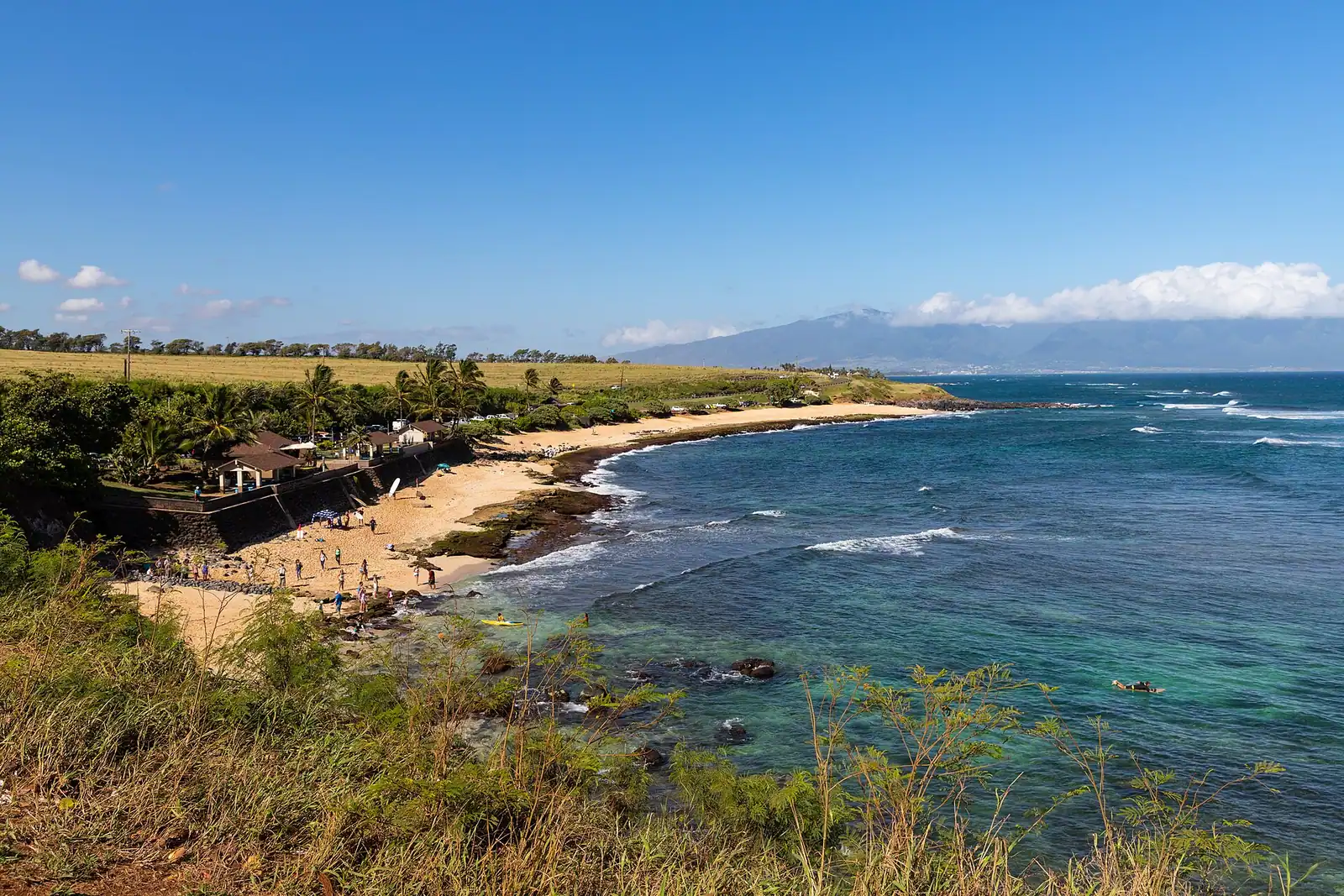
    Hoʻokipa Beach Park

    Free

    Maui's wave-sailing arena, watched from a clifftop lookout, where green sea turtles drag themselves onto the sand most afternoons.

    0.5–2 hoursFree. Both the beach park and the clifftop lookout are free to enter and free to park at.

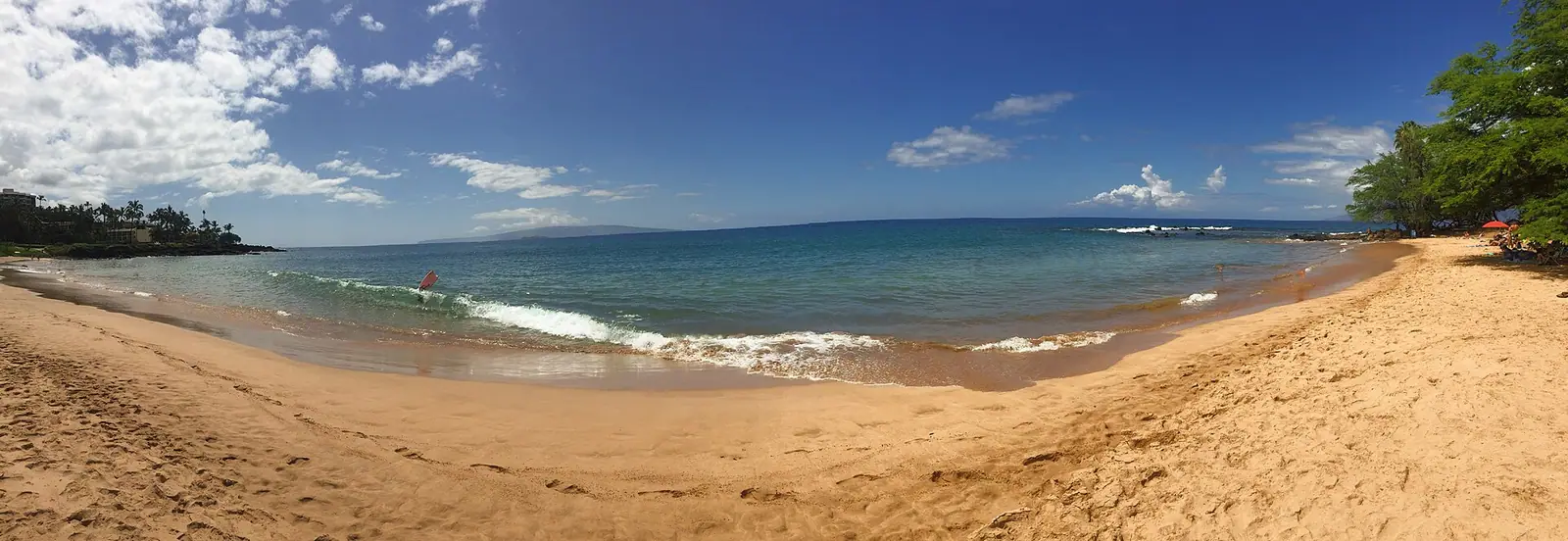
  • A small crescent beach enclosed by two low rocky points with calm clear water

    Beach

    Kapalua Bay

    Free

    A crescent held between two lava headlands, calm on days the rest of West Maui is blown out — with about forty parking stalls.

    1.5–4 hoursFree, including the public beach access car park.

  • A wide golden beach with calm water and palm trees under bright morning sun

    Neighbourhood

    Kīhei

    Free

    Six miles of beach, three lifeguarded parks and the best free whale watching on Maui, plus a wind that arrives every afternoon.

    2–8 hoursFree. All the beach parks are public with free parking.

  • A short crescent of pale sand backed by palms, with low rocky points at either end

    Beach

    Nāpili Bay

    Free

    A quiet condo-fronted crescent with turtles on both rocky sides, no facilities, and street parking that is gone before seven.

    1.5–4 hoursFree. Shoreline access is public; there is simply very little parking and no county facilities.
  • A long, softly curving beach with calm shallow water and a dry hillside beyond

    Beach

    Keawakapu Beach

    Free

    Three quarters of a mile of soft sand between Kīhei and Wailea, three free car parks, and the island's best morning swim.

    1.5–4 hoursFree, with three free car parks along its length.

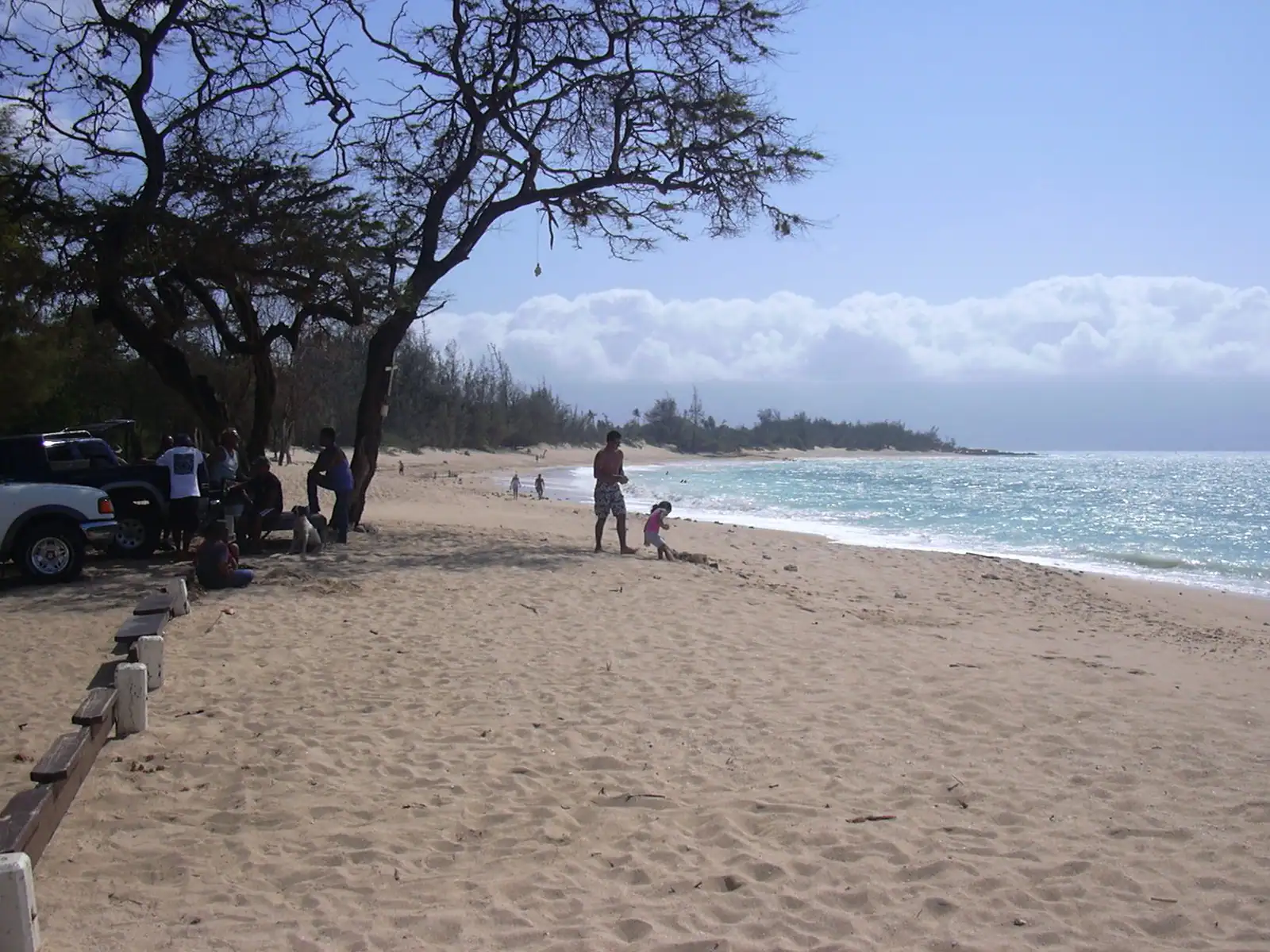
  • A long sweep of pale sand at Baldwin Beach Park with ironwood shade along the left and surf breaking down the shoreline

    Beach

    H.A. Baldwin Beach Park

    Free

    A mile of north shore sand with lifeguards, a shaded pavilion and a sheltered pool at the western end that toddlers can actually use.

    1.5–5 hoursFree, including parking. County beach park with lifeguards, restrooms, showers and a pavilion.

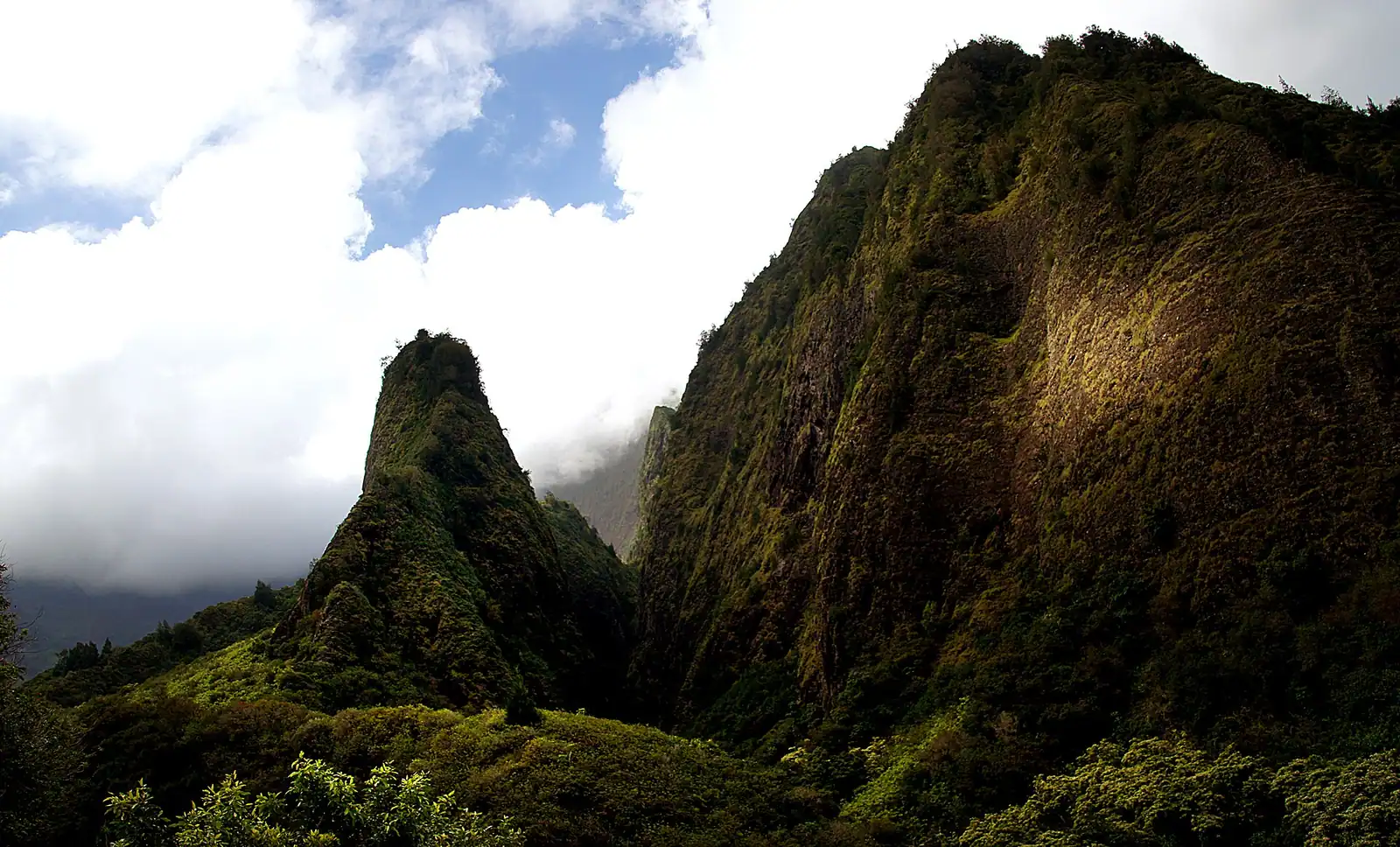
  • A sharp green ridge rising steeply out of a densely vegetated valley

    Historic site

    ʻĪao Valley State Monument

    A green spire 1,200 feet above the valley floor, in a place Hawaiians remember as a battlefield rather than a viewpoint.

    0.5–1.5 hoursNon-residents pay a per-vehicle parking fee plus a per-person entry fee, both booked in advance. Hawaiʻi residents with state ID are free.

  • Fish swimming past a large curved aquarium viewing window

    Museum

    Maui Ocean Center

    The only aquarium on Maui, showing Hawaiian species exclusively — and by county law, no whales or dolphins in tanks.

    2–3 hoursAround $50 for adults, roughly $40 for children 4–12, slightly less for over-65s. Under-fours free. Substantial kamaʻāina and military discount.

  • A snorkeller floating above shallow reef and coral heads in clear water

    Beach

    Ulua Beach

    Free

    A small Wailea cove with reef on the point, used by every South Maui dive school, sharing one modest car park with Mokapu.

    1–3 hoursFree, including the shared Ulua and Mokapu public car park.

  • A spiky pink protea flower head with stiff bracts, photographed close up

    Park

    Kula Botanical Garden

    Eight acres of protea, koa and orchids at 3,300 feet, where the air is cool enough to grow things the rest of Maui cannot.

    1–2 hoursAround $15 per adult and about $5 for children roughly 6–12; under-sixes free.

  • A still lagoon reflecting steep green mountain ridges under scattered cloud

    Park

    Maui Tropical Plantation

    Free

    A working farm at the mouth of Waikapū Valley where the grounds are free and the mountain behind it does most of the work.

    1–2.5 hoursFree to enter the grounds and park. The tram tour, ziplines and food are charged separately.

  • A small waterfall dropping into a green pool in dense tropical forest

    Water feature

    Twin Falls at Wailele Farm

    The first waterfall on the Hāna road, on a working farm with 55 parking spaces and a queue that starts at 7am.

    1–2.5 hoursAround $10 per vehicle for parking, first come first served, with no booking system.

Straight answers

Questions people actually ask

Is Maui good for families with young children?

Yes, if you base yourself on the south or west shore. Kīhei and Wailea have gently shelving, lifeguarded beaches with restrooms, showers and shade, sheltered from the trade winds by Haleakalā behind them, and the water stays between roughly 74 and 80 degrees year-round. What does not suit small children is the island's two headline trips: a 3am summit start at 10,023 feet, and a 10 to 12 hour drive to Hāna.

Which Maui beach is best for toddlers?

Kamaʻole Beach Park III in Kīhei, for the combination of lifeguards, restrooms, shade, grass and a playground beside a gently shelving shore. Kapalua Bay on the west side is the calmest water on the island thanks to reef arms on both sides, but the car park is tiny. Baby Beach, the reef-sheltered cove at the western end of Baldwin Beach Park near Pāʻia, is the north-shore equivalent. Avoid Mākena's Big Beach entirely.

Can children go on a Molokini snorkel trip?

Yes, and most operators take children from about five upwards, but choose the boat carefully. A large catamaran gives you shade, a restroom, a swim step and flotation vests; a small fast boat gives you none of those. Book the earliest departure, because the trade winds fill in by late morning and the crossing gets rough. If anyone is nervous in the water, a sheltered coastal snorkel from Kīhei is a better first attempt.

Should we take children to Haleakalā for sunrise?

Consider sunset instead. It needs no reservation, the drive happens in daylight both ways, the crater light is nearly as good and nobody is woken at 2am. If you do go for sunrise, you need the $1 permit for any vehicle entering between 3am and 7am, released 60 days ahead. Pack real winter clothing: dawn at 10,023 feet is regularly in the 30s Fahrenheit, and altitude headaches are common in children.

Is the Road to Hāna too much for kids?

The full round trip in one day usually is. The road runs about 64 miles with roughly 600 curves and 59 mostly one-lane bridges, and it is a 10 to 12 hour day. Better options: turn around at Keʻanae or Waiʻānapanapa for a six-hour version, book a small-group van so nobody is driving with a queasy child, or stay a night in Hāna. Motion sickness tablets 45 minutes before the first curve, not the tenth.

What sunscreen do we need for children on Maui?

Mineral only. Maui County's ordinance prohibits the sale, distribution and use of non-mineral sunscreen without a prescription, so the active ingredient must be zinc oxide, titanium dioxide, or both. Pack it rather than assuming you will find your usual brand. For children, a long-sleeved rash guard does more than any lotion, and the burns that ruin holidays happen on the tops of feet and the backs of knees.

Can we see turtles on Maui without paying for a tour?

Easily. Green sea turtles haul out on the east end of Hoʻokipa Beach Park near Pāʻia most afternoons, and volunteers rope off a respectful distance and explain what you are looking at. They are also common in the water at Nāpili Bay, Olowalu and Kapalua. The law requires you to stay 10 feet away, and 50 feet from a Hawaiian monk seal. Both are enforced.

How expensive is a family holiday on Maui?

Activity costs run well above US norms. The median bookable tour is around $203 a person, and child pricing on boats is often only $20 to $40 below adult, so a Molokini morning for four lands at $500 to $700. The cheap wins are real, though: a whale watch in season, the $30 three-day national park pass for the whole car, every beach, and the turtles at Hoʻokipa. Budget for one or two boat days, not five.