Involves Animals
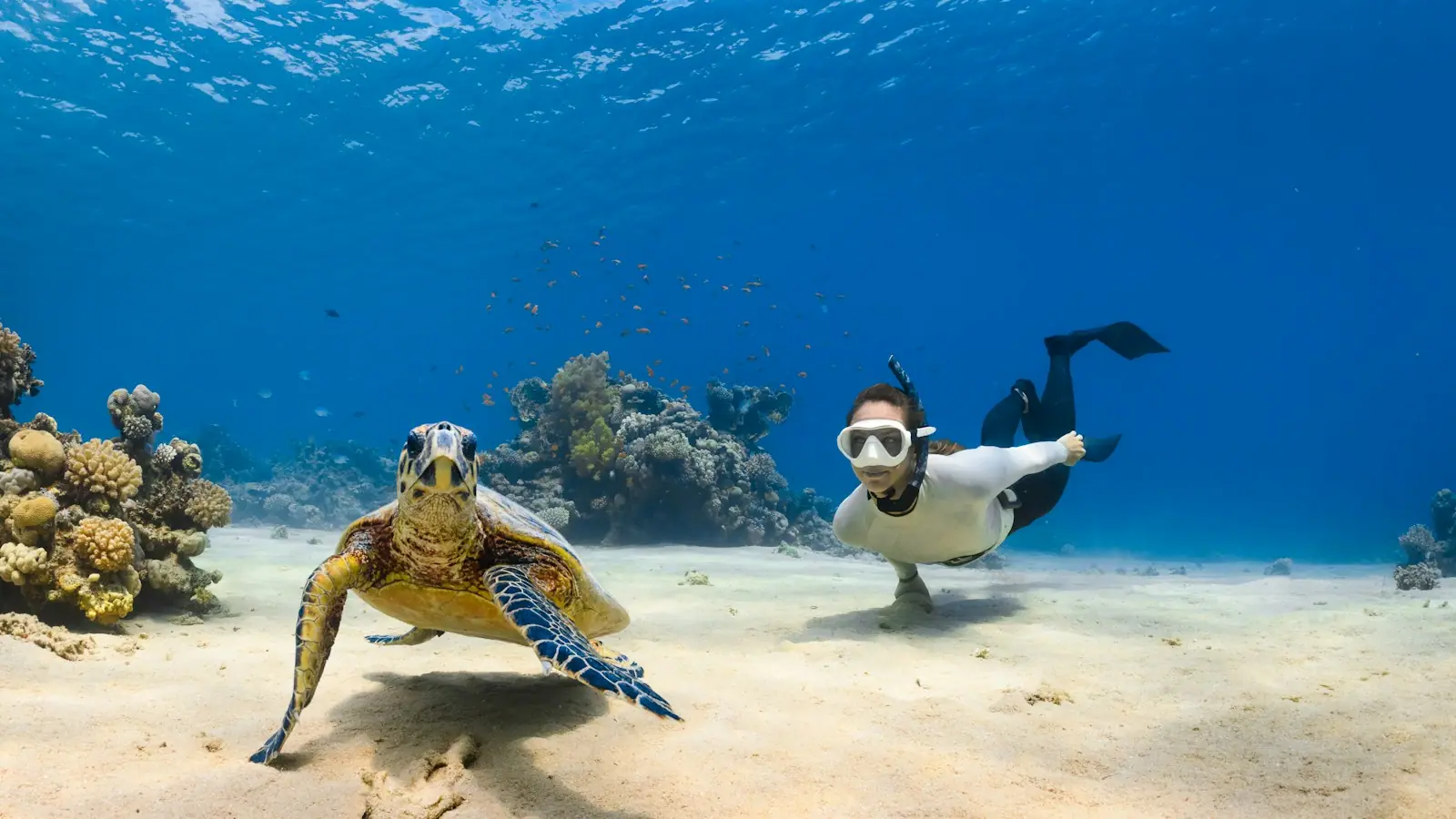
Maui: Molokini and Turtles Luxury Yacht Snorkel (opens in a new tab)
We are a family-owned Maui company with over 40 years of experience on Hawaiian waters. Our expert Captains and crew bring decades of…
5 hours
Prices checked
Neighbourhood
Last updated
Six miles of beach, three lifeguarded parks and the best free whale watching on Maui, plus a wind that arrives every afternoon.
Photo: Michael OswaldPublic domain
Kīhei is a six-mile strip of condominiums, strip malls and beach parks running down the leeward coast of the isthmus, and it is where a large share of Maui's visitors actually stay. It is not Wailea, which begins where Kīhei ends and costs several times as much. It has no single town centre, no historic core and no architectural ambition. What it has is the coastline and the climate.
The climate first, because everything follows from it. Kīhei sits in Haleakalā's rain shadow and receives on the order of ten to fifteen inches of rain a year, which is desert numbers. You can watch cloud stack against the West Maui Mountains across the bay while standing in full sun. The trade-off arrives daily: from around midday the trades accelerate through the gap between the two mountain masses and come down onto this shore, so mornings are glassy and afternoons are windy. Plan water activities before noon and you will have a completely different holiday from someone who does not.
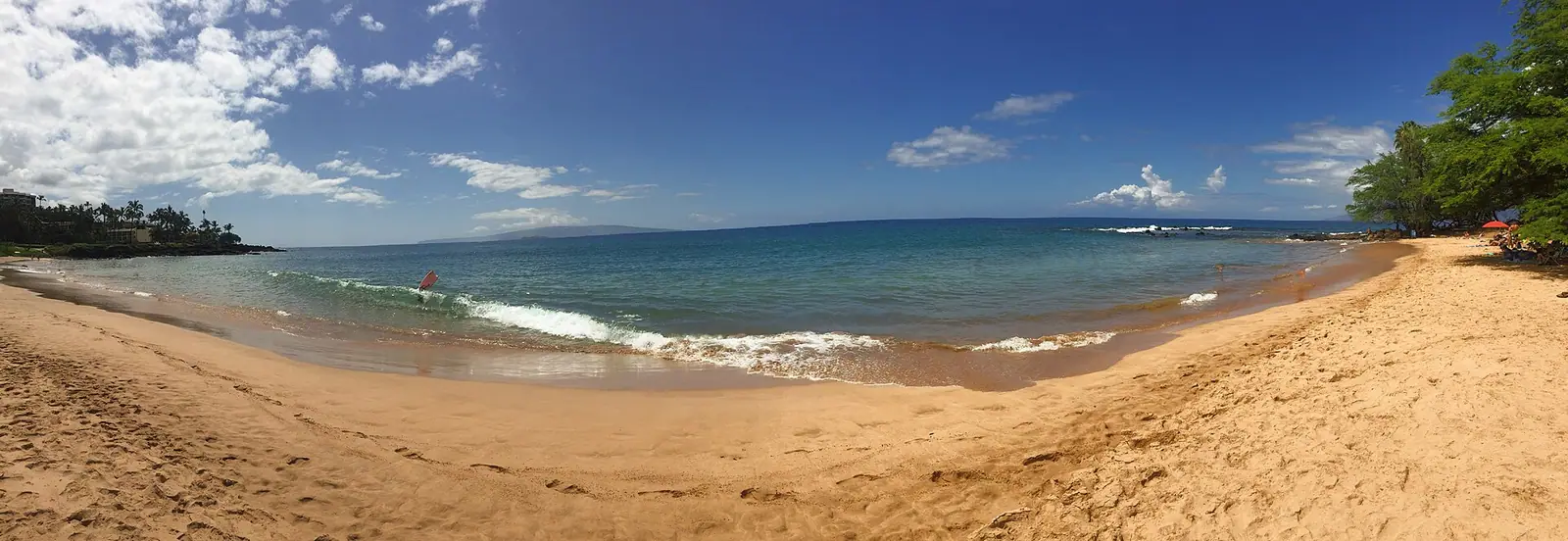
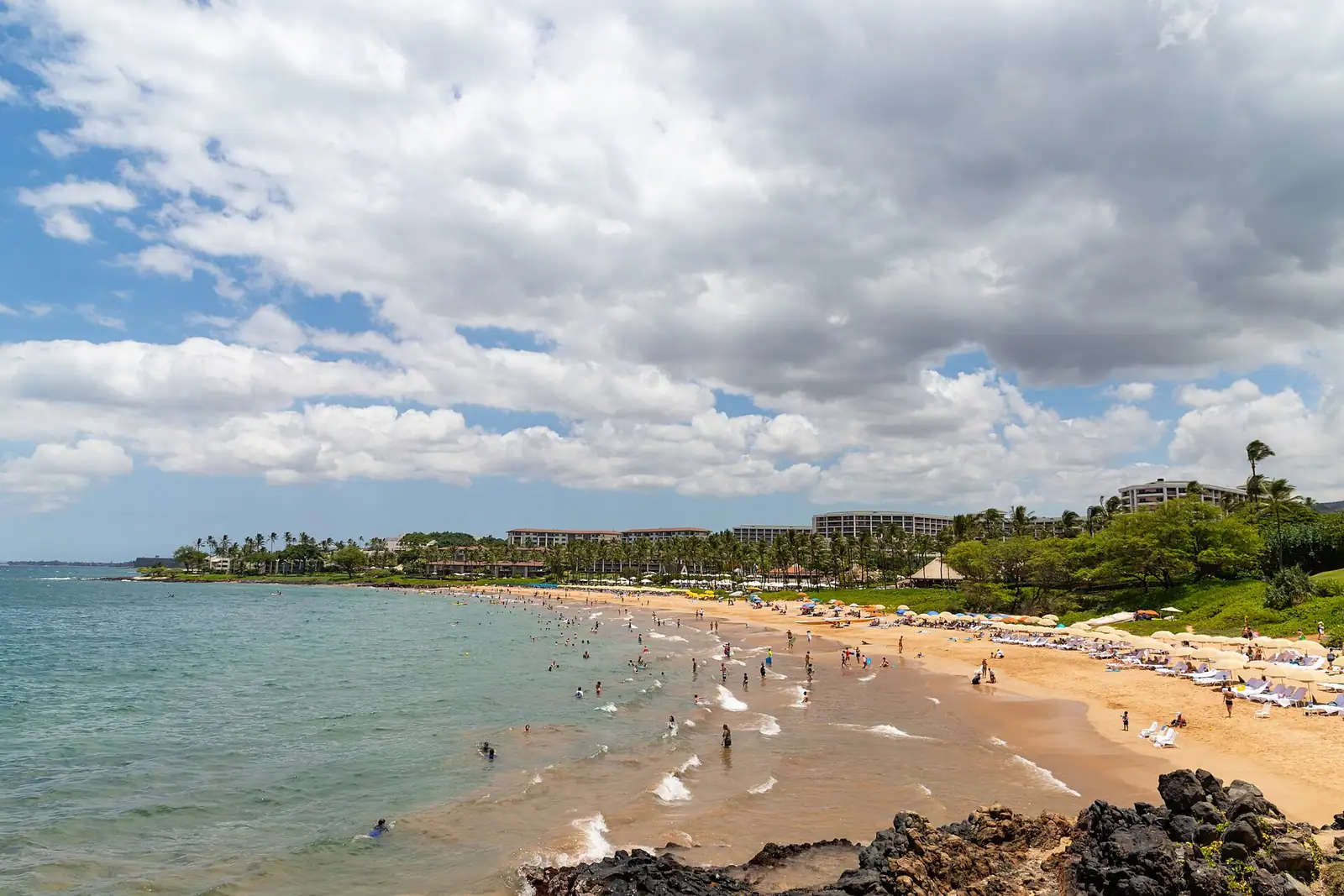
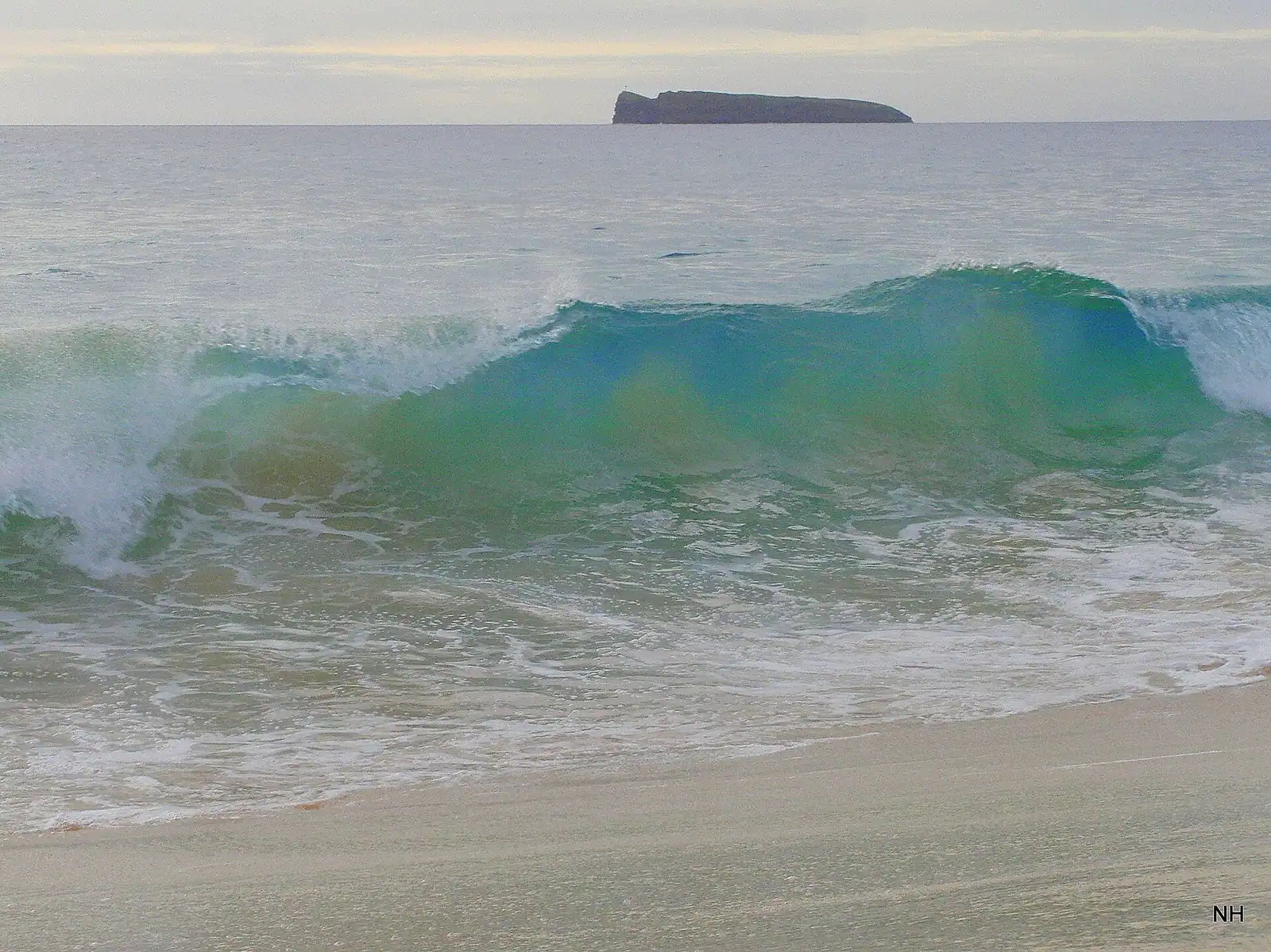
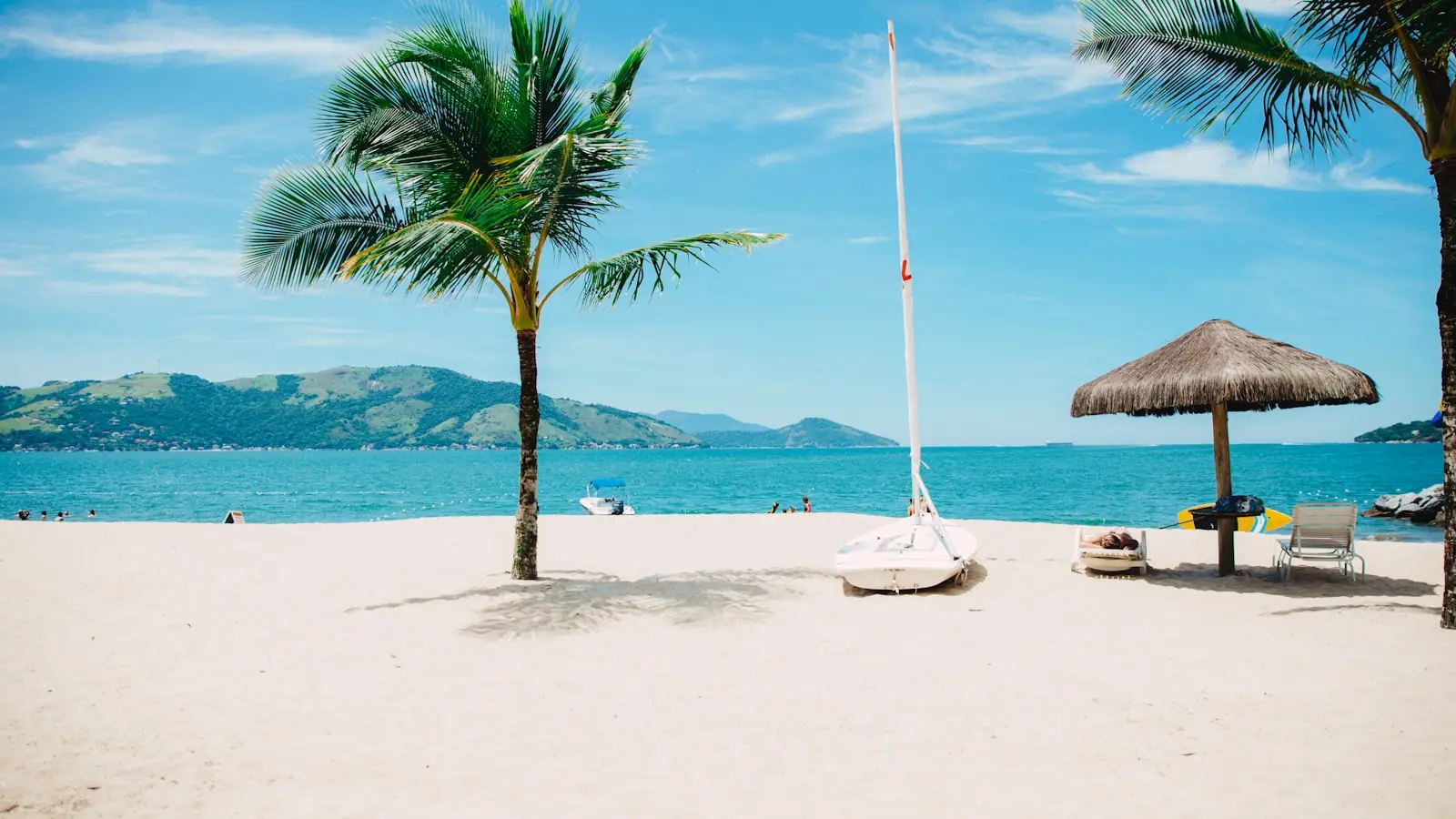
The beaches are the reason to be here. Kamaʻole I, II and III — universally Kam 1, 2 and 3 — run consecutively along South Kīhei Road with lawns, showers, restrooms and free parking, and all three are lifeguarded, which matters because Maui County staffs only nine beaches in total. Keawakapu at the southern end has the best sand and the best sunsets. Kalama Park has 36 acres of skate park, ball fields and playgrounds but poor swimming. North of town, Sugar Beach runs for miles along Māʻalaea Bay and is windy almost always.
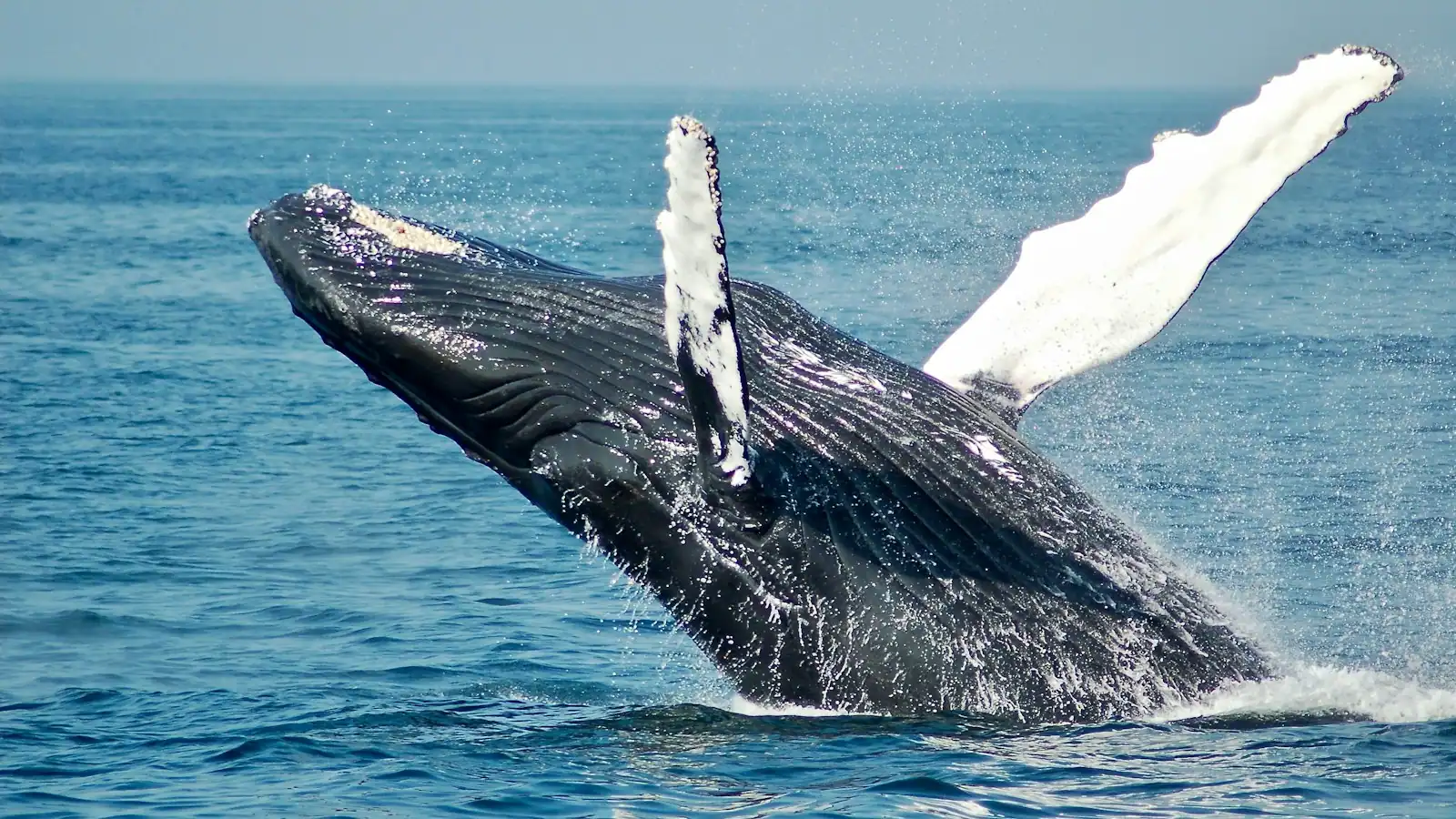
From December to April the humpbacks arrive in the channel offshore and Kīhei becomes the best free whale-watching grandstand in Hawaiʻi. You do not need a boat. You need a bench and some patience.
From Kahului airport, take Route 380 to the Piʻilani Highway (Route 31) south — about 20 to 25 minutes to central Kīhei. From Wailea it is five to ten minutes north; from Kāʻanapali, 50 minutes to an hour via Route 30 and Māʻalaea; from Kahului town, around 25 minutes.
Within Kīhei, use the Piʻilani Highway for any trip longer than a mile and drop down to South Kīhei Road only at the end. The beach road is slow by design.
Parking at the county beach parks — Kamaʻole I, II and III, Kalama and Charley Young — is free, and the lots fill by mid-morning in winter. Keawakapu has only two small lots and they go early.
Maui's county bus serves Kīhei from Kahului and Wailea, but headways are long. Most visitors here have a car.
They are not interchangeable, and the difference between them is about twenty minutes of walking.
Parking at all the county parks is free and fills by mid-morning in winter.
Humpbacks migrate to Hawaiian waters roughly December to April, peaking January to March, and the shallow, sheltered channel between Maui, Lānaʻi, Molokaʻi and Kahoʻolawe is the centre of it — the main calving and nursing ground for the North Pacific population. Kīhei faces straight into it.
You genuinely do not need a boat. On a good February morning you can sit at the south point of Kam III, or on the seawall anywhere along South Kīhei Road, and see blows, tail slaps and breaches without binoculars. Bring them anyway.
The technique is unglamorous: pick a spot with elevation, face the channel, and watch one patch of water for ten minutes rather than scanning. Blows are the giveaway: a puff of vapour that hangs for a second or two. Morning is better, because afternoon whitecaps hide everything.
The Hawaiian Islands Humpback Whale National Marine Sanctuary visitor centre on South Kīhei Road is free, has an oceanfront lānai built for exactly this, and staff who will tell you what you are looking at. It has kept short weekday hours, so check before you go.
If you do take a boat, know the rules that bind it: federal law sets minimum approach distances for humpbacks in Hawaiian waters, and a legitimate operator will shut the engines and wait rather than chase. A captain who closes on a whale is breaking the law, not showing you a good time.
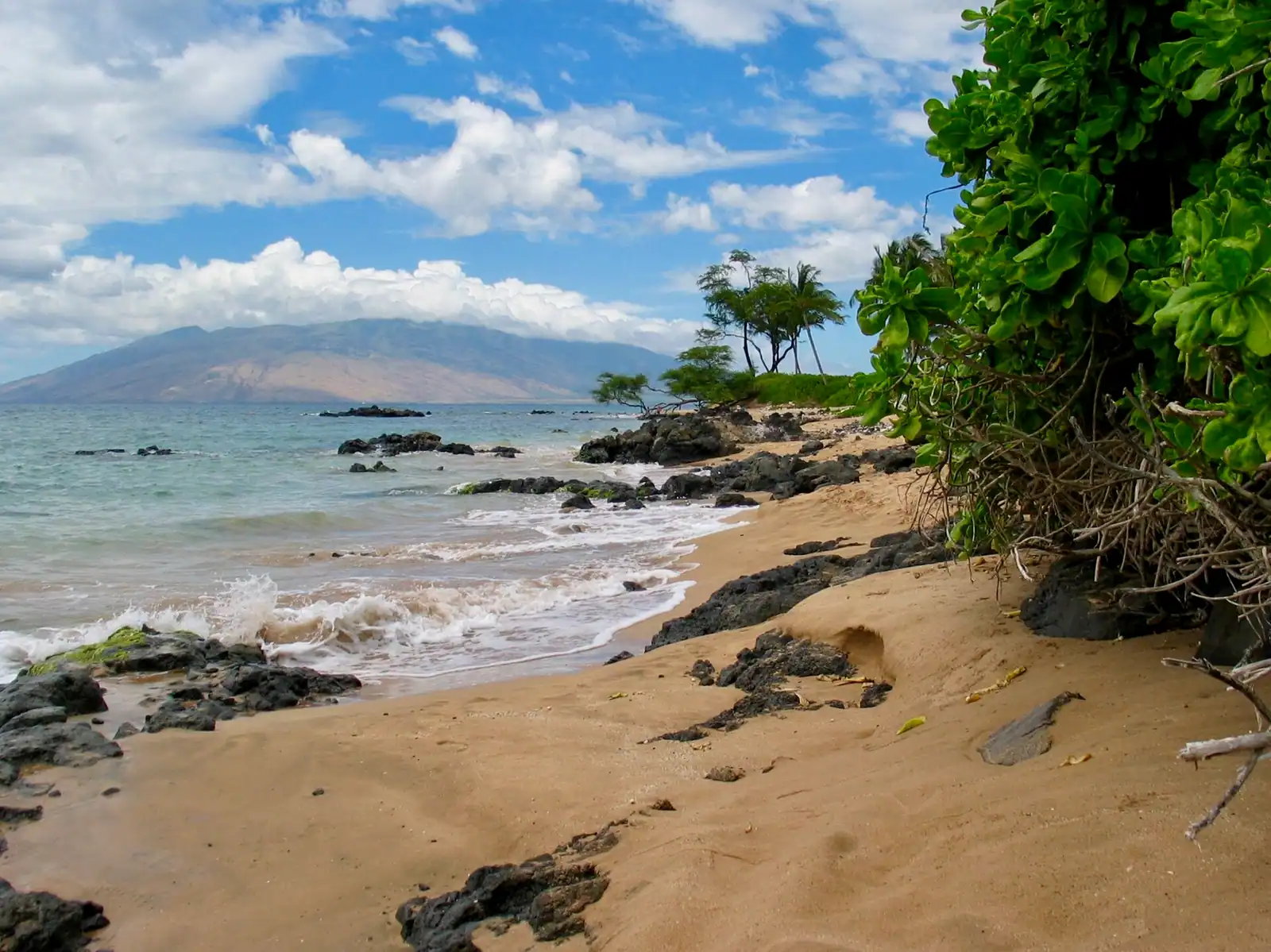
Two weather facts shape a Kīhei day more than the forecast does.
The wind. Maui's trade winds compress through the low isthmus between Haleakalā and the West Maui Mountains and accelerate out over the south shore. In practice: flat, glassy water at seven in the morning, a building chop by eleven, and whitecaps by two on most days for most of the year. Snorkelling, kayaking, stand-up paddling and boat trips are all morning activities here, and anyone who books an afternoon Molokini trip learns why the morning ones cost more. Beach umbrellas become a liability by mid-afternoon.
Vog. When the wind swings southerly, in a kona pattern, more common in winter, volcanic haze from Kīlauea on Hawaiʻi Island drifts up the chain and settles on leeward shores like this one. It looks like smog, softens the horizon, and can irritate asthma and sensitive eyes. It passes when the trades return, usually within a couple of days.
And the rule that applies whenever you get in the water here: Maui County requires mineral sunscreen. Hawaiʻi bans the sale of sunscreens containing oxybenzone and octinoxate statewide, and Maui County goes further, restricting non-mineral sunscreen to zinc oxide and titanium dioxide products unless prescribed. Buy it before you arrive or buy it here — but do not bring a chemical sunscreen and use it over the reef.
Koʻieʻie Fishpond at Kalepolepo, directly in front of the whale sanctuary's visitor centre, is one of the last remaining Hawaiian fishponds on Maui. Estimates put its construction somewhere in the fifteenth century. A loko iʻa of this kind is an engineered aquaculture system — a stone wall enclosing a shallow bay with sluice gates sized so that small fish swim in, feed, grow, and can no longer get out. It has been under community restoration for years. Look at it as infrastructure, which is what it is, and stay off the wall.
Keālia Pond National Wildlife Refuge, at the north end of the strip, protects around seven hundred acres of coastal wetland that expands and contracts with the season. A boardwalk runs out over it from the Maui Veterans Highway, free and open from early morning to evening, with interpretive panels and no crowds. The birds to look for are the aeʻo, the endangered Hawaiian stilt, black and white on absurd pink legs, and the ʻalae keʻokeʻo, the Hawaiian coot. Both are endemic and both are in trouble. The refuge office keeps weekday hours and can tell you what is about.
Neither takes more than an hour, and both are the sort of thing that makes a rained-off or windblown afternoon worth something.
Use the highway, not the beach road. South Kīhei Road is six miles of stop-start with crossings, buses, cyclists and people carrying surfboards. The Piʻilani Highway (Route 31) runs parallel one block inland and will halve your time to Wailea, Mākena or the airport. Locals use it and visitors sit in the other one.
Where the boats go from. Most Molokini and whale trips leave from Māʻalaea Harbor, ten minutes north, or from the Kīhei boat ramp at the south end. Molokini departures are early — often before sunrise for check-in — precisely because of the wind. Confirm your departure harbour when you book; turning up at the wrong one is the most common Maui morning disaster.
The honest caveats. Kīhei has no town centre, and the strip-mall architecture is what it is. Vacation-rental condos mean the neighbours change weekly. Restaurants are plentiful and mid-range rather than excellent. There is no real nightlife past about ten. And in high winter season the free beach-park lots are full by nine.
What you get for that: the sunniest coast on Maui, three lifeguarded beaches within walking distance of thousands of units, whales off the seawall in winter, and accommodation at a fraction of Wailea's price a mile up the same sand.
Operators run these trips past Kīhei, or stop there as part of a longer route. We list what the booking data supports — not everything that mentions the name.
Booking through these earns us a commission from Viator. You pay the same, and payment did not decide what is listed.

Involves Animals
We are a family-owned Maui company with over 40 years of experience on Hawaiian waters. Our expert Captains and crew bring decades of…
5 hours
Prices checked

Short term availability
Your West Maui Snorkel adventure departs from Kaanapali Beach. Along the way keep your eyes open for Hawaiian spinner dolphins, bottle…
4 hours
Prices checked

Nature and Wildlife Tours
Trip Highlights - 15 minute boat ride to Molokini - Snorkel the crystal clear waters of Molokini crater, Maui's 1st Snorkeling destination…
2 hours
Prices checked

Low Supplier Cancellation Rate
You’ll have the chance to drive, or simply be a passenger in one of today’s most advanced 4 seater off-road vehicles, the Canam sport max…
2 hours
Prices checked

Sightseeing Cruises
Part of the reason Maui has been so popular year after year is due to the breathtaking sunsets. Sure you could just watch from the beach…
2 hours
Prices checked

Low Last Minute Supplier Cancellation Rate
Sea Maui’s Sunset Dinner Cruise is our premium dining & Sunset experience. Leave behind the hustle and bustle of the land when you're…
2–3 hours
Prices checked

Sustainable Tours
THIS IS A 8 LINES TOUR - JUNGLE ADVENTURE This adventure with Jungle Ziplines Maui includes eight amazing Ziplines, three tree platforms…
2 hours
Prices checked

Day Trips
Live the real Maui experience on the Road to Hana with our expert guides! Immerse yourself in the beauty of the spectacular Hana…
Full day
Prices checked
Straight-line distances, so allow more on the road — the island is long and has one main parkway.

Beach
Three quarters of a mile of soft sand between Kīhei and Wailea, three free car parks, and the island's best morning swim.
1.5–4 hoursFree, with three free car parks along its length.4.4 mi away

Beach
A small Wailea cove with reef on the point, used by every South Maui dive school, sharing one modest car park with Mokapu.
1–3 hoursFree, including the shared Ulua and Mokapu public car park.4.9 mi away

Beach
A calm crescent between the Grand Wailea and the Four Seasons, with a free public lot and a paved path linking four beaches.
1.5–5 hoursFree, including the public beach access car park. Hawaiʻi shorelines are public to the high-water mark.5.2 mi away

Beach
Two-thirds of a mile of undeveloped gold sand backed by a cinder cone, with a shorebreak that puts people in hospital every year.
1.5–5 hoursBeach access is free; non-residents pay to park at the state park kiosks.8.8 mi away
Where this place fits into a day, and the pages that plan one.

Guide hub
Maui is two volcanoes joined by a low, windy isthmus, and almost every planning mistake visitors make comes from forgetting that. The western half…

Guide hub
Every beach on Maui is public. Hawaiʻi law puts the shoreline below the upper reach of the waves in public trust, and coastal landowners, including…

Things to do
Maui has reef on three sides and each side has a different season. That single sentence explains most of the disappointment visitors report about…

Who it suits
Maui is an excellent family island with two conspicuous exceptions, and it saves a lot of disappointment to name them first. Sunrise at Haleakalā…

Things to do
The stretch of water between Maui, Lānaʻi, Molokaʻi and Kahoʻolawe is the reason humpback whales are the thing Maui is best at. That basin, Maui…

Guide
Almost everyone needs one. The island is 727 square miles with a volcano in the middle, and the public bus does not go to a single thing you flew here for.
10 min readKealoha Nakamura
Kamaʻole III for families — it has the biggest lawn, a playground, shade, restrooms, showers, a lifeguard and a rocky point that is the best free whale-watching spot in Kīhei. Kamaʻole II has the cleanest arc of sand and good snorkelling at both ends on a calm morning. Keawakapu, at the south end, has the softest sand and the best sunsets but no lifeguard and very limited parking.
Yes, and it is the best free whale watching in Hawaiʻi. Humpbacks are in the channel between Maui, Lānaʻi, Molokaʻi and Kahoʻolawe roughly December to April, peaking January to March, and Kīhei faces straight into it. Pick a spot with a little elevation — the south point at Kamaʻole III, or the whale sanctuary's oceanfront lānai — watch one patch of water rather than scanning, and go in the morning before whitecaps hide the blows.
Geography. The trade winds compress through the low isthmus between Haleakalā and the West Maui Mountains and accelerate out across the south shore, which means glassy water at seven in the morning and whitecaps by early afternoon on most days of the year. Book snorkelling, kayaking and Molokini trips for the morning. It is also why the earliest boat departures are the ones that sell out.
If you want sun, beach access and value, yes. Kīhei sits in Haleakalā's rain shadow with roughly ten to fifteen inches of rain a year, has three lifeguarded beaches within walking distance of thousands of condo units, and costs a fraction of Wailea a mile down the same sand. The honest downsides are strip-mall architecture, no town centre, mid-range rather than excellent restaurants, and almost nothing open late.
Mineral only. Hawaiʻi bans the sale of sunscreens containing oxybenzone and octinoxate statewide, and Maui County goes further by restricting non-mineral sunscreen altogether — zinc oxide and titanium dioxide are the accepted actives unless you have a prescription. Buy a mineral product before you travel or pick one up locally, and remember that a rash guard and a hat do more for the reef than any bottle.