Involves Animals
Maui: Molokini and Turtles Luxury Yacht Snorkel (opens in a new tab)
We are a family-owned Maui company with over 40 years of experience on Hawaiian waters. Our expert Captains and crew bring decades of…
5 hours
Prices checked
Water feature
Last updated
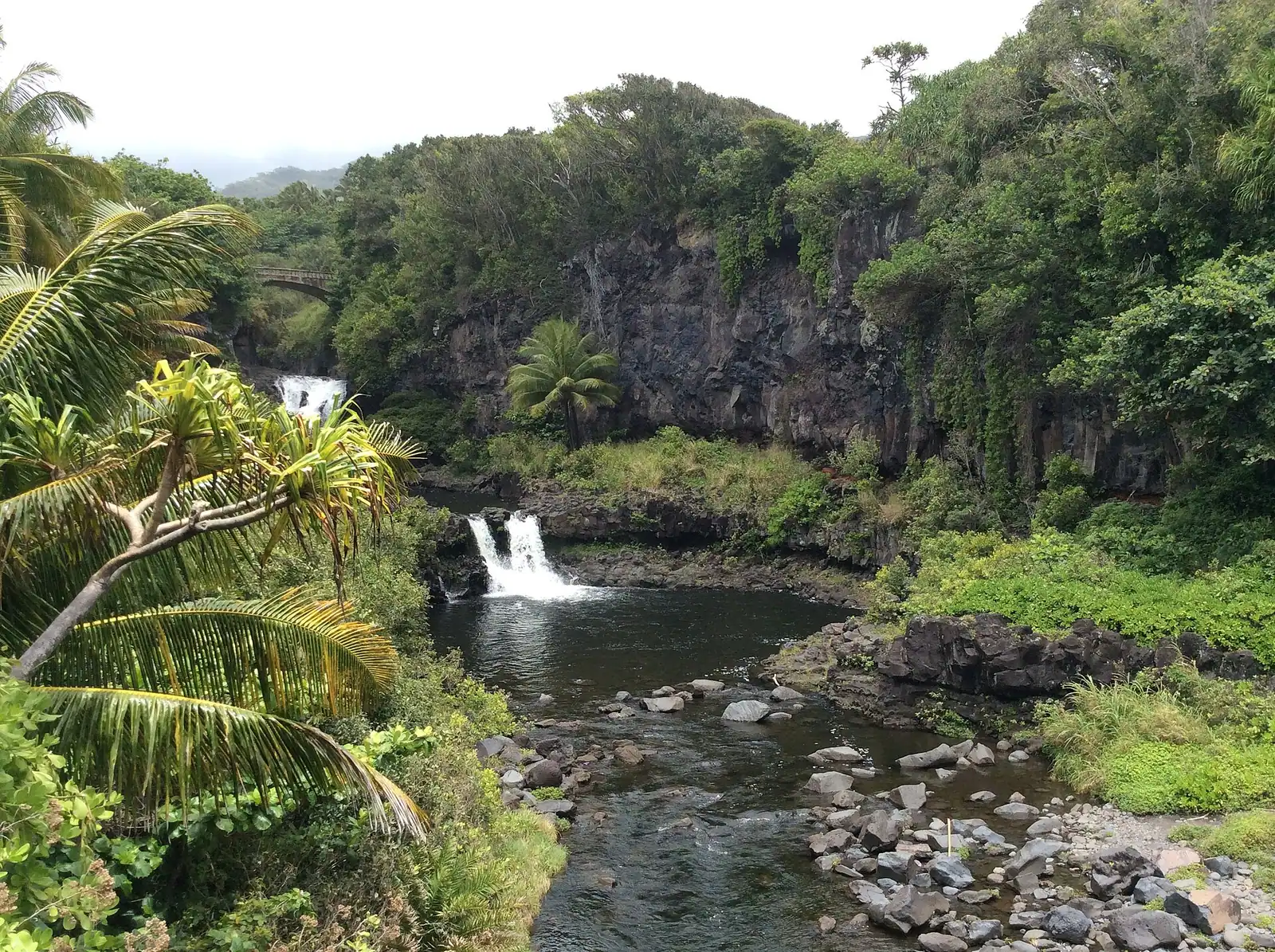
A staircase of stream pools falling to the sea at Kīpahulu, where swimming has been closed and the famous name was never real.
Photo: Jackie Frost/ NPS PhotoPublic domain
Swimming in the pools at ʻOheʻo is closed until further notice. The pools can still be viewed from the Kūloa Point Trail.
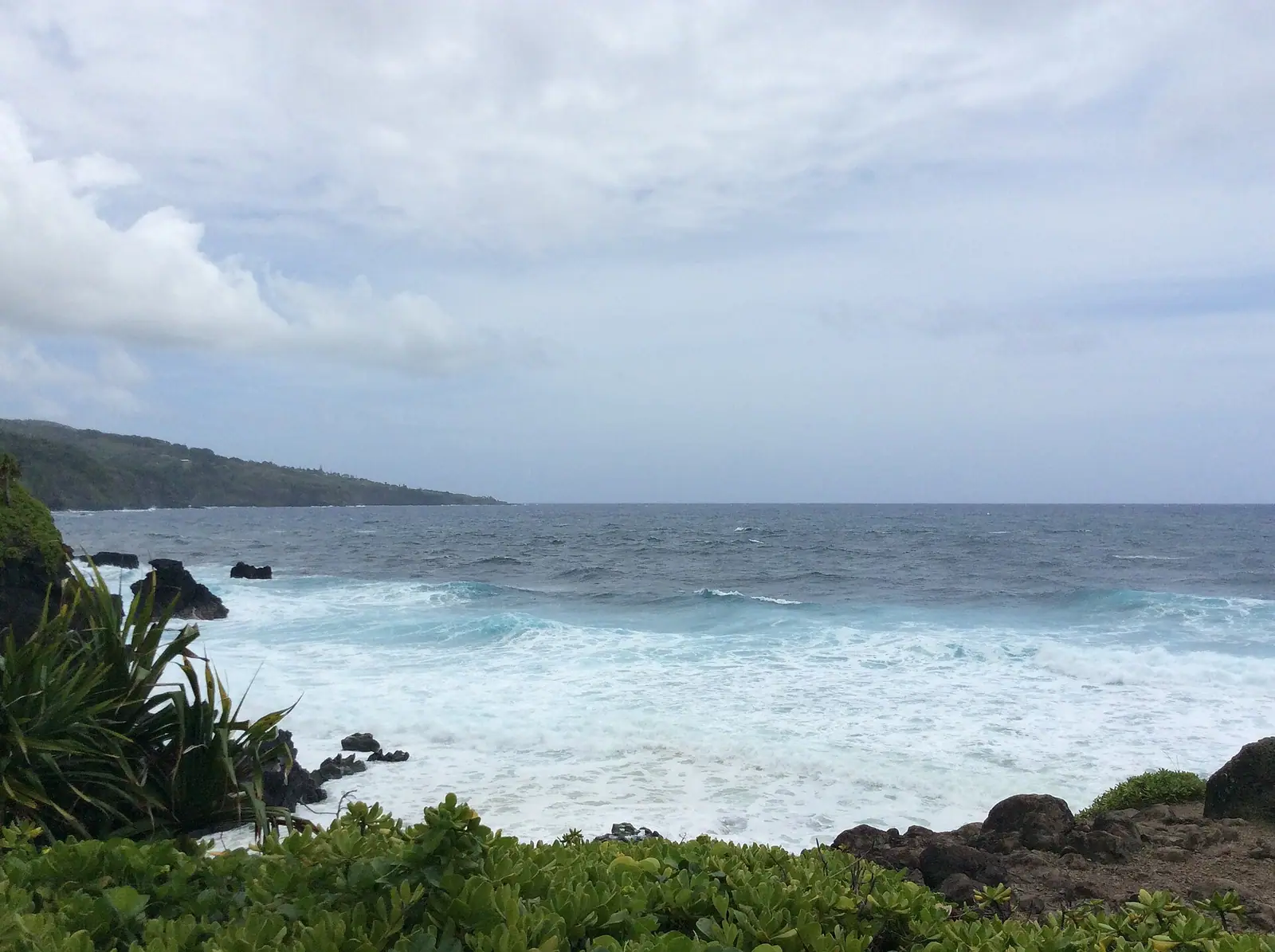
Palikea Stream comes off the flank of Haleakalā, works its way down through the Kīpahulu valley and, in the last few hundred metres before the ocean, drops through a series of basalt terraces into pool after pool before falling into the sea over a low cliff. That is ʻOheʻo Gulch. On a clear day you stand at Kūloa Point with the pools stepping away inland, the surf working the black rock below, and the coastline running off towards Kaupō.
Start with the two facts that change a visit.
Swimming in the pools is closed until further notice. The National Park Service has kept the stream and pools shut to entry, and reporting has tied the current closure to the loss of the stream-monitoring equipment that provided flash-flood warning from upstream. Whatever the immediate cause, the underlying hazard is permanent: this catchment rises fast on rain falling miles inland under blue sky at the coast, and people have been swept out of these pools to the sea. The pools can still be seen, close up, from the Kūloa Point Trail.
"Seven Sacred Pools" is not the name of this place. It appears to have been attached by mid-century tourism promotion, there are far more than seven pools, and nothing in Hawaiian tradition designates them as such. The park uses ʻOheʻo Gulch, and so do the Kīpahulu families. Using the real name is a small thing that people here notice.
What remains is a short, genuinely good walk. The Kūloa Point Trail is a half-mile loop from the visitor centre down through grass and hala to the pool terraces and out to the sea cliffs, taking about thirty minutes. Along it are stone remains of the Kīpahulu ahupuaʻa — house platforms, walls and taro terraces from a community that farmed this valley for centuries, some of it under active restoration.
It sits directly across the road from the Pīpīwai trailhead. One entrance fee covers both.
Follow the Hāna Highway to Hāna town, then continue south on Highway 31 for about ten miles to the Kīpahulu Visitor Center near mile marker 42. The markers count down south of Hāna, so 45 (Wailua Falls) comes first. About three hours from Kahului without stops.
Park at the visitor centre. The Kūloa Point Trail starts on the ocean side; the Pīpīwai Trail starts across the road. The lot is modest and fills between about 10am and 2pm in peak season.
Continuing south on Piʻilani Highway to complete a loop back to Kīhei is possible in dry conditions but the road is narrow, remote, partly unsealed in stretches and excluded from most Maui rental car agreements. Most visitors return the way they came.
No reservation is required for the Kīpahulu District, and there is no fuel, food or shop beyond Hāna.
The pools at ʻOheʻo are closed to swimming until further notice. This is not a seasonal restriction and it is not enforced loosely. Rangers post it at the visitor centre and at the trail, and the closure has now run for years rather than months.
The stated reason has been tied to the loss of stream-gauge equipment upstream — the system that gave rangers warning when water was on its way down the valley. Without it there is no advance notice at all.
The hazard it was watching for is worth spelling out. Palikea Stream drains a steep, extremely wet catchment on the windward flank of Haleakalā. Rain falling several miles inland, invisible from the coast, can send a surge down the gulch in minutes. The pools sit in a confined rock channel with a low sea cliff at the bottom end. Swimmers have been carried from the pools into the ocean here. This is the specific thing that happens.
There is also a leptospirosis risk in Hawaiian fresh water generally, which applies to every stream on this island regardless of closure status.
So: look, photograph, sit on the grass at Kūloa Point and watch the surf work the rocks. If a swim in a stream pool is what you drove three hours for, that is worth knowing before you set off. The Pīpīwai Trail across the road is the better use of the day, and it is open.
Half a mile, roughly thirty minutes, and the most rewarding short walk on this side of the island.
From the Kīpahulu Visitor Center the path drops through open grass towards the stream, with hala and coconut on either side, then reaches the pool terraces — flat basalt shelves with water stepping down through them and small falls between each level. A low overlook gives the classic view back up the gulch.
Continuing, the trail turns towards the coast and opens onto the sea cliffs, where Palikea Stream makes its final drop into the ocean and the swell comes in hard against black rock. On a windy day the spray carries. Looking south-west the coastline runs away towards Kaupō and the dry side of the island, a completely different landscape from the rainforest you drove through.
On the loop back are the stone remains of the Kīpahulu ahupuaʻa: house platforms, a heiau site, boundary walls and terraces for growing kalo, with interpretive signs. Parts of the valley are under active loʻi restoration by Kīpahulu ʻOhana in partnership with the park, and the taro growing there is not decorative. Keep off the walls and the terraces.
The trail is rough grass and packed earth with some uneven rock, and it is exposed. There is no shade to speak of at the coastal end. Ten minutes' worth of sun protection matters more than it sounds like it should.
About a mile further south on Highway 31, Palapala Hoʻomau Church holds the grave of Charles Lindbergh, who spent his last years in Kīpahulu. It is a small working church with an active cemetery on private ground, reached by a narrow lane, and the congregation has asked visitors repeatedly to keep it quiet and respectful. If you go, go quietly, park properly, and do not treat it as a stop on a list.
You will still see "Seven Sacred Pools" on billboards, tour listings, older guidebooks and roadside signs. It is worth understanding where that came from, because visitors repeat it in good faith.
The name has no basis in Hawaiian tradition. It appears to have originated in mid-twentieth-century tourism promotion, at a point when Hāna was being marketed to mainland visitors and a memorable phrase was more useful than an accurate one. There are considerably more than seven pools on Palikea Stream, the number varies with water level, and there is no traditional designation of them as sacred in the sense the phrase implies.
The place name is ʻOheʻo, and the district is Kīpahulu — an ahupuaʻa, a land division running from the mountain to the sea, farmed continuously for centuries and still home to families who trace their connection to it directly.
The National Park Service uses ʻOheʻo. So do local residents, and so do most Maui operators now. Using it yourself costs nothing, and it is part of the same adjustment as spelling Haleakalā and Hāna with their kahakō. A guide that gets this right is telling you something about how much attention it pays elsewhere.
Operators run these trips past ʻOheʻo Gulch, or stop there as part of a longer route. We list what the booking data supports — not everything that mentions the name.
Booking through these earns us a commission from Viator. You pay the same, and payment did not decide what is listed.

Involves Animals
We are a family-owned Maui company with over 40 years of experience on Hawaiian waters. Our expert Captains and crew bring decades of…
5 hours
Prices checked

Short term availability
Your West Maui Snorkel adventure departs from Kaanapali Beach. Along the way keep your eyes open for Hawaiian spinner dolphins, bottle…
4 hours
Prices checked

Nature and Wildlife Tours
Trip Highlights - 15 minute boat ride to Molokini - Snorkel the crystal clear waters of Molokini crater, Maui's 1st Snorkeling destination…
2 hours
Prices checked

Low Supplier Cancellation Rate
You’ll have the chance to drive, or simply be a passenger in one of today’s most advanced 4 seater off-road vehicles, the Canam sport max…
2 hours
Prices checked

Low Last Minute Supplier Cancellation Rate
Sea Maui’s Sunset Dinner Cruise is our premium dining & Sunset experience. Leave behind the hustle and bustle of the land when you're…
2–3 hours
Prices checked

Excellent Quality
All riders must be 36 inches or taller to participate/ride submarine. Dive 100 feet below the surface and experience Maui’s marine…
2 hours
Prices checked

Sustainable Tours
THIS IS A 8 LINES TOUR - JUNGLE ADVENTURE This adventure with Jungle Ziplines Maui includes eight amazing Ziplines, three tree platforms…
2 hours
Prices checked

Day Trips
Live the real Maui experience on the Road to Hana with our expert guides! Immerse yourself in the beauty of the spectacular Hana…
Full day
Prices checked
Straight-line distances, so allow more on the road — the island is long and has one main parkway.

Trail
Four miles through a banyan, a boardwalk bamboo forest and two stream bridges, ending under a 400-foot waterfall.
2.5–5 hoursCovered by the Haleakalā National Park entrance fee, around $30 per vehicle and valid three days across both districts.270 ft away

Water feature
Four hundred feet of water down a sheer lava wall, two miles up a rainforest valley and reachable no other way.
0.5–1 hoursCovered by the Haleakalā National Park entrance fee, around $30 per vehicle for three days.0.7 mi away

Water feature
Eighty feet of water beside the road south of Hāna, and the only serious Maui waterfall you can see without leaving the car.
10–40 minutesFree. No entry fee, no reservation and no parking charge.3.5 mi away

Beach
The one reliably calm swim on the Hāna coast, under the cinder cone where Queen Kaʻahumanu was born in 1768.
1–2.5 hoursFree. Parking is free.7.6 mi away
Where this place fits into a day, and the pages that plan one.

Guide hub
Maui is two volcanoes joined by a low, windy isthmus, and almost every planning mistake visitors make comes from forgetting that. The western half…

Guide hub
Maui's attractions do not cluster. They are strung along a figure-eight island where the two halves are separate volcanoes and the connecting road…

Things to do
The Hāna Highway is not the road to a place. It is the place. Highway 36 becomes Highway 360 a few miles past Pāʻia, and from there it runs roughly…

Things to do
Haleakalā is the reason Maui has the shape it does. The eastern three quarters of the island is one shield volcano, and its summit at Puʻu ʻUlaʻula…

Things to do
Maui's waterfalls are concentrated on one side of the island for a simple reason. Trade winds push moist air against the eastern slope of Haleakalā…

Things to do
Maui gives you three separate hiking countries inside an hour and a half of driving, and they have almost nothing in common. Up at the top of…

Guide
Sixty-four miles, around 600 curves and 59 bridges, most of them one lane. The road is the destination, and the people who live along it are the reason to drive it well.
10 min readKealoha Nakamura
No. Swimming in the pools is closed until further notice and has been for years. Reporting has connected the current closure to the loss of the upstream monitoring equipment that gave rangers flash-flood warning. The underlying danger is permanent: Palikea Stream surges on rain falling miles inland under clear coastal skies, and swimmers have been carried from these pools into the ocean. You can still see the pools close up from the Kūloa Point Trail.
It is not, really. The phrase appears to have come from mid-twentieth-century tourism promotion rather than from Hawaiian tradition. There are far more than seven pools, the count changes with water level, and nothing designates them as sacred in the sense the name implies. The place is ʻOheʻo Gulch, in the Kīpahulu district. The National Park Service and local residents use the real name, and it is worth doing the same.
Yes, though manage expectations. The Kūloa Point Trail is a half-mile loop of about thirty minutes that reaches the pool terraces, the sea cliffs where the stream drops into the ocean, and the stone remains of the Kīpahulu ahupuaʻa with its restored taro terraces. It is genuinely good. But if a swim was the reason for the three-hour drive, the Pīpīwai Trail across the road is the stronger draw and the better day.
No. The Kīpahulu District of Haleakalā National Park has no reservation requirement at any hour — that applies only to the summit between 3am and 7am. You pay the park entrance fee, around $30 per vehicle, valid three days and covering both districts. If you have already driven up to the summit earlier in the week, your existing ticket may still be valid.
About ten miles and thirty minutes south of Hāna town on Highway 31, where the mile markers count down. That puts it roughly three hours from Kahului without stops, and it is past the point where most Hāna day-trippers turn around. There is no fuel, food or shop between Hāna and Kīpahulu, so fill up and buy lunch before leaving town.