Skip to content
Menu

Booking through these earns us a commission from Viator. You pay the same, and payment did not decide what is listed.

Search

Water feature

Waimoku Falls

Last updated

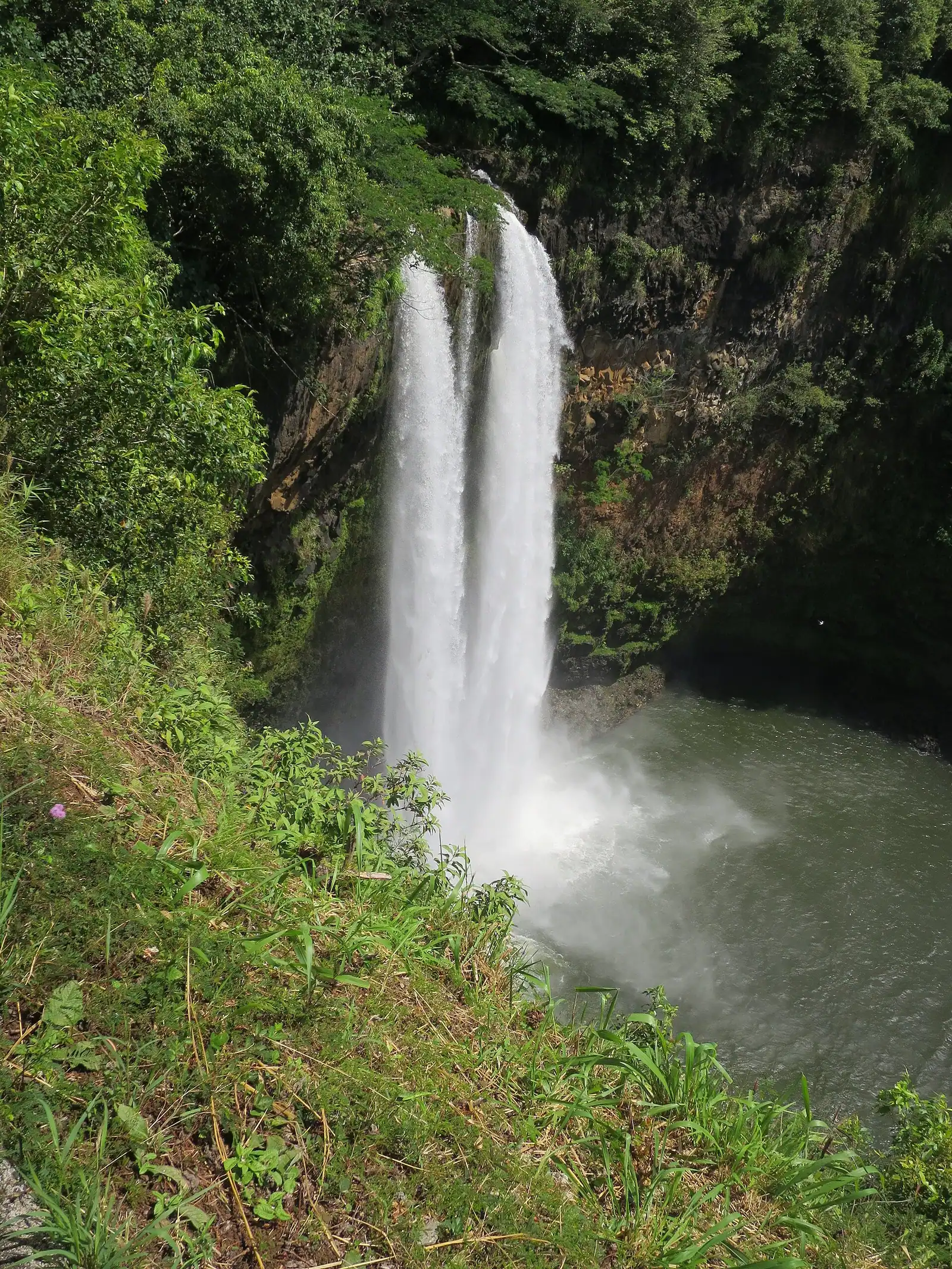
Four hundred feet of water down a sheer lava wall, two miles up a rainforest valley and reachable no other way.

Photo: Angela Sevin from SF Bay Area, USCC BY 2.0

Closed at the moment

The area immediately beneath the falls is closed because of rockfall, and swimming in the plunge pool is not permitted.

Waimoku Falls is the payoff at the head of the Pīpīwai Trail, and it does not announce itself. You come out of half a mile of bamboo into a widening, boulder-filled valley, follow the stream bed for a few hundred metres, and the wall ahead resolves into an amphitheatre of black lava with a single ribbon of water coming off the lip roughly 400 feet above you.

The shape is the interesting part. Palikea Stream runs off the edge of a hanging valley onto a face that has eroded backwards into a horseshoe, so the cliff wraps around you and the water lands in a shallow, rock-choked pool at the bottom. Ferns and moss run in vertical green stripes down the wet rock either side. The scale is difficult to hold: people standing at the base read as specks in photographs, which is usually the only way the height registers.

How much water is coming over varies enormously. After sustained rain in the uplands the fall is loud, heavy and throws spray far enough back down the valley that you feel it before you see it. In a dry stretch — and East Maui does get them — it can thin to a wavering veil that the wind pushes sideways before it reaches the ground. Both versions are worth the walk; they are simply different things.

Two rules matter here and they are not advisory. The park posts a rockfall warning short of the base and asks visitors to stay behind it. A 400-foot wall of weathered basalt drops rock without warning, and the pool sits directly underneath. Swimming is not permitted in the plunge pool. The rock around it is wet, algae-covered and about as slippery as any surface on the island.

There is no road to Waimoku, no viewpoint from a car, and no shortcut. The only way in is four miles on foot, round trip, which is why it stays relatively uncrowded on an island that is not.

Getting there and parking

On foot only, two miles up the Pīpīwai Trail from the Kīpahulu Visitor Center car park on Highway 31 near mile marker 42. There is no road access, no viewpoint from a vehicle and no shorter route. Round trip is four miles and two and a half to five hours.

Getting to the trailhead: the Hāna Highway to Hāna town, then about ten miles further south on Highway 31, roughly thirty minutes. Three hours from Kahului before stops.

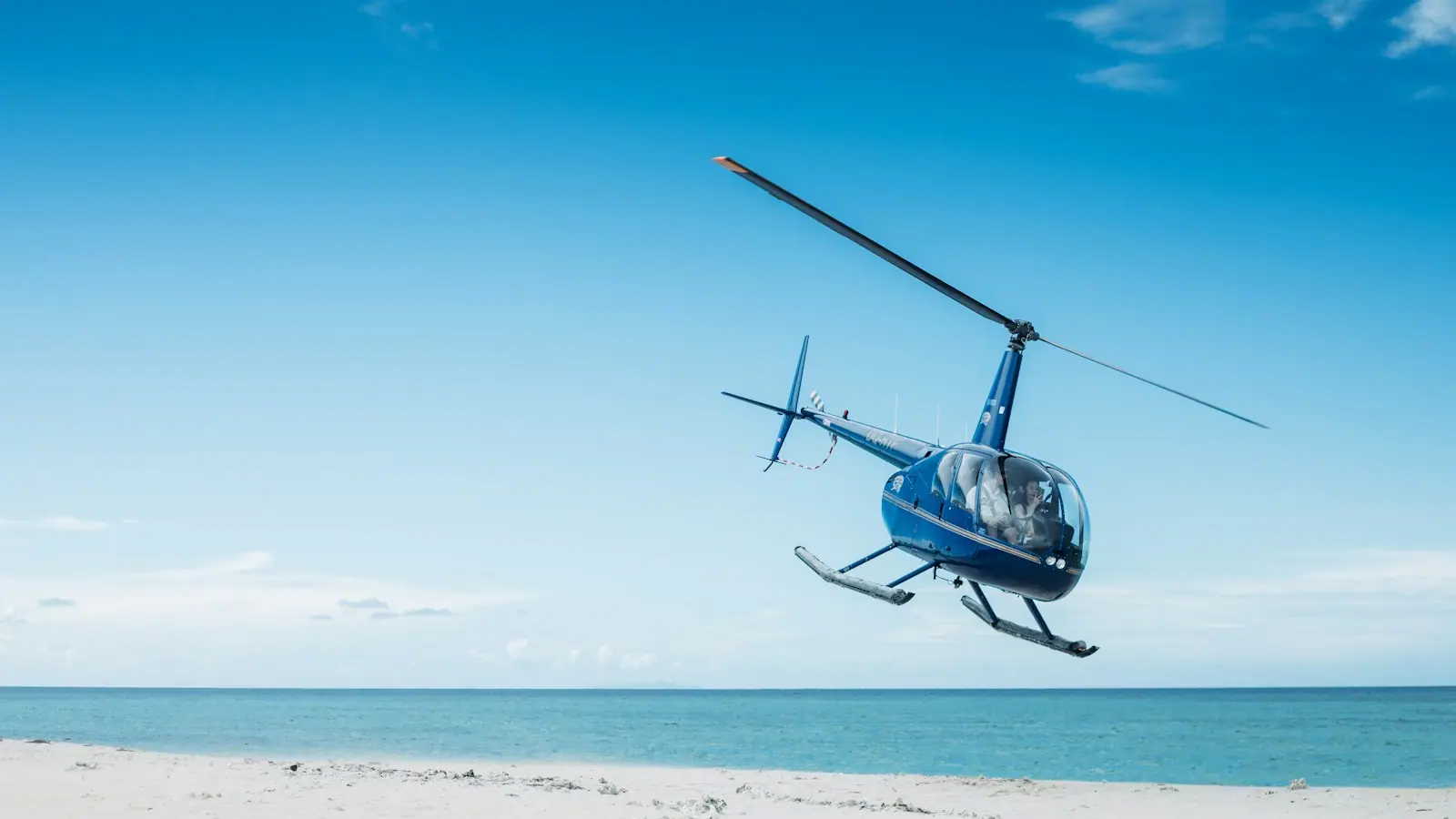
The only realistic alternative view is from the air. Helicopter tours of East Maui pass over the Kīpahulu valleys and show Waimoku from above along with falls that have no ground access at all. That is a different experience and, on this island, a considerably more expensive one.

The Haleakalā National Park entrance fee covers the trail. No reservation is required for the Kīpahulu District.

The rockfall line, and why it is there

The National Park Service posts a sign short of the base of Waimoku Falls asking visitors to go no further, and closes the immediate pool area to entry. It exists because the amphitheatre wall actively sheds material — the same headward erosion that produced the horseshoe is still happening, and it happens on no schedule.

What people do anyway: walk past the sign for a photograph under the fall, or wade into the pool. Both put you directly in the fall line of anything that comes off 400 feet of wet cliff.

The surface adds a second problem. The boulders and bedrock around the plunge pool stay permanently wet and carry a film of algae. Falls on that rock account for a steady trickle of injuries on a trail that is otherwise not technical.

The third factor is water. Palikea Stream can rise fast on rain falling upvalley under a clear sky at the coast. If the stream you crossed on the way up has come up, or turned brown, or is carrying branches, get back to the high side of the crossings and wait rather than pushing on to the falls.

Watching from behind the sign costs nothing. The full height is easier to take in from twenty metres back anyway, and it is the only place the whole fall fits in a frame.

When the falls actually run

Kīpahulu sits on the windward flank of Haleakalā and catches trade-wind rain year-round, so Waimoku almost always has water in it. How much is the variable.

The heaviest flow follows a day or two of sustained upland rain, which is more common between November and March but happens in any month here. The fall becomes a full column, the noise fills the valley, and spray reaches well back along the approach.

The thinnest flow comes after a dry run of trade-wind weather, typically late summer. The water breaks into a lace before it lands and the wind lifts sections of it sideways.

The catch is that the conditions that make the fall spectacular are the same conditions that make the stream crossings dangerous. The best realistic window is a clear day one or two days after heavy rain: full flow, safe crossings, and a trail that has had time to drain some of the mud.

Time of day matters less than at most viewpoints because the amphitheatre is deep and mostly shaded. Direct sun reaches the face only briefly around the middle of the day, and the high contrast that produces is harder to photograph than flat overcast light. Morning is better for the walk in, simply because you are not racing the light on the way out.

Why it photographs badly, and what to do about it

Most photographs of Waimoku Falls disappoint the people who took them, and there are specific reasons.

  • It is very tall and very narrow, in a tight space. You cannot back up far. A wide lens or a phone's ultra-wide is close to essential, and even then the fall reads as a thin white line unless something gives it scale.
  • Put a person in the frame. This is the single fix. A figure at the base turns a white stripe into 400 feet.
  • Spray coats the lens within seconds when the fall is running hard. Carry a microfibre cloth and check the front element between shots.
  • The dynamic range is brutal — bright water against black wet rock in shade. Expose for the water and lift the shadows afterwards rather than the reverse.
  • Flat overcast is your friend here. Patchy sun through the canopy produces blown highlights on the water and nothing recoverable.
  • Drones are prohibited throughout Haleakalā National Park, including here. Do not.

The wider valley on the approach, with the boulder field and the green walls closing in, is often the better photograph and almost nobody takes it.

How it compares to Maui's other waterfalls

Maui has a lot of waterfalls and they are not interchangeable.

Waimoku, 400 feet. Foot access only, two miles in. The tallest thing you can walk to on this island, and the only one where the cliff wraps around you.

Makahiku, around 185 feet. Half a mile up the same trail, seen side-on from an overlook across the gorge. Different character entirely, and a fair consolation if you turn back early.

Wailua Falls, around 80 feet, near mile marker 45 on Highway 31. Visible from the car, which is exactly why it is busy and why it is the most photographed fall on the Hāna road.

Twin Falls, at mile marker 2. Short walks on private farmland, modest heights, and the first stop out of Pāʻia.

Honokōhau Falls, in the West Maui Mountains, is reckoned to be the tallest on the island at something over a thousand feet — and is effectively helicopter-only. That is the trade this island offers: the biggest falls are in country with no roads.

If you can only do one waterfall on Maui and you are able to walk four miles, do Waimoku. If you cannot, Wailua Falls gets you a genuinely good waterfall from a roadside pull-out, which few islands can offer.
Tours that visit Waimoku Falls

Operators run these trips past Waimoku Falls, or stop there as part of a longer route. We list what the booking data supports — not everything that mentions the name.

Booking through these earns us a commission from Viator. You pay the same, and payment did not decide what is listed.

Shared departurespriced per seat, best value for one or two

  • Maui: Lahaina ATV Adventure

    Low Supplier Cancellation Rate

    Maui: Lahaina ATV Adventure (opens in a new tab)

    Free cancellation
    1.8K reviews

    You’ll have the chance to drive, or simply be a passenger in one of today’s most advanced 4 seater off-road vehicles, the Canam sport max…

    2 hours

    Prices checked

    from $202.55
  • Maui Atlantis Submarine Adventure

    Excellent Quality

    Maui Atlantis Submarine Adventure (opens in a new tab)

    Free cancellation
    815 reviews

    All riders must be 36 inches or taller to participate/ride submarine. Dive 100 feet below the surface and experience Maui’s marine…

    2 hours

    Prices checked

    from $144.36Usually $160.41

Private and small-group optionsoften cheaper per head for a family or a group of six

Near Waimoku Falls

Straight-line distances, so allow more on the road — the island is long and has one main parkway.

  • A narrow path running through a dense stand of tall green bamboo

    Trail

    Pīpīwai Trail

    Four miles through a banyan, a boardwalk bamboo forest and two stream bridges, ending under a 400-foot waterfall.

    2.5–5 hoursCovered by the Haleakalā National Park entrance fee, around $30 per vehicle and valid three days across both districts.0.7 mi away

  • A stream stepping down rock terraces towards the ocean under cloud

    Water feature

    ʻOheʻo Gulch

    A staircase of stream pools falling to the sea at Kīpahulu, where swimming has been closed and the famous name was never real.

    0.5–1.5 hoursCovered by the Haleakalā National Park entrance fee, around $30 per vehicle for three days across both districts.0.7 mi away

  • A single waterfall falling into a rock pool in a narrow fern-covered gully

    Water feature

    Wailua Falls

    Free

    Eighty feet of water beside the road south of Hāna, and the only serious Maui waterfall you can see without leaving the car.

    10–40 minutesFree. No entry fee, no reservation and no parking charge.3 mi away

  • A sheltered bay with dark sand, a small pier and a steep green headland behind

    Beach

    Hāna Bay

    Free

    The one reliably calm swim on the Hāna coast, under the cinder cone where Queen Kaʻahumanu was born in 1768.

    1–2.5 hoursFree. Parking is free.7 mi away

Waimoku Falls: common questions

How tall is Waimoku Falls?

Around 400 feet, dropping in a single ribbon down a horseshoe-shaped wall of lava at the head of the Pīpīwai valley. It is the tallest waterfall on Maui that you can reach on foot. Maui's tallest overall, Honokōhau Falls in the West Maui Mountains, is reckoned to be more than a thousand feet and is realistically only seen from a helicopter, because there is no road or trail into that country.

How do you get to Waimoku Falls?

On foot, two miles up the Pīpīwai Trail from the Kīpahulu Visitor Center on Highway 31 near mile marker 42, about ten miles past Hāna town. Four miles round trip, two and a half to five hours, with around 800 feet of climb past Makahiku Falls, a large banyan, two stream bridges and a bamboo forest. There is no road access and no viewpoint from a car.

Can you swim at the bottom of Waimoku Falls?

No. The plunge pool is closed and the park posts a rockfall warning short of the base asking visitors not to go beyond it. The 400-foot wall sheds rock unpredictably and the pool sits directly beneath it. The surrounding basalt is wet and algae-covered year-round, which causes most of the injuries on an otherwise straightforward trail. The view from behind the sign shows more of the fall anyway.

Is Waimoku Falls running all year?

Effectively yes, but the volume varies a lot. Kīpahulu catches trade-wind rain year-round, so there is almost always water coming over. After a couple of days of heavy upland rain it is a thundering column that throws spray back down the valley; in a dry trade-wind spell it thins to a veil the wind pushes sideways. The trade-off is that the biggest flows come with the most dangerous stream crossings.