Skip to content
Menu

Booking through these earns us a commission from Viator. You pay the same, and payment did not decide what is listed.

Search

Trail

Pīpīwai Trail

Last updated

Four miles through a banyan, a boardwalk bamboo forest and two stream bridges, ending under a 400-foot waterfall.

Photo: Jackie Frost/ NPS PhotoPublic domain

The Pīpīwai Trail is the best hike on Maui that most visitors never do, and the only reason is geography: the trailhead sits in the Kīpahulu District of Haleakalā National Park, about ten miles and thirty minutes past Hāna town on Highway 31. Getting there is a three-hour drive from Kahului before you have walked a step, which filters out everyone doing the Hāna road as a checklist.

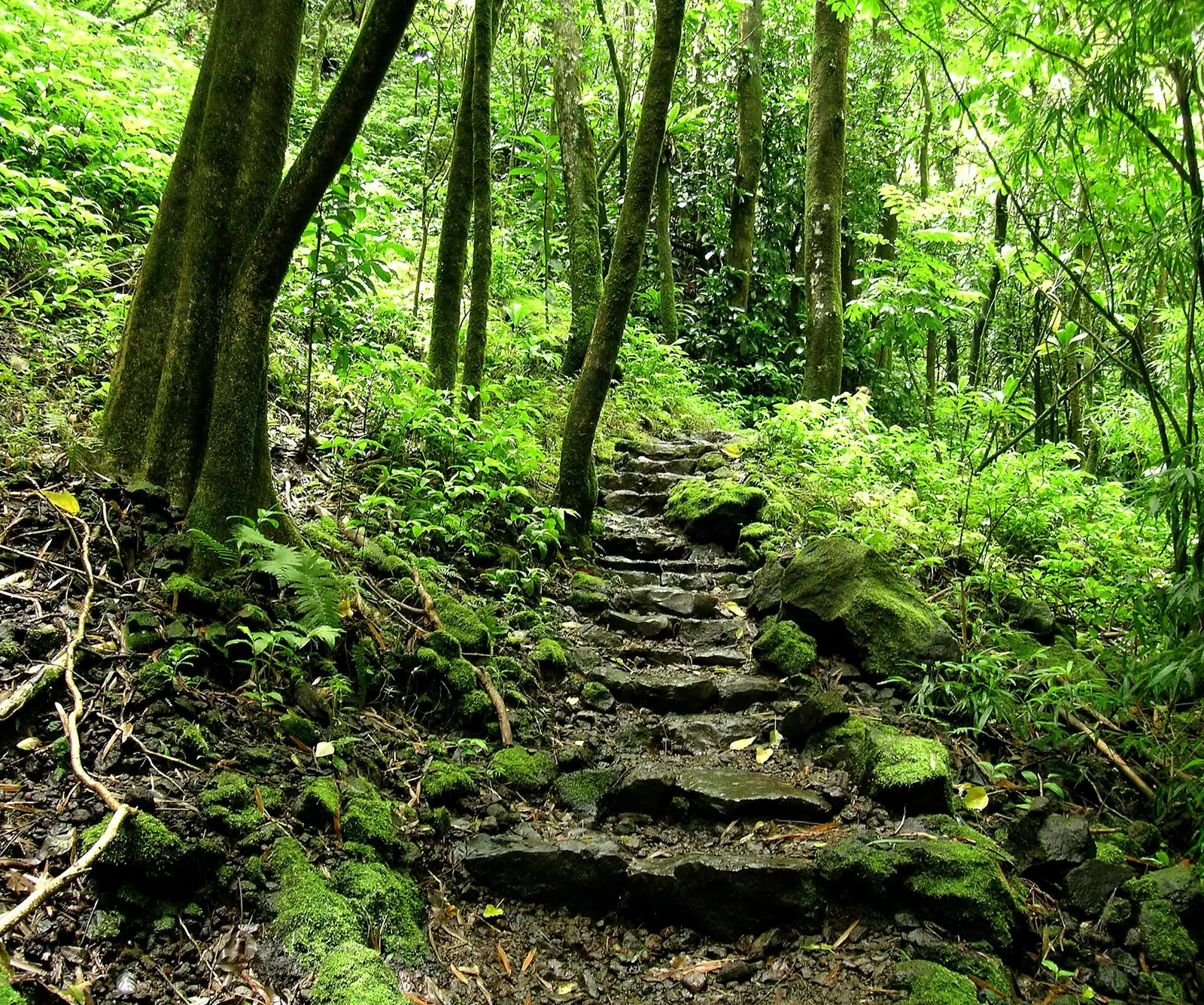
It is four miles round trip with about 800 feet of climb, and the park suggests two and a half to five hours. Five is not padding. The gradient is steady rather than brutal, but the surface is roots, mud, wet rock and occasional stone steps, and you will stop repeatedly because the trail changes character every half mile.

At roughly half a mile a short spur reaches an overlook of Makahiku Falls, which drops around 185 feet into a gorge. You see it side-on from across the valley; there is no safe way down and people have died trying. A little further on, the trail passes under an enormous banyan, aerial roots down to the ground across a wide section of the path, and the light goes green.

Then two footbridges over Palikea Stream, then the bamboo. The bamboo forest is the part people remember: a dense stand tall enough to close over the trail entirely, with a boardwalk laid through it because the ground below is permanently waterlogged. In wind the culms knock against each other, which is a sound rather than a view, and it goes on for the better part of half a mile.

Out the far side, the valley narrows and Waimoku Falls appears at the head of it, 400 feet down a sheer horseshoe of lava wall. The last stretch involves a rocky, braided path along the stream bed. Signs warn about rockfall at the base and they are not decorative.

No reservation is needed for Kīpahulu. The park entrance fee covers it.
Getting there and parking

Follow the Hāna Highway to Hāna town, then continue south on Highway 31 for about ten miles — roughly thirty minutes — to the Kīpahulu Visitor Center near mile marker 42. The mile markers count down on this stretch, so you will pass 45 (Wailua Falls) before 42.

Total drive from Kahului is about three hours without stops, and nobody drives it without stops. From Pāʻia, about two and three quarter hours. Leave early.

Parking is in the park lot at the visitor centre, and the Pīpīwai trailhead is across the road from it. The lot is not large and fills through the middle of the day in peak season; arriving before 10am usually solves it.

This is a district of Haleakalā National Park, so the standard entrance fee applies and covers you for three days across both districts. No reservation is needed for Kīpahulu at any hour.

Stream crossings, flash floods and the sign you must not ignore

This is a rainforest valley below a mountain that catches enormous rainfall, and the stream you walk beside responds to weather you cannot see. Flash flooding is the real hazard on this trail, not the distance.

  • Check the forecast and the park's conditions page before you set out. Rangers post warnings at the trailhead and close the trail when the stream is running high.
  • If a crossing looks marginal, it is. Water that is brown, carrying debris, or has risen since you passed it on the way in means turn around and wait on the high side.
  • Heavy rain upvalley can raise the stream within minutes under a blue sky at the coast. This is the specific way people get caught here.
  • The final approach to Waimoku Falls involves picking across the stream bed. Rangers have at times closed the last section entirely.

At the falls themselves, rockfall is the second hazard. The 400-foot wall sheds rock, and the plunge pool sits directly beneath it. The park posts a warning sign short of the base and asks visitors not to go beyond it or swim in the pool. Wet basalt at the bottom of a waterfall is also as slippery as any surface on the island.

Freshwater in Hawaiʻi carries a leptospirosis risk. Do not drink from the stream, and keep open cuts out of it.

What the trail actually demands

  • Shoes with grip, that you do not mind ruining. Mud, roots and wet rock, in that order. Trainers are fine; flip-flops and slick-soled sandals are how ankles get turned here.
  • Water, at least two litres per person. There is none on the trail and the drive back is long.
  • Insect repellent. The bamboo section and the stream banks hold mosquitoes, and the still air in there means they find you.
  • Rain layer. Kīpahulu is on the wet side of East Maui. A shower during the hike is more likely than not.
  • Food. The nearest reliable shop is in Hāna, thirty minutes back up the road, and it closes early.
  • Cash for the entrance fee if you do not already hold a park pass, though cards are generally accepted at the station.
  • A full tank before Hāna, because Kīpahulu has no fuel at all.

Start the hike by mid-afternoon at the very latest. It gets dark quickly in a deep valley on the windward coast, the trail has no lighting, and you still have a three-hour drive home on a road with 620 curves. A 9am or 10am start is the sane plan, which in practice means leaving Pāʻia around 6:30am or staying overnight in Hāna.

The trail, section by section

Trailhead to 0.5 miles. Out of the car park across the highway from the Kīpahulu Visitor Center, climbing steadily on a wide dirt track through grass and guava. Views open back down to the coast behind you. A signed spur on the right reaches the Makahiku Falls overlook — go, it takes two minutes.

0.5 to 1 mile. Into forest. The path narrows, the roots begin, and you pass under the banyan, which is large enough that people walk past looking for a waterfall and miss that they are standing under the landmark.

1 to 1.5 miles. Two footbridges cross Palikea Stream with gorge views upstream and down. This is the point to look at the water and make a judgement about conditions.

1.5 to 1.8 miles. The bamboo forest, entered abruptly through a gap. Boardwalk sections keep you out of the mud. The canopy closes, the light drops, and everything sounds different.

1.8 to 2 miles. Out of the bamboo into an open, boulder-strewn valley head, following the stream over rock to the base of Waimoku Falls.

Then back the way you came, which is faster downhill and considerably muddier if it has rained while you were up there. Most people are surprised by how long the return still takes.

Combining it with ʻOheʻo Gulch and the drive home

The Kīpahulu Visitor Center sits between the two things worth doing here. The Pīpīwai Trail goes uphill from the road. The Kūloa Point Trail, a half-mile loop down to ʻOheʻo Gulch and the sea cliffs, goes the other way and takes about thirty minutes. One entrance fee covers both, and doing both is the right call given how far you have driven.

Note that swimming in the pools at ʻOheʻo has been closed until further notice. If someone in your group is here for the swim, that is worth knowing before the three-hour drive rather than after.

For the return: most people go back the way they came, north through Hāna and along the Hāna Highway, roughly three hours to Kahului. The alternative is continuing south on Piʻilani Highway around the dry side of Haleakalā to Kīhei, which is shorter in miles but narrow, remote, sometimes unsealed and excluded from most rental car agreements. In daylight, in dry conditions, with a confident driver, it is a genuinely interesting road. After a long hike, late in the day, it is not the moment.

The best answer to all of this is to stay a night in Hāna. It turns a punishing round trip into two relaxed half-days and puts you at the trailhead at opening.

Tours that visit Pīpīwai Trail

Operators run these trips past Pīpīwai Trail, or stop there as part of a longer route. We list what the booking data supports — not everything that mentions the name.

Booking through these earns us a commission from Viator. You pay the same, and payment did not decide what is listed.

Shared departurespriced per seat, best value for one or two

  • Maui: Lahaina ATV Adventure

    Low Supplier Cancellation Rate

    Maui: Lahaina ATV Adventure (opens in a new tab)

    Free cancellation
    1.8K reviews

    You’ll have the chance to drive, or simply be a passenger in one of today’s most advanced 4 seater off-road vehicles, the Canam sport max…

    2 hours

    Prices checked

    from $202.55
  • Maui Atlantis Submarine Adventure

    Excellent Quality

    Maui Atlantis Submarine Adventure (opens in a new tab)

    Free cancellation
    815 reviews

    All riders must be 36 inches or taller to participate/ride submarine. Dive 100 feet below the surface and experience Maui’s marine…

    2 hours

    Prices checked

    from $144.36Usually $160.41

Private and small-group optionsoften cheaper per head for a family or a group of six

Near Pīpīwai Trail

Straight-line distances, so allow more on the road — the island is long and has one main parkway.

  • A tall narrow waterfall dropping down a dark cliff face into forest

    Water feature

    Waimoku Falls

    Four hundred feet of water down a sheer lava wall, two miles up a rainforest valley and reachable no other way.

    0.5–1 hoursCovered by the Haleakalā National Park entrance fee, around $30 per vehicle for three days.0.7 mi away

  • A stream stepping down rock terraces towards the ocean under cloud

    Water feature

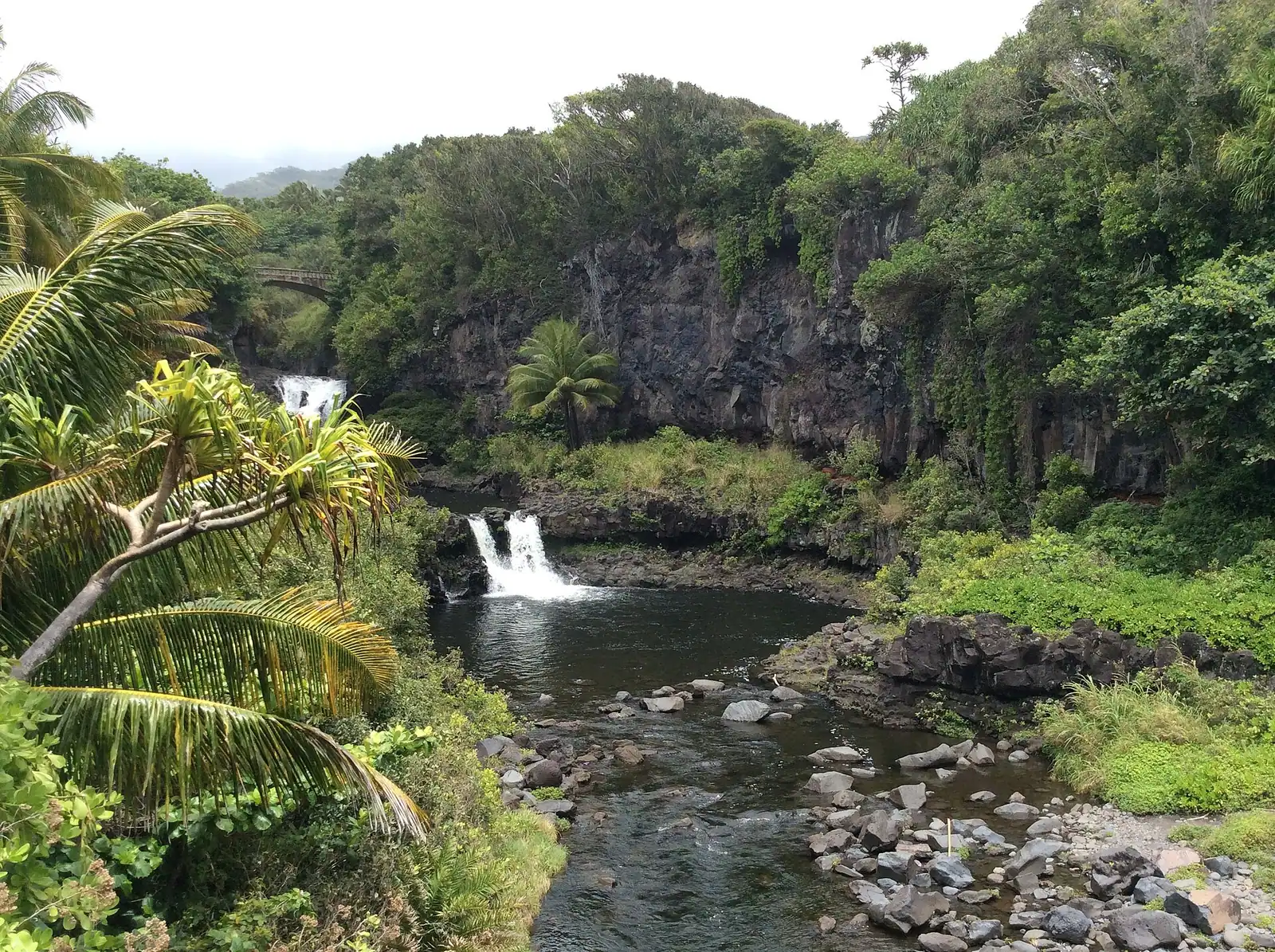
    ʻOheʻo Gulch

    A staircase of stream pools falling to the sea at Kīpahulu, where swimming has been closed and the famous name was never real.

    0.5–1.5 hoursCovered by the Haleakalā National Park entrance fee, around $30 per vehicle for three days across both districts.270 ft away

  • A single waterfall falling into a rock pool in a narrow fern-covered gully

    Water feature

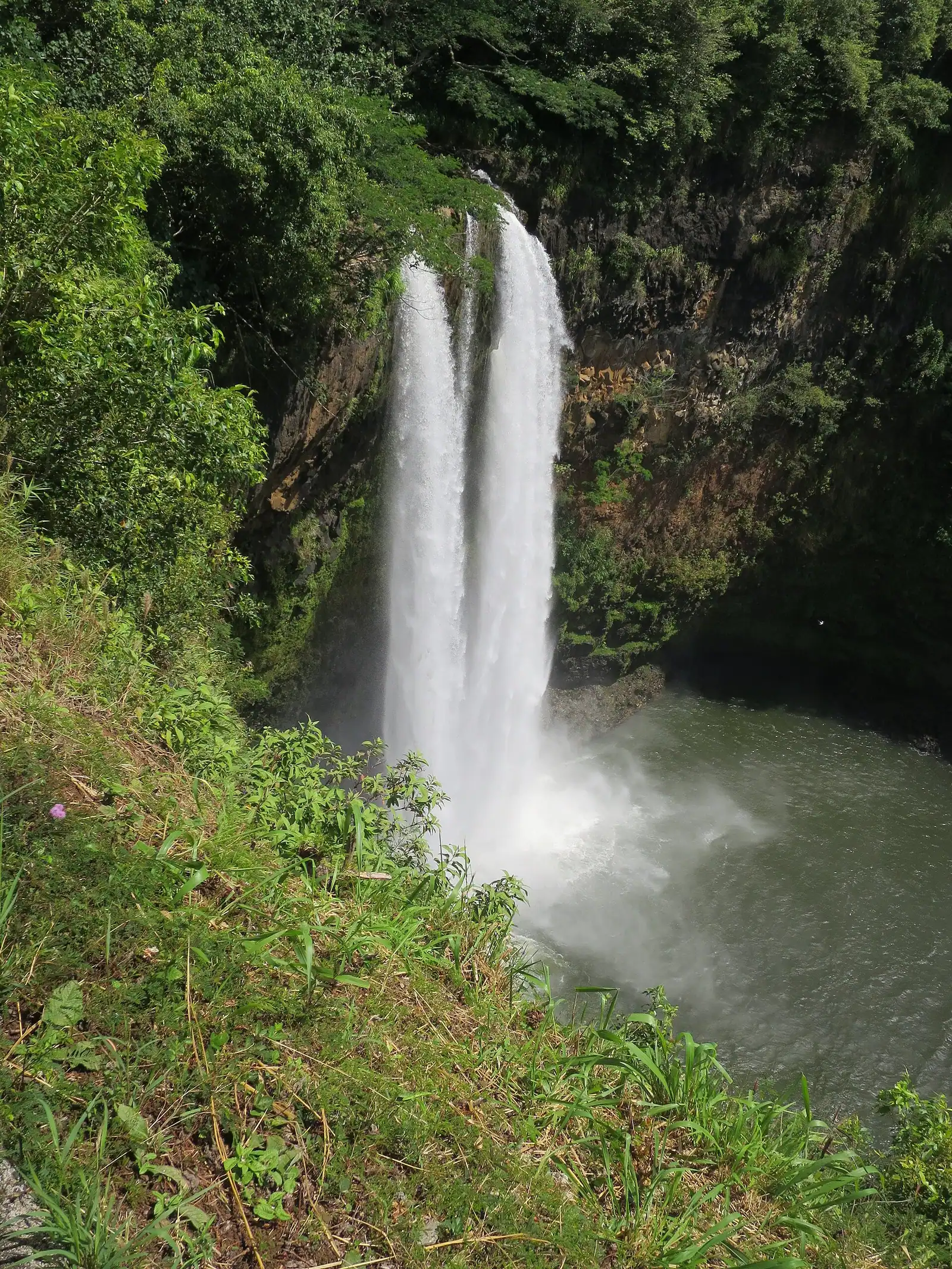
    Wailua Falls

    Free

    Eighty feet of water beside the road south of Hāna, and the only serious Maui waterfall you can see without leaving the car.

    10–40 minutesFree. No entry fee, no reservation and no parking charge.3.5 mi away

  • A sheltered bay with dark sand, a small pier and a steep green headland behind

    Beach

    Hāna Bay

    Free

    The one reliably calm swim on the Hāna coast, under the cinder cone where Queen Kaʻahumanu was born in 1768.

    1–2.5 hoursFree. Parking is free.7.5 mi away

Pīpīwai Trail: common questions

How long is the Pīpīwai Trail and how hard is it?

Four miles round trip with around 800 feet of climb, and the park allows two and a half to five hours. It is a moderate hike rather than a hard one — the gradient is steady — but the surface is roots, mud, wet rock and a rough stream-bed section at the end, so it takes longer than the distance suggests. Reasonably fit children manage it. Trainers or hiking shoes, not sandals.

Do you need a reservation for the Pīpīwai Trail?

No. The Kīpahulu District of Haleakalā National Park has no reservation system at any hour — that requirement applies only to the summit between 3am and 7am. You pay the standard park entrance fee, around $30 per vehicle, which is valid for three days and also covers the Summit District. If you drove up Haleakalā earlier in the week, keep the receipt and you may already be covered.

Can you swim at Waimoku Falls?

No, and you should not try. The park posts a rockfall warning short of the base of the falls and asks visitors not to go beyond it or enter the plunge pool. A 400-foot lava wall sheds rock, the pool sits directly under it, and the surrounding basalt is extremely slippery. Swimming in the pools at ʻOheʻo further down the valley is also closed until further notice.

Is the Pīpīwai Trail worth driving past Hāna for?

If you are physically able to do the hike, yes — it is the best walk on Maui, and the bamboo forest and the 400-foot falls at the end are not replicated anywhere else on the island. The honest caveat is the drive: ten miles and thirty minutes beyond Hāna, three hours from Kahului each way. It works best as part of an overnight in Hāna, or as a day where the trail, not the roadside stops, is the point.

What happens if it rains while you are on the Pīpīwai Trail?

Light rain is normal here and the hike carries on. Heavy rain is different: Palikea Stream flash floods from rainfall higher in the valley that you cannot see, and the crossings become dangerous within minutes. If the water is brown, carrying debris, or higher than when you passed it, stop and wait on the high side rather than crossing. Rangers close the trail in high water and post conditions at the trailhead.