Skip to content
Menu

Booking through these earns us a commission from Viator. You pay the same, and payment did not decide what is listed.

Search

Viewpoint

Puʻu ʻUlaʻula (Haleakalā Summit)

Last updated

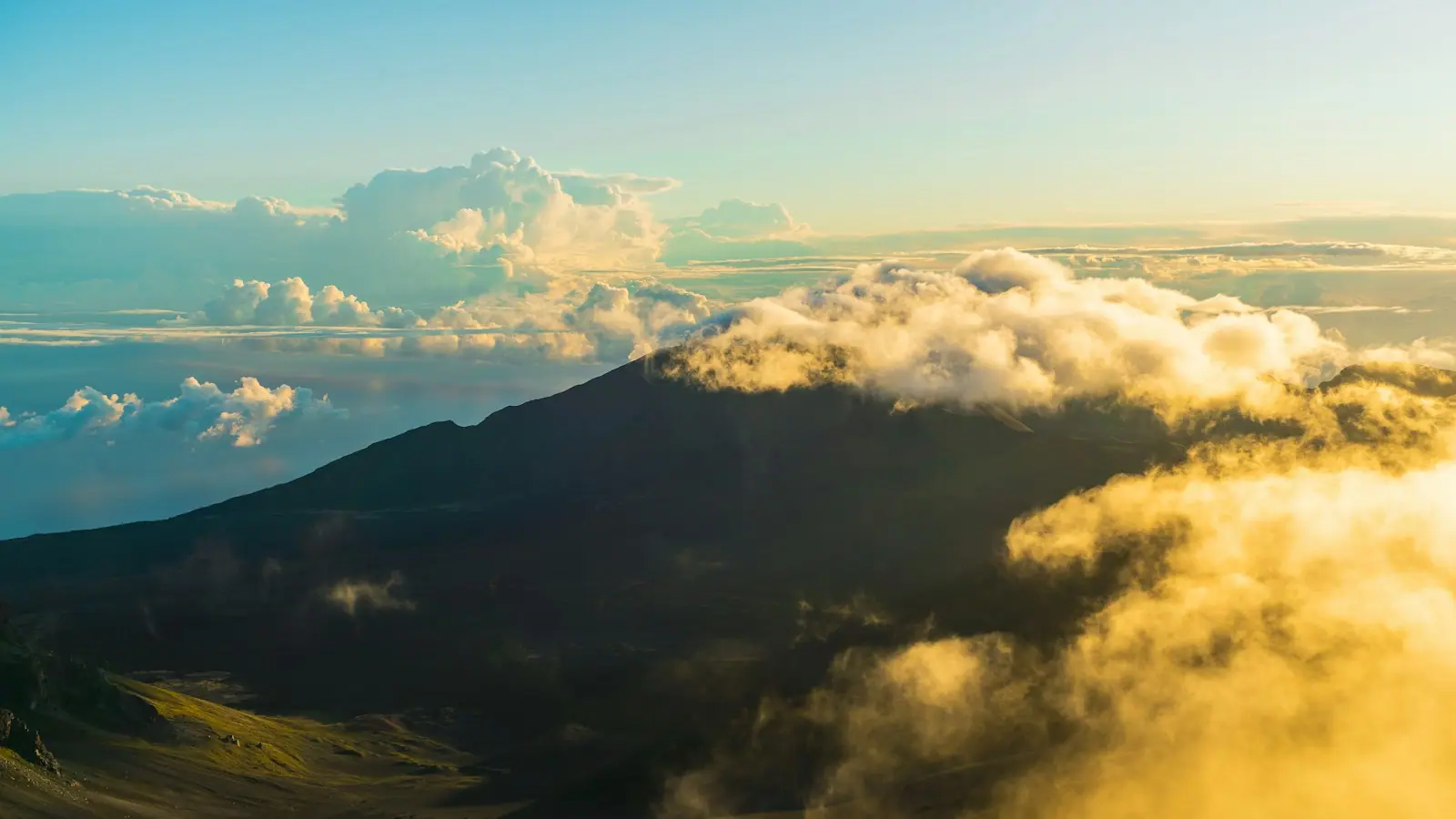
The highest point on Maui, 10,023 feet up, where the horizon curves and the clouds are a thousand feet below your feet.

Photo: Farid Askerov whereisfaridCC0

Closed at the moment

The summit road closes occasionally in severe weather, including winter ice and snow events. Check park conditions before driving up in the dark.

The road ends at a cinder hill called Puʻu ʻUlaʻula — Red Hill — and at 10,023 feet it is the highest ground on Maui. A low glass-walled observation building sits on top of it, which matters more than it sounds like it should: the wind up here is constant and cold, and being able to watch sunrise through glass rather than into a gale is the difference between staying an hour and staying ten minutes.

What you see from the rim depends entirely on the cloud. On the ordinary day, the trade-wind inversion caps out somewhere around 6,000 to 7,000 feet, which puts a flat white floor below you and nothing but sky above. Mauna Kea and Mauna Loa stand out of it across the ʻAlenuihāhā Channel, 80-odd miles away on Hawaiʻi Island, and on clear mornings you can pick out the observatory domes on Mauna Kea's summit as white specks. Turn the other way and the island of Lānaʻi and the long ridge of Molokaʻi sit on the horizon. Turn inward and the view is the crater: 2,600 feet down to a floor of cinder cones in rust and ash-grey, with nothing growing on it.

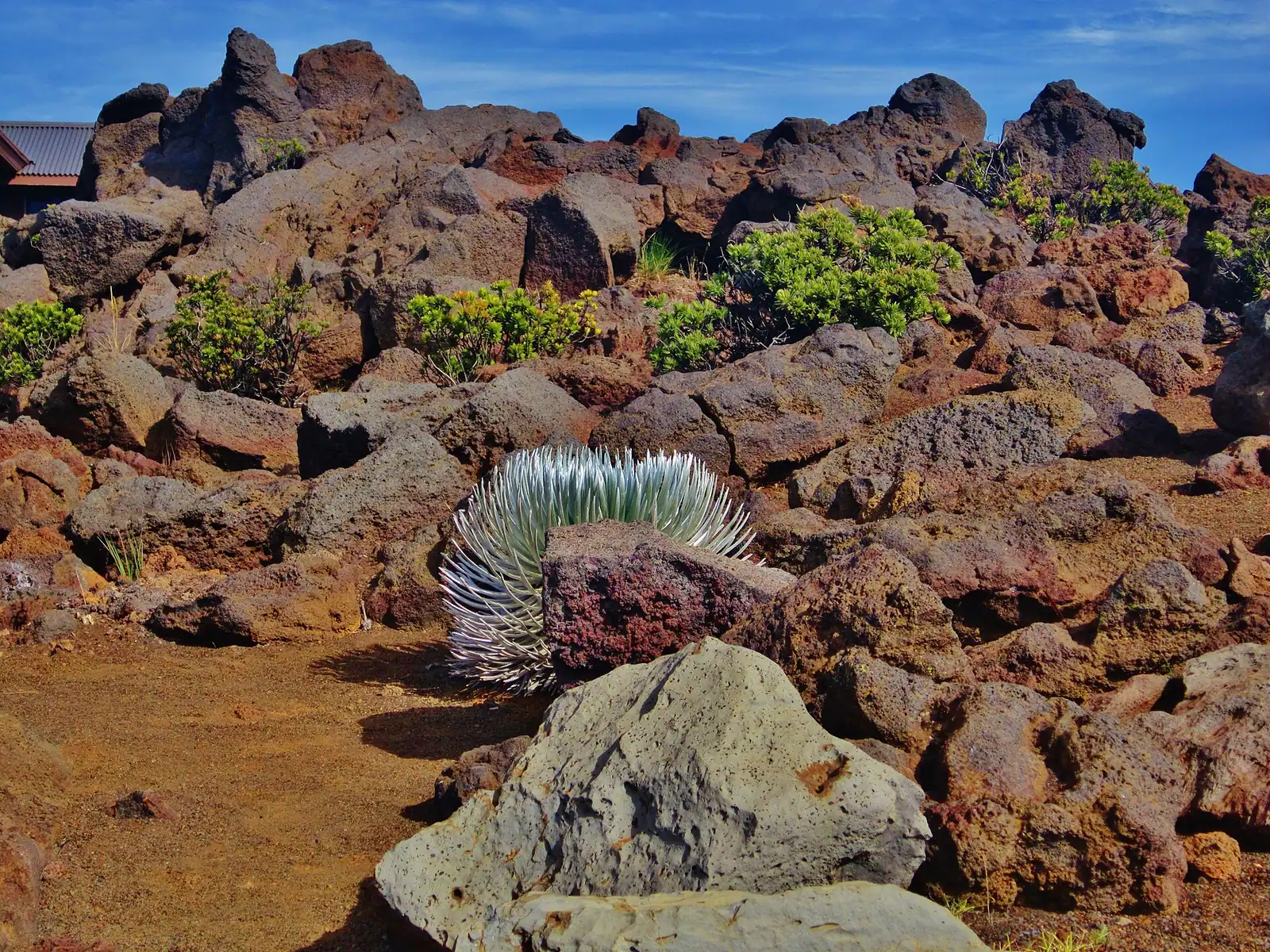
Two overlooks on the way up are worth the stop and get skipped by everyone racing the dark. Leleiwi, around 8,800 feet, looks into the crater from the north side and is the classic spot for the Brocken spectre, where your own shadow appears projected on the cloud below you inside a ring of colour. Kalahaku, higher up, has a silversword enclosure and can only be entered on the way down — there is no left turn into it on the ascent.

Adjacent to the summit, and closed to the public, is the cluster of research domes locals call Science City: Air Force space-surveillance telescopes, University of Hawaiʻi instruments, and the Daniel K. Inouye Solar Telescope, the largest solar telescope in the world. You will photograph them by accident from the summit and you cannot visit them.

This is a sacred summit in Hawaiian tradition, not only a viewpoint. Stay on the paths, take nothing, leave nothing, and do not build rock stacks.
Getting there and parking

Crater Road (Route 378) off Route 377 above Kula, then roughly 21 miles of switchbacks from the junction to the summit. About two hours from Kahului, two and a half to three from Kāʻanapali or Wailea. The last fuel is in Pukalani or Kula.

Parking is free once inside the park. There are three lots that matter: the Haleakalā Visitor Center at about 9,740 ft, the summit lot at Puʻu ʻUlaʻula, and a small overflow area between them. For sunrise the summit lot is full by around 4:45am in season; park at the visitor centre rather than circling, because the view is effectively the same.

Cycling down the mountain with an outfitter is a long-standing Maui activity; riders start below the park boundary on the commercial tours, not from the summit itself.

Working up the mountain: the three stops that matter

Leleiwi Overlook, roughly 8,800 feet, is a short walk from a small pull-out to a rim viewpoint on the crater's north wall. Late afternoon with cloud filling the basin below is when the Brocken spectre shows: your shadow thrown onto the cloud surface, ringed by a circular rainbow. It is a real optical effect, not a local legend, and it happens here more often than at most places on earth because of how reliably the cloud sits.

Kalahaku Overlook is higher, has the best roadside view down into the crater, and holds a fenced planting of ʻāhinahina — Haleakalā silverswords — so you can see them without walking out onto the cinder. The catch is a piece of road design that trips up everyone: you cannot turn left into Kalahaku on the way up. Catch it on the descent.

Puʻu ʻUlaʻula, the summit itself, has the parking area, the glass observation building and the widest sweep of view. It fills completely before sunrise and empties within half an hour of it.

Between Kalahaku and the summit sits the Haleakalā Visitor Center at about 9,740 feet, with the Keoneheʻeheʻe (Sliding Sands) trailhead beside it. The building's opening hours vary and it has closed for extended renovation work in recent years; the restrooms have generally stayed open regardless.

Ten thousand feet does things to people

The air at the summit carries roughly two-thirds of the oxygen it does at sea level, and most visitors arrive having been at the beach two hours earlier. That is a fast ascent by any standard.

Expect some combination of headache, shortness of breath on the short walk up to the observation building, light-headedness and fatigue. It is normal, it is usually mild, and it resolves on the way down. Move slowly, drink water, and do not sprint up the cinder path in the dark because sunrise is starting.

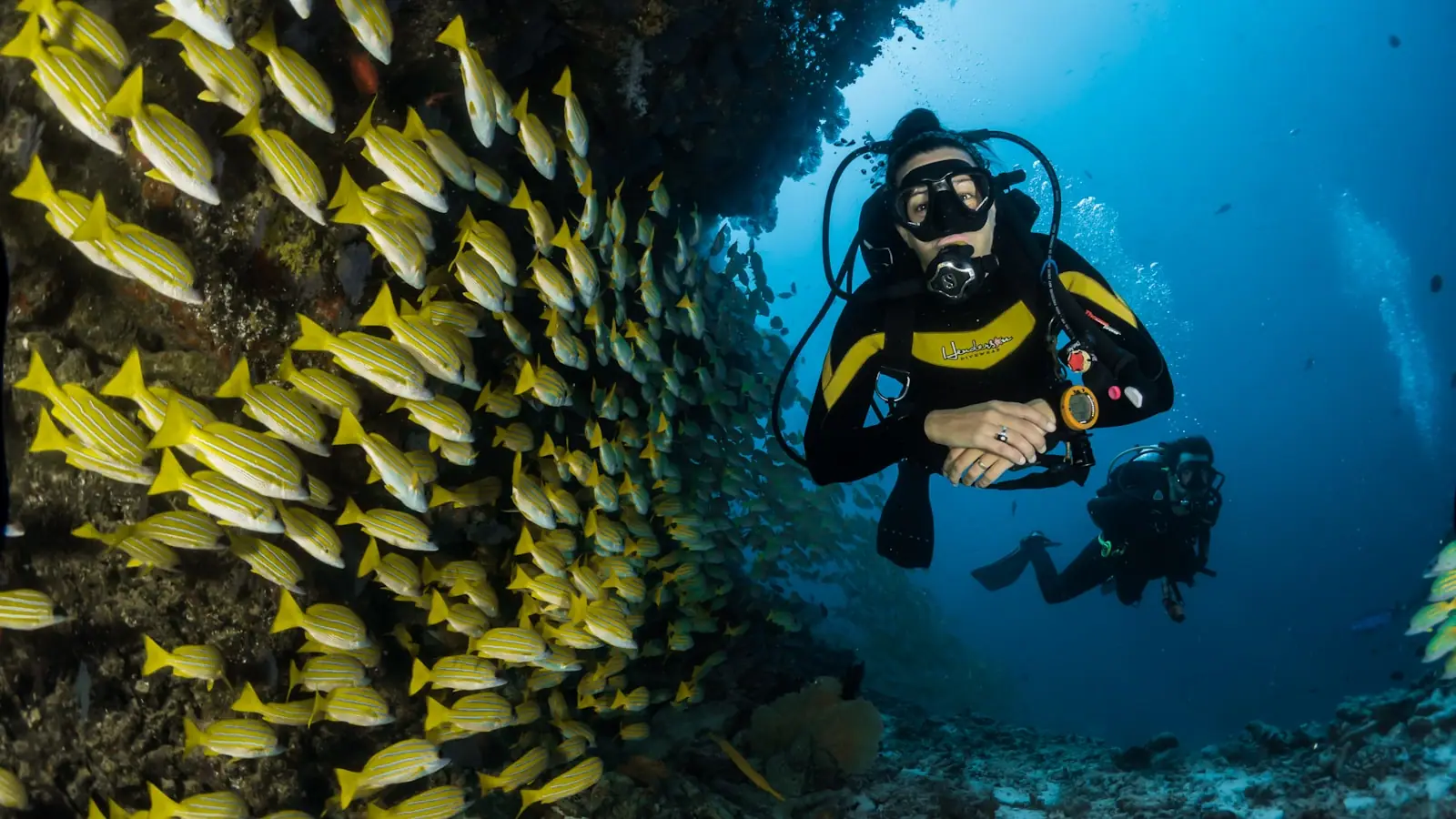
Two specific cautions carry real weight. The park advises against bringing children under two to the summit. And do not come up within 24 hours of scuba diving — the pressure change from sea level to 10,000 feet is the same problem as flying, and on a Maui trip a Molokini dive the previous day is an easy thing to forget about.

People with heart or respiratory conditions, and anyone pregnant, should treat the summit as a genuine medical consideration rather than a scenic drive. The visitor centre is 9,740 feet and the view from there is nearly the same; stopping there instead is a perfectly good outcome.

Sunrise, hour by hour

Sunrise at the summit needs a reservation for the 3am–7am entry window, booked in advance through recreation.gov, per vehicle.

Working backwards from a sunrise around 6:00am:

  • 2:30am — leave Kīhei or Kahului. From Kāʻanapali, leave an hour earlier again.
  • 4:15am — through the entrance station, reservation and photo ID ready.
  • 4:45am — parked. The summit lot fills first; the overflow is at the visitor centre, ten minutes below, and the view from there is fine.
  • 5:00–5:45am — the sky lights from the east long before the sun appears. This is the part people photograph.
  • ~6:00am — actual sunrise. Chanting is common, respectful silence is appreciated.
  • 6:30am — the lot empties and the descent traffic begins.

Sunrise times swing by roughly forty minutes across the year, so check for your date rather than working from a blog post. The park posts a summit webcam, and if it shows nothing but grey at 2am, the reservation is not worth the drive.

On the way down, the road drops 10,000 feet continuously. Use a low gear. Watch for cyclists on the downhill bike tours, and for nēnē standing in the road near Hosmer Grove.

After dark, when almost everyone has gone

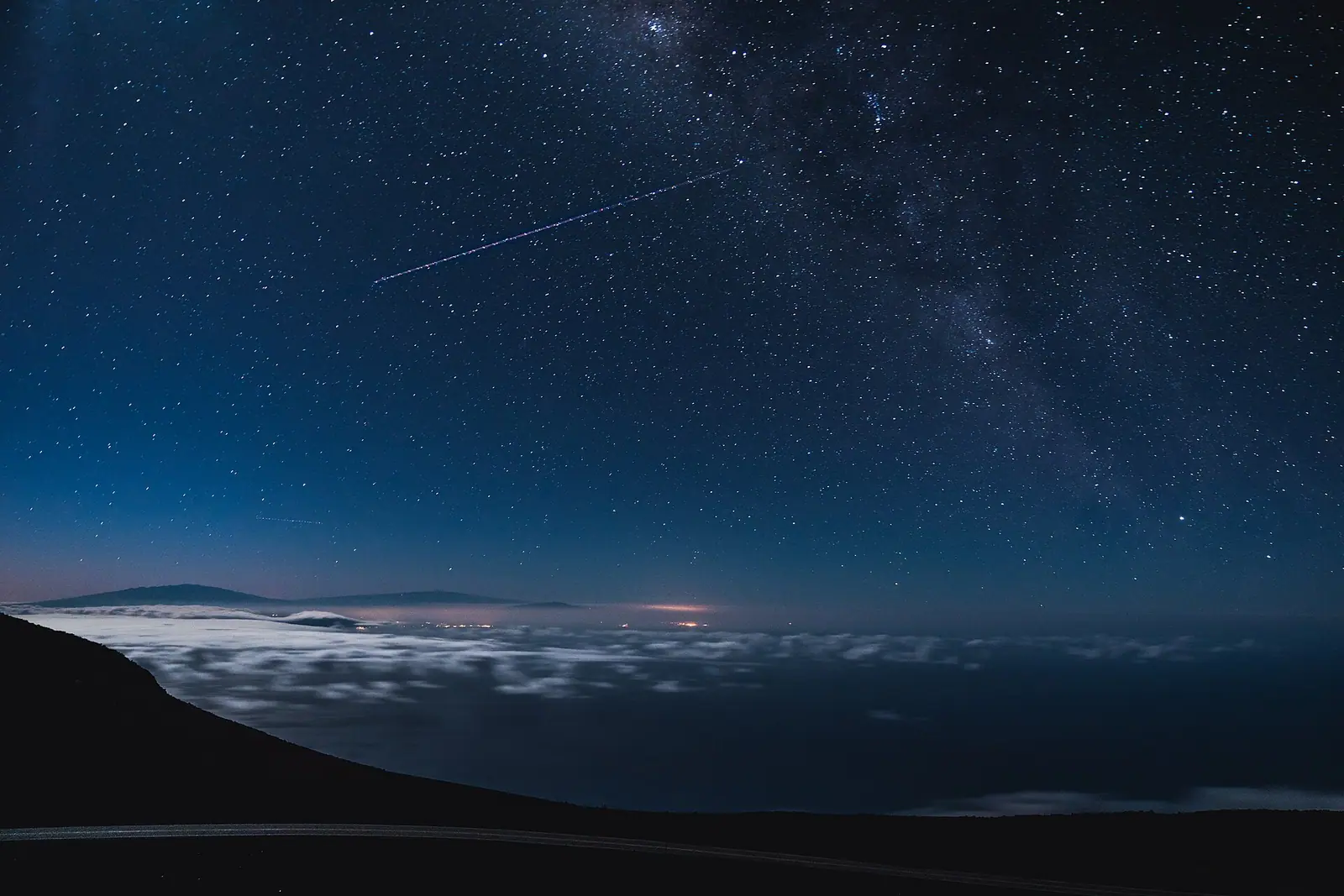
The case for staying after sunset is simple: high altitude, dry air above the inversion layer, and no coastal light bleeding upward. There are few better accessible night skies in the Pacific, which is precisely why the research telescopes are here.

  • Give your eyes a full twenty minutes to dark-adapt, and keep phone screens off. A red-light head torch is worth packing.
  • The Milky Way is obvious to the naked eye on a moonless night rather than something you squint for.
  • Check the moon phase. A full moon washes out the sky but lights the crater floor, which is its own kind of view.
  • Bring everything you would have brought for sunrise and then one more layer. Temperatures drop fast once the sun is down and the parking area has no shelter.
  • Ranger-led stargazing programmes run intermittently and are posted on the park's calendar rather than scheduled far ahead.

Commercial stargazing tours run from the summit road and generally include telescopes, a guide and a warm drink. On this island they price similarly to a sunrise tour, and they are the better bet if you want the astronomy explained rather than just looking up.

Tours that visit Haleakalā Summit

Operators run these trips past Haleakalā Summit, or stop there as part of a longer route. We list what the booking data supports — not everything that mentions the name.

Booking through these earns us a commission from Viator. You pay the same, and payment did not decide what is listed.

Near Haleakalā Summit

Straight-line distances, so allow more on the road — the island is long and has one main parkway.

  • Bare volcanic cinder cones on a high crater floor under early morning light

    Park

    Haleakalā National Park

    A 10,023-foot volcano with a reservation system at the gate and a second district four hours away on the far side of the island.

    3–8 hoursAround $30 per private vehicle, valid three days and covering both districts. Sunrise entry needs a separate $1 reservation.3.5 mi away

  • A spiky pink protea flower head with stiff bracts, photographed close up

    Park

    Kula Botanical Garden

    Eight acres of protea, koa and orchids at 3,300 feet, where the air is cool enough to grow things the rest of Maui cannot.

    1–2 hoursAround $15 per adult and about $5 for children roughly 6–12; under-sixes free.5.1 mi away

  • Rows of flowering lavender running across a sloping field

    Park

    Aliʻi Kula Lavender

    Thirteen acres of lavender at 4,000 feet, with a view that takes in both of Maui's coastlines on a clear morning.

    1–2 hoursA small admission charge, historically a few dollars per adult; children 12 and under free.5.2 mi away

  • Low wooden false-front storefronts along a quiet small-town street under a cloudy sky

    Neighbourhood

    Makawao Town

    Free

    Hawaiian cowboy country at 1,600 feet, where two streets of false-front storefronts meet and the Fourth of July means a rodeo.

    1–3 hoursFree to visit. Parking is free on the street.10.8 mi away

Haleakalā Summit: common questions

How high is the Haleakalā summit and how cold does it get?

The summit at Puʻu ʻUlaʻula is 10,023 feet, the highest point on Maui. It runs roughly 25 to 30 degrees Fahrenheit colder than the coast, so pre-dawn readings near or below freezing are routine, and the wind on the exposed rim makes it feel colder still. Ice and occasional snow happen in winter. Layers, a hat, gloves and something to sit on are the difference between watching the whole sunrise and retreating to the car.

Can you see the Big Island from the Haleakalā summit?

Yes, on a clear morning. Mauna Kea and Mauna Loa rise out of the cloud across the ʻAlenuihāhā Channel, roughly 80 miles away, and the observatory domes on Mauna Kea's summit are visible as white specks with good eyes or a zoom lens. Lānaʻi and Molokaʻi sit on the horizon in the other direction. Whether you get any of it depends on where the trade-wind inversion sits that day.

Is the drive up Haleakalā difficult?

It is a well-maintained paved road with guardrails, but it is long, steep and relentlessly winding — about 21 miles of switchbacks from the Route 377 junction, gaining most of 10,000 feet. Nervous drivers find the descent harder than the climb. Use a low gear going down rather than riding the brakes, which overheat on this road with some regularity. Passengers prone to motion sickness should sit in front and take something beforehand.

Do you have to go at sunrise?

No, and increasingly the argument is not to. Sunrise needs an advance reservation for the 3am–7am window, a 2:30am departure and a full parking lot. Sunset needs neither, delivers the same inversion cloud and the same light on the cinder cones, and leaves you positioned for what is genuinely one of the best accessible night skies in the Pacific. Late afternoon at Leleiwi also gives you the best chance of seeing a Brocken spectre.

Can you visit the observatories at the top of Haleakalā?

No. The domes beside the summit — Air Force space-surveillance facilities, University of Hawaiʻi instruments and the Daniel K. Inouye Solar Telescope — are an active research site closed to the public, with no tours and no visitor access. You will see them from the summit area and from the road, and that is as close as anyone gets.