Skip to content
Menu

Booking through these earns us a commission from Viator. You pay the same, and payment did not decide what is listed.

Search

Neighbourhood

Makawao Town

Last updated

Hawaiian cowboy country at 1,600 feet, where two streets of false-front storefronts meet and the Fourth of July means a rodeo.

Makawao is two streets crossing at a stop sign, and that is the whole town. Baldwin Avenue climbs up from Pāʻia; Makawao Avenue runs across it. The wooden false-front buildings on all four corners went up in the plantation and ranching decades around the turn of the last century, and enough of them survived that the intersection still reads as a working country town rather than a reconstruction of one.

The reason it looks like this is cattle. In 1832 Kamehameha III sent a chief to California to bring back Spanish-Mexican vaqueros to teach Hawaiians how to handle the wild herds that had multiplied across the uplands since Vancouver's gift of cattle four decades earlier. Those horsemen taught a generation, the Hawaiian word for them — paniolo, from español — stuck, and Hawaiʻi had a mounted ranching culture a good while before Texas did. The slopes above and below Makawao have been grazed ever since, and the families who work them still live here.

That history is not a museum exhibit. It comes out in the open over the Fourth of July, when the Makawao Rodeo fills Oskie Rice Arena with roping, barrel racing and bronc riding, and the parade takes the town's two streets at a walking pace behind a line of pāʻū riders. It is the largest paniolo event in the state and it has been running for over sixty years. Book accommodation and expect closed roads if you are here for it.

The rest of the year Makawao trades quietly in galleries, a couple of good bars, a saddlery and one bakery that has been on Baldwin Avenue since 1916 and still sells out before lunch. Half a mile down the hill sits Hui Noʻeau Visual Arts Center, occupying the 1917 Baldwin estate at Kaluanui — a C. W. Dickey house on twenty-five acres, now full of kilns and printing presses.

Bring a layer. At 1,600 feet the afternoon cloud comes down off Haleakalā most days, and Makawao is often fifteen degrees cooler and considerably wetter than the beach you drove up from.
Getting there and parking

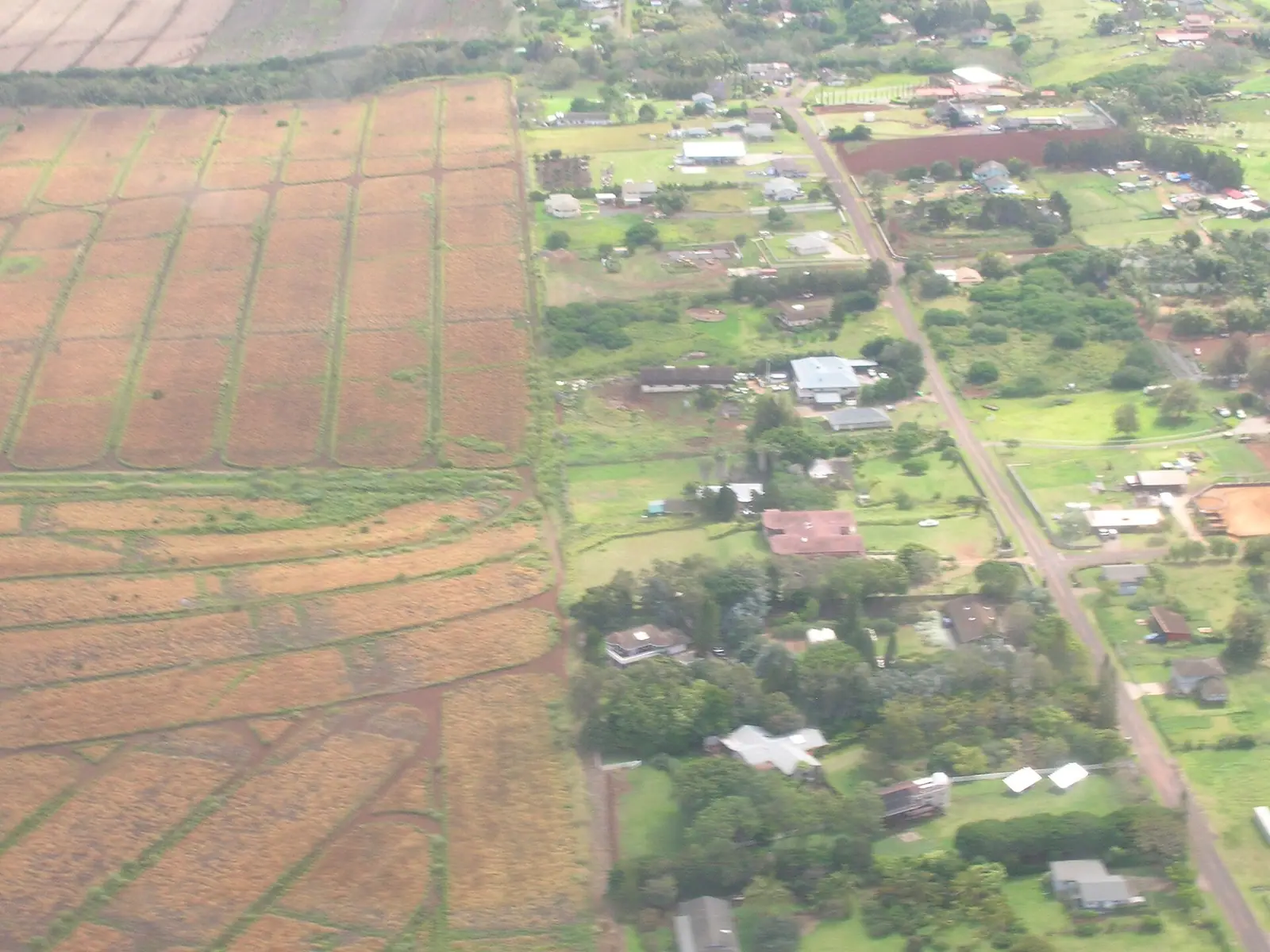
From Kahului, take Haleakalā Highway (Route 37) up to Pukalani, then Makawao Avenue east into town — about 25 minutes. From Pāʻia, Baldwin Avenue climbs seven miles straight up from the Hāna Highway and is the prettier approach, past old cane and pineapple land.

Coming down from the Haleakalā summit, stay on Route 377 to Route 37, then cut across on Makawao Avenue rather than continuing to Kahului.

Parking is free on-street. The four corners of the Baldwin and Makawao intersection fill first; there is almost always space a block or two out. No public transport serves the town usefully for visitors, and rideshare supply Upcountry is thin at night.

What paniolo actually means here

Cattle arrived on Hawaiʻi Island in 1793 as a gift from Captain George Vancouver to Kamehameha I, and a royal kapu protected them from being killed. By the 1820s the herds were feral and destructive. The answer, in 1832, was to import expertise: Kamehameha III sent for vaqueros from Mexican-held California, who arrived, worked, and taught.

Hawaiians took the craft and made it theirs. The word paniolo is a Hawaiian rendering of español. The slack-key guitar tradition, the braided rawhide gear, the pāʻū riding style in which women ride astride in long sweeps of fabric — all of it grew out of that transfer and the century of ranching that followed.

Upcountry Maui is where that took root on this island. The pasture that runs from Makawao up towards Haleakalā and across to ʻUlupalakua has been cattle country for six generations, and it still is. Visitors who come expecting a cowboy theme town are surprised twice: first that Makawao is smaller than they pictured, and then that the ranching is real. If you see a horse trailer parked outside the bakery at seven in the morning, nobody put it there for you.

The Fourth of July rodeo and parade

The Makawao Rodeo runs over the Fourth of July weekend at the Oskie Rice Arena, on the pasture side of town, and it is the biggest paniolo competition in Hawaiʻi. Events are the ones you would recognise — team roping, barrel racing, bareback and saddle bronc — plus Hawaiʻi-specific twists like double mugging and the po'o wai u, a wild-cow milking event with local roots.

The parade through town on the Saturday morning is free and is the part most visitors enjoy more than the arena. Pāʻū riders represent each island in the colours and lei of that island, and the whole thing moves at the speed of a horse.

Plan around it rather than into it. Baldwin and Makawao Avenues close, parking disappears well beyond the town limits, and Upcountry accommodation books out months ahead. Ticket prices, gate times and the exact schedule move year to year, so check the rodeo association's listing rather than a date you read in a guidebook. If you would rather avoid the crowd entirely, the town is unusually quiet the following week.

Walking the two streets

You can see all of Makawao in forty minutes on foot, and there is nowhere you need to drive between.

  • T. Komoda Store & Bakery, on Baldwin Avenue since 1916, is the fixture. Cream puffs and stick doughnuts are the reason for the morning queue, and they genuinely run out — by mid-morning on a good day. Closed Wednesdays and Sundays. Cash is welcome; patience is required.
  • Galleries and studios occupy most of the Baldwin Avenue frontage, with glassblowing, ceramics and painting all represented. Several open late for the town's occasional evening art nights.
  • Hui Noʻeau Visual Arts Center, about half a mile down Baldwin Avenue at Kaluanui, is worth the detour even if you have no interest in taking a class. The 1917 house was designed by C. W. Dickey, the architect who gave Hawaiʻi its double-pitched roofline, and the grounds, gallery and gift shop are open to walk-ins during posted hours.
  • Makawao Union Church, a 1917 stone church also attributed to Dickey, sits on Makawao Avenue heading towards Haʻikū.
  • Eating and drinking is a short list of long-established places rather than a scene. Hours Upcountry are shorter than on the coast, and several kitchens shut mid-afternoon.

Fitting Makawao into a day

Makawao is a natural pairing with anything else Upcountry, and an awkward standalone trip. From Kahului it is about a 25-minute drive; from Kīhei closer to 45; from Kāʻanapali well over an hour.

The two combinations that work. First: Haleakalā sunrise, then breakfast in Makawao on the way down — the summit road delivers you to Pukalani and Makawao is ten minutes further, and by the time you arrive the bakery is open and you are ready to be warm again. Second: Makawao to Pāʻia, seven downhill miles on Baldwin Avenue through cane-era farmland, which works as a morning-in-the-hills, afternoon-at-the-beach pairing and needs no backtracking.

What does not work is treating Makawao as a stop on the way to Hāna. The Hāna Highway leaves from Pāʻia at sea level, and climbing to Makawao first adds half an hour to a drive that is already long enough.

Parking is free, on-street, and tight at the crossroads. Park a block out on Makawao Avenue and walk in.

Tours that visit Makawao

Operators run these trips past Makawao, or stop there as part of a longer route. We list what the booking data supports — not everything that mentions the name.

Booking through these earns us a commission from Viator. You pay the same, and payment did not decide what is listed.

Shared departurespriced per seat, best value for one or two

  • Maui: Lahaina ATV Adventure

    Low Supplier Cancellation Rate

    Maui: Lahaina ATV Adventure (opens in a new tab)

    Free cancellation
    1.8K reviews

    You’ll have the chance to drive, or simply be a passenger in one of today’s most advanced 4 seater off-road vehicles, the Canam sport max…

    2 hours

    Prices checked

    from $202.55
  • Maui Atlantis Submarine Adventure

    Excellent Quality

    Maui Atlantis Submarine Adventure (opens in a new tab)

    Free cancellation
    815 reviews

    All riders must be 36 inches or taller to participate/ride submarine. Dive 100 feet below the surface and experience Maui’s marine…

    2 hours

    Prices checked

    from $144.36Usually $160.41

Private and small-group optionsoften cheaper per head for a family or a group of six

Near Makawao

Straight-line distances, so allow more on the road — the island is long and has one main parkway.

  • Rows of flowering lavender running across a sloping field

    Park

    Aliʻi Kula Lavender

    Thirteen acres of lavender at 4,000 feet, with a view that takes in both of Maui's coastlines on a clear morning.

    1–2 hoursA small admission charge, historically a few dollars per adult; children 12 and under free.7.2 mi away

  • A spiky pink protea flower head with stiff bracts, photographed close up

    Park

    Kula Botanical Garden

    Eight acres of protea, koa and orchids at 3,300 feet, where the air is cool enough to grow things the rest of Maui cannot.

    1–2 hoursAround $15 per adult and about $5 for children roughly 6–12; under-sixes free.8 mi away

  • Low wooden storefronts with painted signs along a small-town main street

    Neighbourhood

    Pāʻia Town

    Free

    A two-street sugar town that surfers took over, and the last place to buy petrol, coffee and a picnic before the Road to Hāna.

    1–3 hoursFree to visit. You pay for what you buy, and parking is free but scarce.5.5 mi away

  • A windsurfer carving off the top of a breaking wave with spray behind the sail

    Beach

    Hoʻokipa Beach Park

    Free

    Maui's wave-sailing arena, watched from a clifftop lookout, where green sea turtles drag themselves onto the sand most afternoons.

    0.5–2 hoursFree. Both the beach park and the clifftop lookout are free to enter and free to park at.6 mi away

Makawao: common questions

What is Makawao known for?

Paniolo — Hawaiian cowboy — culture. The uplands around Makawao have been cattle country since the 1830s, when Kamehameha III brought Spanish-Mexican vaqueros to Hawaiʻi to teach Hawaiians to work the feral herds. The town itself is two streets of false-front wooden buildings now filled with galleries, a saddlery and a bakery running since 1916, and it hosts the state's largest rodeo over the Fourth of July.

How long do you need in Makawao?

An hour to ninety minutes covers the whole town on foot, including a bakery stop and a wander through the galleries. Add another hour if you are going down to Hui Noʻeau Visual Arts Center at Kaluanui. Most people pair it with something else Upcountry — the Kula gardens, the lavender farm or Maui Wine — rather than driving up for Makawao alone.

When is the Makawao Rodeo?

Over the Fourth of July weekend, at the Oskie Rice Arena just outside town, with a parade through Makawao on the Saturday morning. It is the largest paniolo rodeo in Hawaiʻi and has run for more than sixty years. Exact dates, gate times and ticket prices change each year, so check the rodeo association's schedule. Expect road closures in town and book Upcountry lodging well ahead.

Is Makawao worth visiting?

If you like small working towns and want a break from the coast, yes. If you are expecting a large historic district or a full afternoon of attractions, no — Makawao is genuinely tiny. The honest case for it is the contrast: cool air, cloud on the mountain, pasture instead of ocean, and a bakery queue made mostly of locals. Treat it as one stop on an Upcountry loop.

What should I eat in Makawao?

The cream puffs and stick doughnuts at the bakery on Baldwin Avenue are the town's signature, and they sell out, so go early and know it is closed Wednesdays and Sundays. Beyond that the town has a short list of long-standing restaurants and bars rather than a dining scene. Upcountry kitchens often close mid-afternoon and some shut a weekday entirely, so check before making a special trip for dinner.