On this page
Maui runs on visitors and Maui is tired of them, and both of those are true at once. Around three million people come here in a normal year to an island where roughly 165,000 live. Since August 2023 that arithmetic has carried a weight it did not before.
This page is not about being a nicer person on holiday. It is about specific things residents, county officials and Native Hawaiian organisations have asked visitors to do differently, most of which take no effort once you know them.
Lāhainā
On 8 August 2023, a wildfire driven by hurricane-force downslope winds destroyed historic Lāhainā town. Around a hundred people died. It is the deadliest wildfire in the United States in more than a century, and thousands of people lost their homes, their businesses and their town in a single afternoon.
Lāhainā was not a resort strip that burned. It was the capital of the Kingdom of Hawaiʻi in the nineteenth century, the site of Mokuʻula, the island residence of Kamehameha III, a town with a continuous Hawaiian presence stretching back centuries and families who had been on the same streets for generations.
Three years on, the town is a construction site, a memorial and a community rebuilding. The County of Maui reopened Front Street to vehicle traffic on 1 August 2026 after seawall, sidewalk and utility work, with fencing installed around areas that remain closed. Businesses are coming back in stages. Banyan Court has been closed through the tree's recovery, and arborists have been careful about what they promise.
What residents have asked for is unambiguous and it has been said publicly, repeatedly, and in almost identical words by different people:
- Do not drive into the burn zone to look. Do not get out of the car. Do not wander.
- Do not photograph damaged property, ruined homes or the sites where people died.
- Do not cross barricades or fencing, for any reason, including a photograph of the banyan tree.
- Do come to West Maui. Stay in the hotels, eat in the restaurants that have reopened, book the boats that are running, buy from the small businesses, and tip well.
The second half of that list matters as much as the first. West Maui's economy is the visitor economy, and the fastest way to hurt people who have already lost everything is to stay away out of misplaced delicacy.
Access arrangements have changed repeatedly since 2023 and will keep changing. Check the county's current recovery information before you travel rather than trusting anything written months earlier.
Water, housing and why the resentment is specific
Maui's tension with tourism is not vague. It attaches to two resources.
Water. Maui County has declared water shortage conditions across Upcountry, Central and South Maui in recent years, and a conservation ordinance effective March 2026 restricts when potable water may be used for irrigation, applying to hotels and lodging establishments as well as homes. Behind that sits a much longer argument: Nā Wai ʻEhā, the four great waters of Waiheʻe, Waiehu, Wailuku and Waikapū, were diverted for plantation agriculture for over a century, and restoring stream flow for taro cultivation and for the streams themselves has taken decades of litigation. When a visitor takes a twenty-minute shower in a resort on a dry coast, that is the history they have walked into.
Housing. The fire destroyed thousands of homes on an island that already had among the worst housing affordability in the country, and displaced families ended up competing with vacation rentals for what was left. Maui County has moved to phase out short-term rentals in apartment-zoned buildings, a contested policy whose timeline has shifted more than once. Wherever it lands, the underlying fact is worth knowing: where you sleep on this island is a live political question, and hotels, licensed rentals and unlicensed ones are not the same thing. Book something legal.
Short showers, reused towels, and a hotel or a properly permitted rental. That is most of what is being asked.
Places that are not photo stops
Maui has sites that are sacred in the plain sense of the word, and several of them look like viewpoints.
Haleakalā. The name means house of the sun, from the account of Māui snaring the sun above the crater to lengthen the day. Hawaiian cultural practitioners conduct protocol at the summit. If you are there at dawn and something is happening that is clearly not for you, be quiet and stay back.
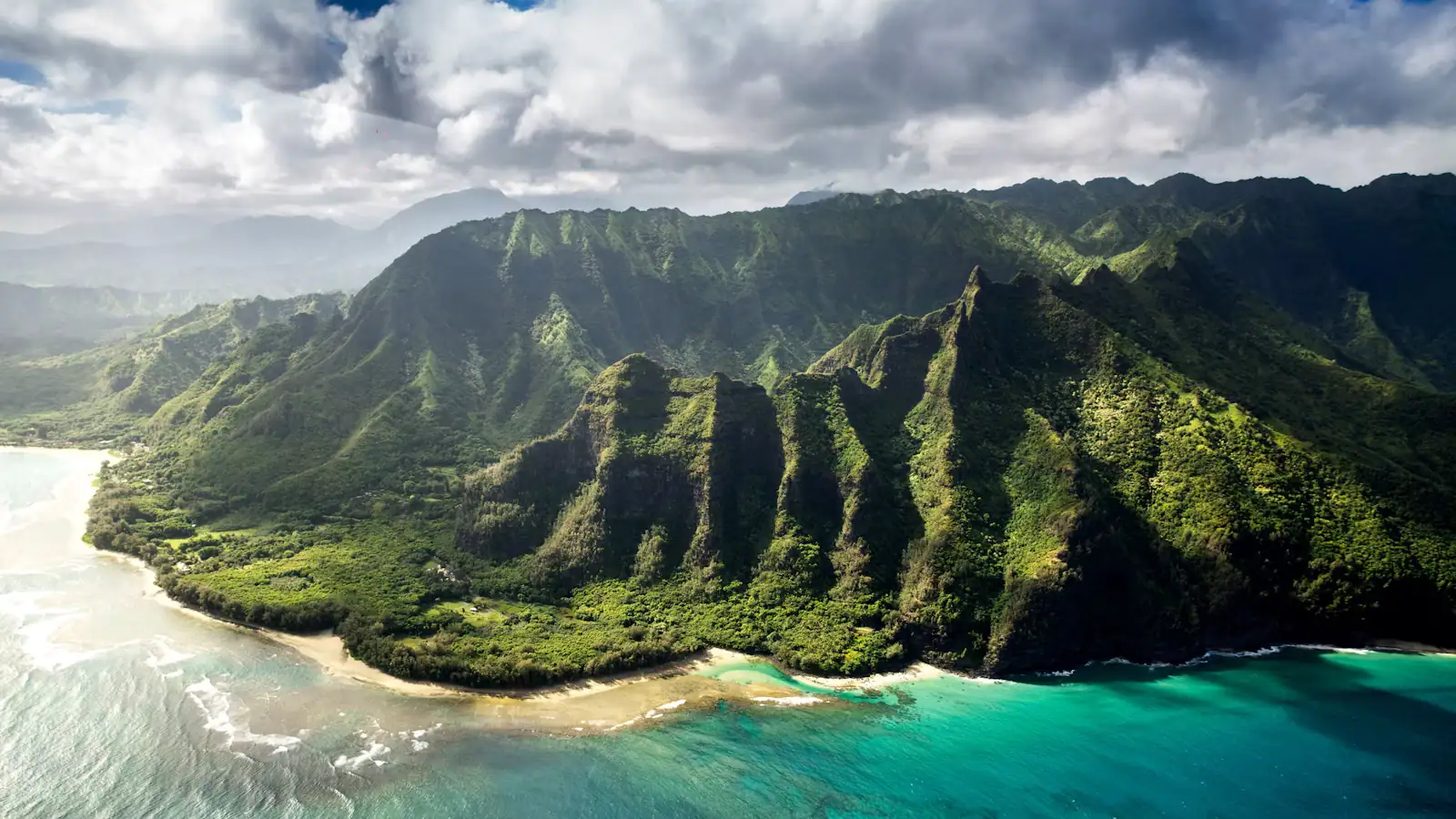
ʻĪao Valley. The ridge in the photographs is Kūkaʻemoku. The valley was a burial place for aliʻi and the site of the 1790 battle of Kepaniwai, whose name refers to the dammed waters of the stream. Non-residents need an advance reservation, which is the right kind of friction for a place like this.
Puʻu Kekaʻa, the rock at the north end of Kāʻanapali that people jump off. In Hawaiian tradition it is a leina a ka ʻuhane, a place where souls leap from this world. The torch-lighting ceremony held there in the evening is a cultural practice, not an entertainment.
Piʻilanihale Heiau at Kahanu Garden near Hāna, the largest heiau in the Hawaiian islands. Heiau are temples. Do not climb on them, do not move stones, and do not leave offerings unless you know what you are doing.
Honokahua, at Kapalua. In 1987 and 1988, construction of a hotel there uncovered more than a thousand ancestral burials. The resulting protest changed Hawaiʻi law, and the site is now a preserved burial ground. Sand dunes across Maui hold iwi kūpuna, ancestral remains. This is the reason digging in dunes and driving on them is taken so seriously here.
Two habits worth dropping. Do not build rock stacks; ahu are markers with meaning, and tourist cairns both confuse and offend. Do not wrap stones in ti leaves and leave them at overlooks, which is a misunderstood imitation of a practice that is not yours.
Kahoʻolawe, the low island visible from south Maui, was used as a live-fire bombing range by the US military until 1990. It is now a reserve with restricted access and an ongoing restoration. It is not a tour destination and there is no visiting it casually.
The living part, not the historical part
Hawaiian culture on Maui is not a period exhibit. Around ten per cent of the state's population is Native Hawaiian, taro is still grown in Keʻanae, ʻōlelo Hawaiʻi is taught in immersion schools, and hula is a discipline with lineages and teachers.
Practical consequences. Spend money with Native Hawaiian-owned businesses where you can find them — guides, farms, galleries, food. Choose a luau that treats hula as narrative and says plainly where its performers and its food come from, rather than one that stages a generic Polynesian revue. Ask before photographing people, especially at anything ceremonial. And treat the word aloha as meaning something, because the people using it do.
Pronunciation is courtesy
Hawaiian is an official language of the state. It has thirteen letters, it is regular, and saying a place name correctly takes about ninety seconds to learn.
Vowels are Spanish-like: a as in father, e as in bet, i as in machine, o as in go, u as in rule. A kahakō, the macron over a vowel, makes it long and usually stressed. An ʻokina is a consonant, the catch in the middle of "uh-oh", and it changes the word.
| Name | Say it |
|---|---|
| Haleakalā | hah-leh-ah-kah-LAH |
| Hāna | HAH-nah |
| Kāʻanapali | KAH-ah-nah-PAH-lee |
| Waiʻānapanapa | vye-AH-nah-pah-NAH-pah |
| ʻĪao | EE-ao |
| Pāʻia | PAH-ee-ah |
| Kīhei | KEE-hey |
| Makawao | mah-kah-VAU |
| Hoʻokipa | ho-oh-KEE-pah |
| Lānaʻi (the island) | LAH-nah-ee |
That last one matters: Lānaʻi is the island, lānai is the porch. They are different words.
Nobody expects fluency and nobody minds an honest attempt. What is noticed is a visitor who cannot be bothered — who says "Hana Highway" flat, or writes Kaanapali without the marks because the keyboard was awkward. Getting it approximately right is the cheapest respect available to you here.
Kuleana
There is a word for what all of this is. Kuleana means responsibility and right together — the idea that a claim to a place comes with a duty to it. Visitors are not exempt from that, and asking what your kuleana is while you are here is a better frame than asking what the rules are.
Where the money goes
The single most useful thing a visitor does on Maui is spend locally rather than upstream. Roughly, in descending order of usefulness:
Native Hawaiian-owned and locally owned tour operators, farms, galleries and restaurants. Several Maui guiding outfits are family businesses with a cultural practitioner on staff; they are usually not the cheapest option and they are almost always the better day.
Farmers markets and farm stands. Upcountry Kula, the Hāna road stands, and the weekly markets in Kahului and Lāhainā. Much of the fruit on this island is grown here, and buying it at the source keeps a farm going.
Wailuku and Kahului for at least half your meals. Saimin counters, plate lunch, Filipino and Japanese places that have been in the same storefront for decades. It is cheaper and considerably more interesting than the resort strips, and the money stays on the island.
West Maui businesses specifically, if you are able. Restaurants, shops and boats that have reopened since 2023 are operating in a market that lost a large share of its customers overnight.
Tip in cash and tip properly. Service wages here sit against one of the highest costs of living in the United States.
Words worth knowing, and how not to use them
Aloha — love, affection, compassion, and a greeting. It is not a synonym for hello, and marketing has worn it thin. Use it and mean it.
Mahalo — thank you. Ubiquitous, genuine, and the one word every visitor should be using daily.
Kōkua — help, cooperation. You will see it on signs asking for your kōkua. It is a request, not decoration.
Mālama — to care for, to protect. Mālama ʻāina, care for the land, is the framing behind almost every conservation rule on this island.
Pono — righteous, correct, in balance. Doing something pono is doing it the right way.
Kuleana — responsibility and right, inseparable.
Honu — green sea turtle. Koholā — humpback whale. Nēnē — the Hawaiian goose. ʻĀina — land.
Haole — foreigner, non-Hawaiian. Descriptive far more often than it is an insult, and not a word visitors need to use about themselves.
What to avoid: dropping Hawaiian words into English sentences as flavour, calling the mainland "the States" as though Hawaiʻi is not one, and saying "back in America". Hawaiʻi has been a state since 1959 and the history of how that happened, including the 1893 overthrow of the Hawaiian Kingdom, is not settled feeling here.
Last updated
Opening hours, ordinances and prices move with the season. We re-check this guide rather than rewrite it, and the date above is the last time someone did. How we research and correct.