Involves Animals
Maui: Molokini and Turtles Luxury Yacht Snorkel (opens in a new tab)
We are a family-owned Maui company with over 40 years of experience on Hawaiian waters. Our expert Captains and crew bring decades of…
5 hours
Prices checked
Nature preserve
Last updated
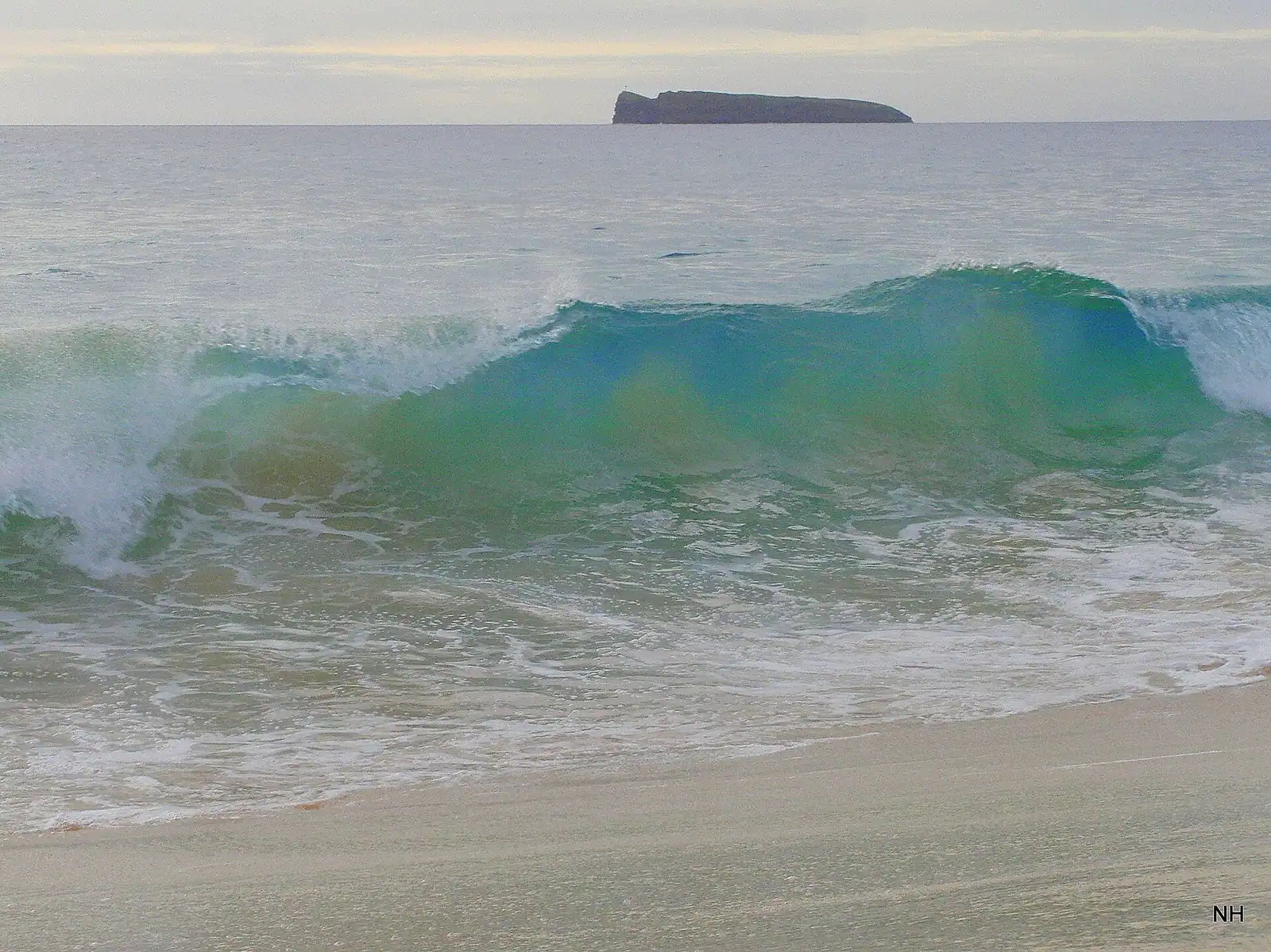
A sunken crescent of volcanic rock three miles offshore, with water clear enough to see the bottom from the deck.
Molokini is a crescent of bare rock sitting in the ʻAlalākeiki Channel between Maui and Kahoʻolawe, about three miles off the Mākena coast. It is what is left of a tuff cone built by a single explosive eruption in Haleakalā's late volcanic stage, reckoned at something over 200,000 years ago, after the sea took out the seaward half of the rim. What remains is a curved wall enclosing a shallow cove on its sheltered north side, and a sheer drop on the outside.
That geometry is the entire reason to go. The crescent blocks the trade-wind swell, so inside the cove the water is glassy in the morning while everywhere else on the south coast is chopping up. There is no river within miles and no runoff into it, so there is no sediment. Visibility routinely runs 100 to 150 feet, which is the best you will see anywhere around Maui and among the clearest inshore water in the Pacific.
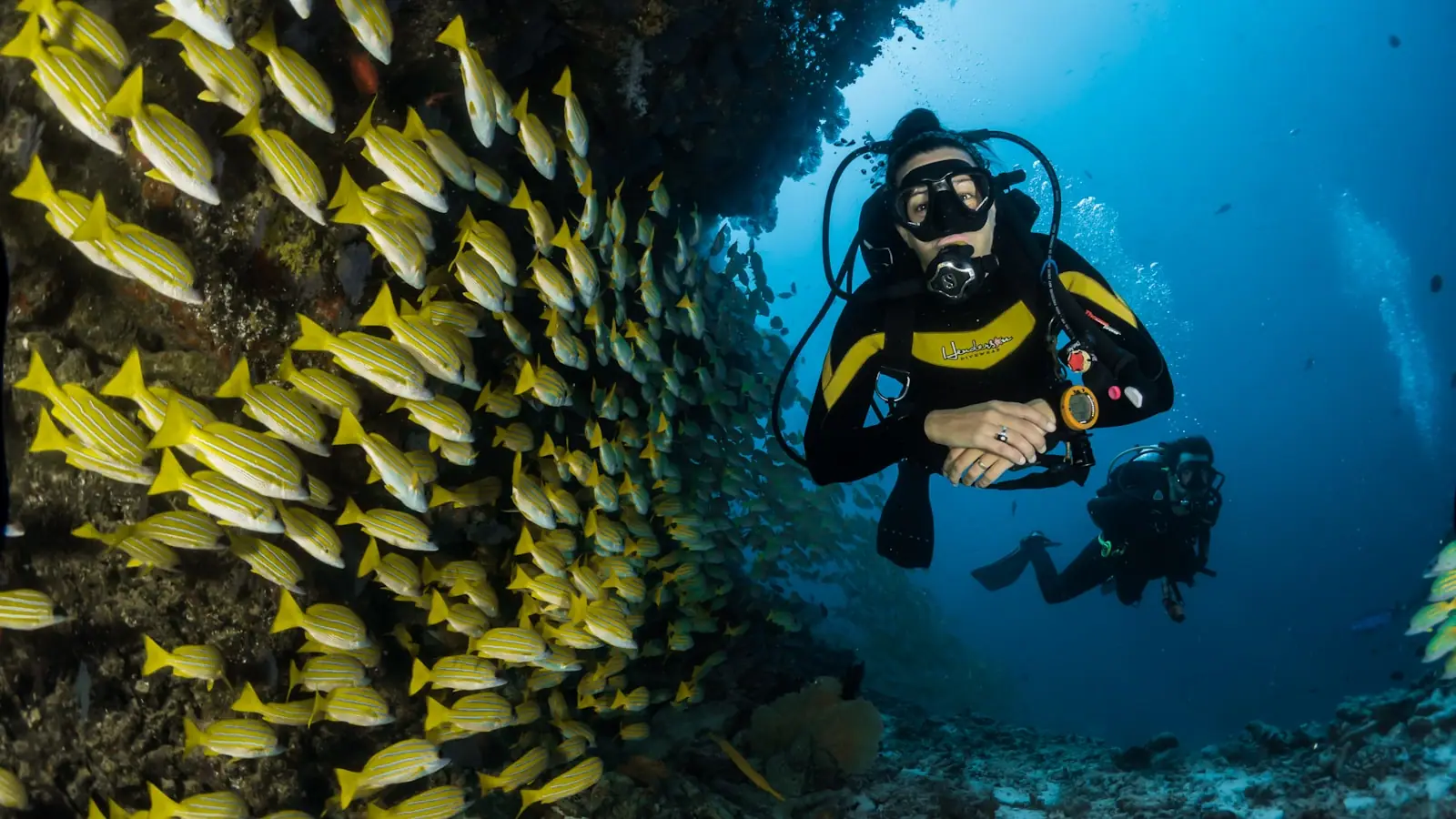
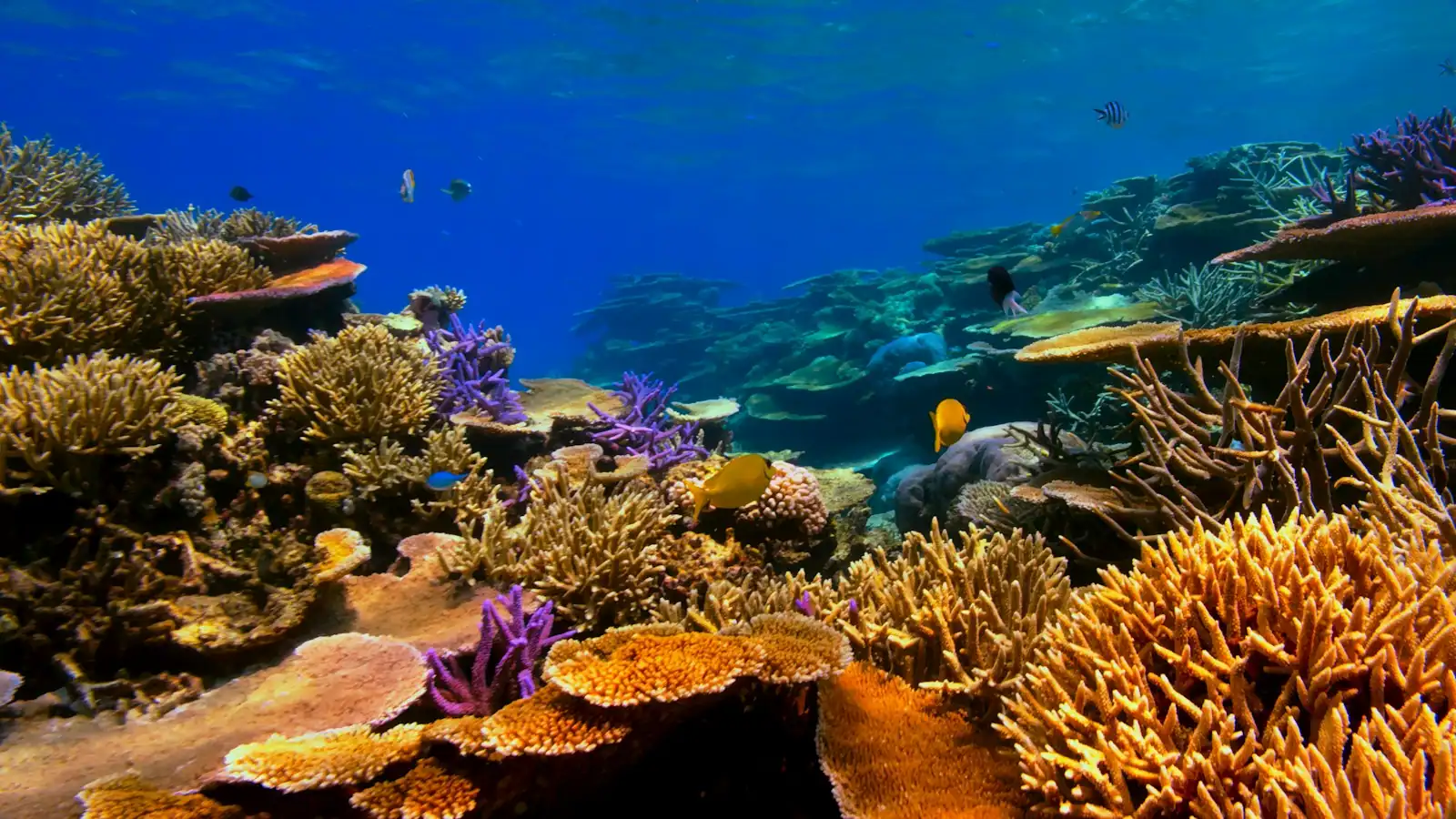
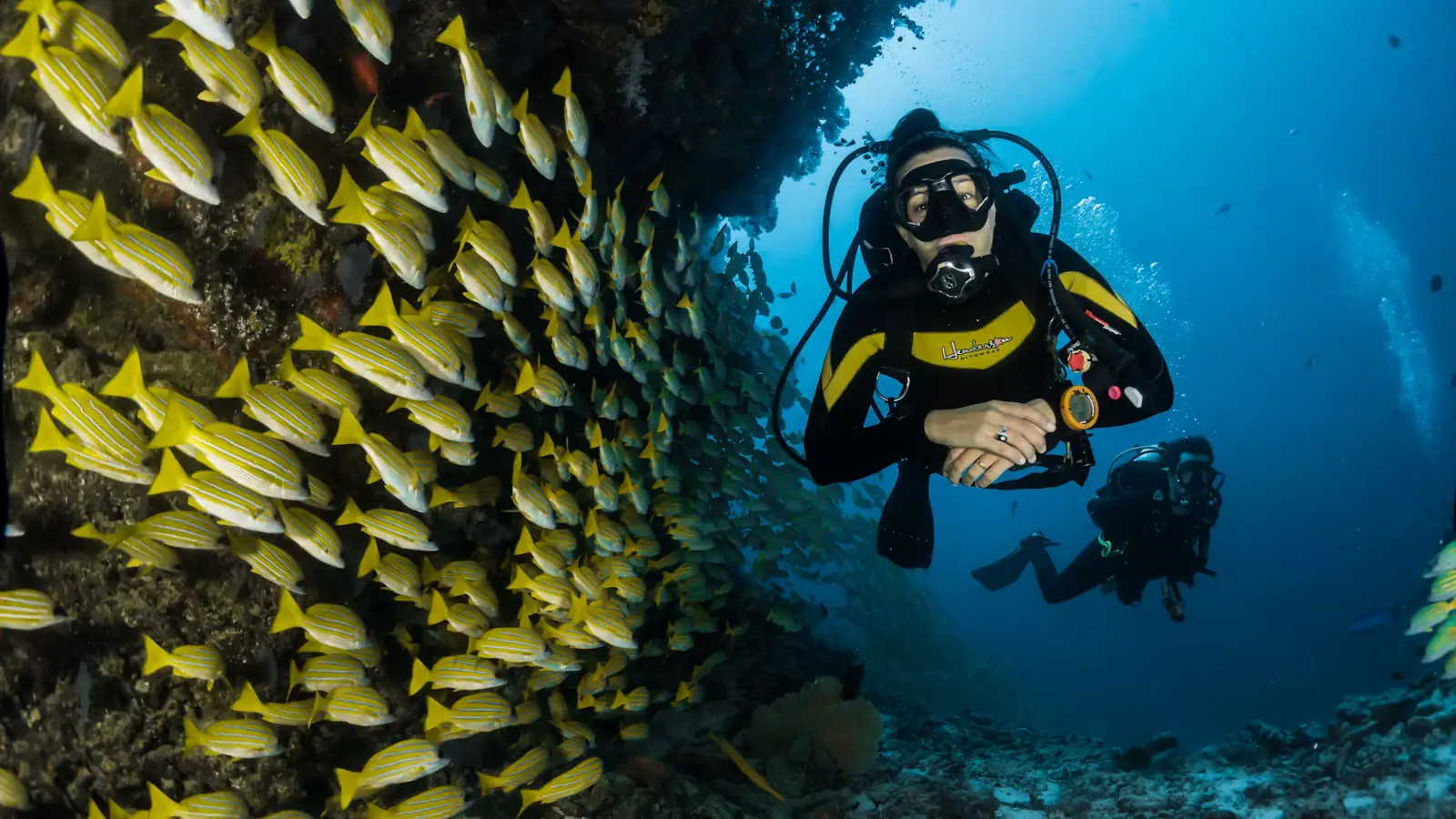
Inside the cove the bottom slopes from about 10 feet near the wall out to around 100 feet, with coral heads and sand channels, and something in the order of 250 fish species — a high proportion of them found only in Hawaiian waters. Yellow tangs in numbers, parrotfish grinding coral, raccoon and milletseed butterflyfish, moorish idols, the occasional whitetip reef shark asleep under a ledge. Outside the crescent, the back wall falls more than 200 feet into blue water and is an advanced scuba dive, not a snorkel.
Molokini has been a Marine Life Conservation District since 1977 and is a State Seabird Sanctuary. Landing on the islet is prohibited. Boats tie to fixed moorings rather than anchoring, nothing may be taken, and the wedge-tailed shearwaters and Bulwer's petrels nesting on the slopes are the reason the rock itself is off limits. The islet also spent part of the 1940s as a US Navy bombing target, which is a strange footnote to a place now protected this closely.
Every visit is a boat trip. Which boat, and what time it leaves, decides what you get.
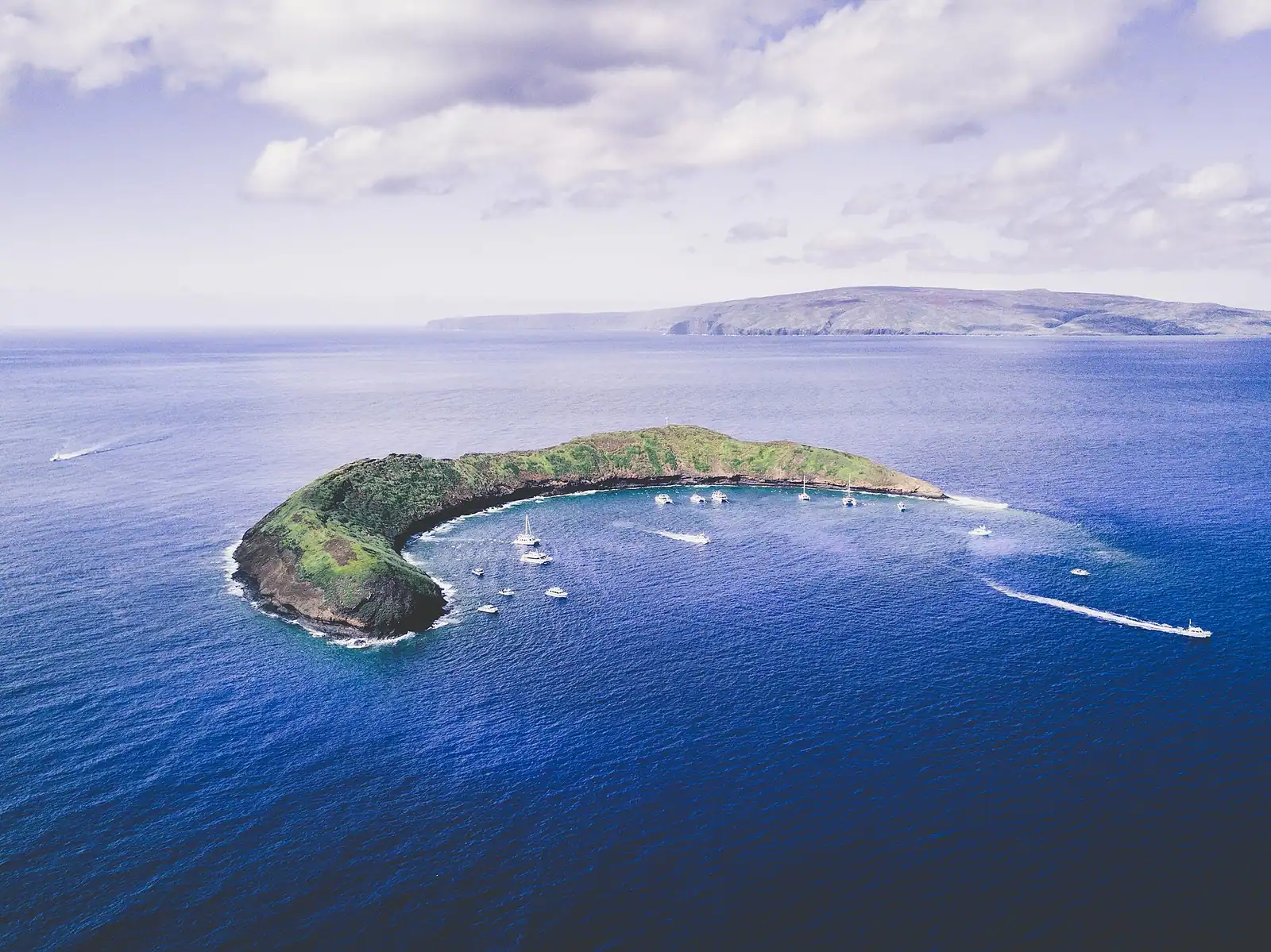
By boat only. Landing on the islet is prohibited, so there is no way to visit other than on a permitted charter.
Māʻalaea Harbor is the closest port and has the largest fleet, with the shortest transit times on large catamarans. It is about 20 minutes from Kīhei, 25 from Kahului and 40 from Kāʻanapali.
Kīhei boat ramp and Mākena Landing launch smaller, faster boats; Mākena has the shortest crossing of all but often requires wading to board from the beach.
Lahaina Small Boat Harbor has reopened in phases since the 2023 wildfire and operators have been returning progressively; crossings to Molokini from the west side are longer in any case. Check the departure point on your booking, because a hotel pickup in Kāʻanapali may still mean driving to Māʻalaea.
Arrive at the harbour 30 minutes before departure. Parking at Māʻalaea is free but fills early on the 6am and 7am sailings. Boats do not wait.
The trade winds on Maui's south coast are usually light at dawn and build through the late morning. By early afternoon the channel between Maui and Kahoʻolawe is moving. That single pattern drives everything about Molokini pricing and experience.
| Morning trips | Afternoon trips | |
|---|---|---|
| Departure | Roughly 6:00–8:00am | Roughly 11:00am–1:00pm |
| Water inside the crescent | Usually glassy | Often choppy |
| Visibility | Best of the day | Reduced by wind and stirred sand |
| Chance of reaching Molokini at all | High | Lower — trips divert |
| Price | Higher | Noticeably cheaper |
| Crowding on the moorings | Heavier | Lighter |
Afternoon trips are cheaper for a reason. When conditions are poor, operators substitute a nearer site — Coral Gardens off Olowalu, or the lava formations off Mākena that get marketed as Turtle Town — and those are decent snorkels but they are not Molokini. Read the booking terms: most afternoon charters reserve the right to switch sites and do not refund for it.
If Molokini specifically is what you want, book the earliest departure you will tolerate. The 6am and 7am boats reach the crescent before most of the fleet, get the better moorings and are back at the harbour by lunchtime.
One trade-off worth naming: the earliest trips are also the coldest and the most likely to involve a dark drive. On this island, that is the price of the clear water.
Māʻalaea Harbor is the closest port to Molokini and carries the largest fleet: big power catamarans with freshwater showers, marine heads, lunch service and, on several, waterslides. Crossing time is short. This is the default and the right call for families, nervous swimmers and anyone who wants structure.
Kīhei boat ramp launches smaller, faster vessels — rigid inflatables and light catamarans with a dozen or twenty guests rather than a hundred. Less comfort, fewer facilities, a wetter ride, and considerably more time in the water per dollar.
Mākena Landing / Mākena Bay has the shortest crossing of all on small boats, and the ones that go from here often reach the crescent first. Beach-launch boarding means wading, which rules it out for some people.
Lahaina Small Boat Harbor has reopened in phases following the 2023 fire, with operators returning progressively; sailings from the west side are longer crossings to Molokini in any case, so check both the departure point and the crossing time when booking from a Kāʻanapali or Kapalua hotel.
Boat types, roughly:
You will be in a cove, tied to a mooring, with several other boats doing the same. Most operators give you 45 to 90 minutes in the water at Molokini before moving on.
If you are not a confident swimmer, say so at check-in. Every reputable operator carries flotation belts, noodles and rings, and the crews on this run are experienced at getting nervous first-timers comfortable. It is a bad idea to discover you are out of your depth 150 feet above a crater floor.
The back wall is the outside of the crescent, where the tuff drops sheer past 200 feet into open channel water. It is an advanced scuba site: deep, exposed, sometimes with current, and done as a drift along the face. What it offers is pelagic — whitetip and grey reef sharks, big trevally, occasionally manta rays and, in the right season, the sound of humpbacks through the water. It is only run when conditions allow, and reputable operators will refuse it outright on a bad day. Do not argue with that.
Inside the cove, introductory dives and SNUBA are widely offered and work well in 20 to 40 feet of water on the sheltered slope.
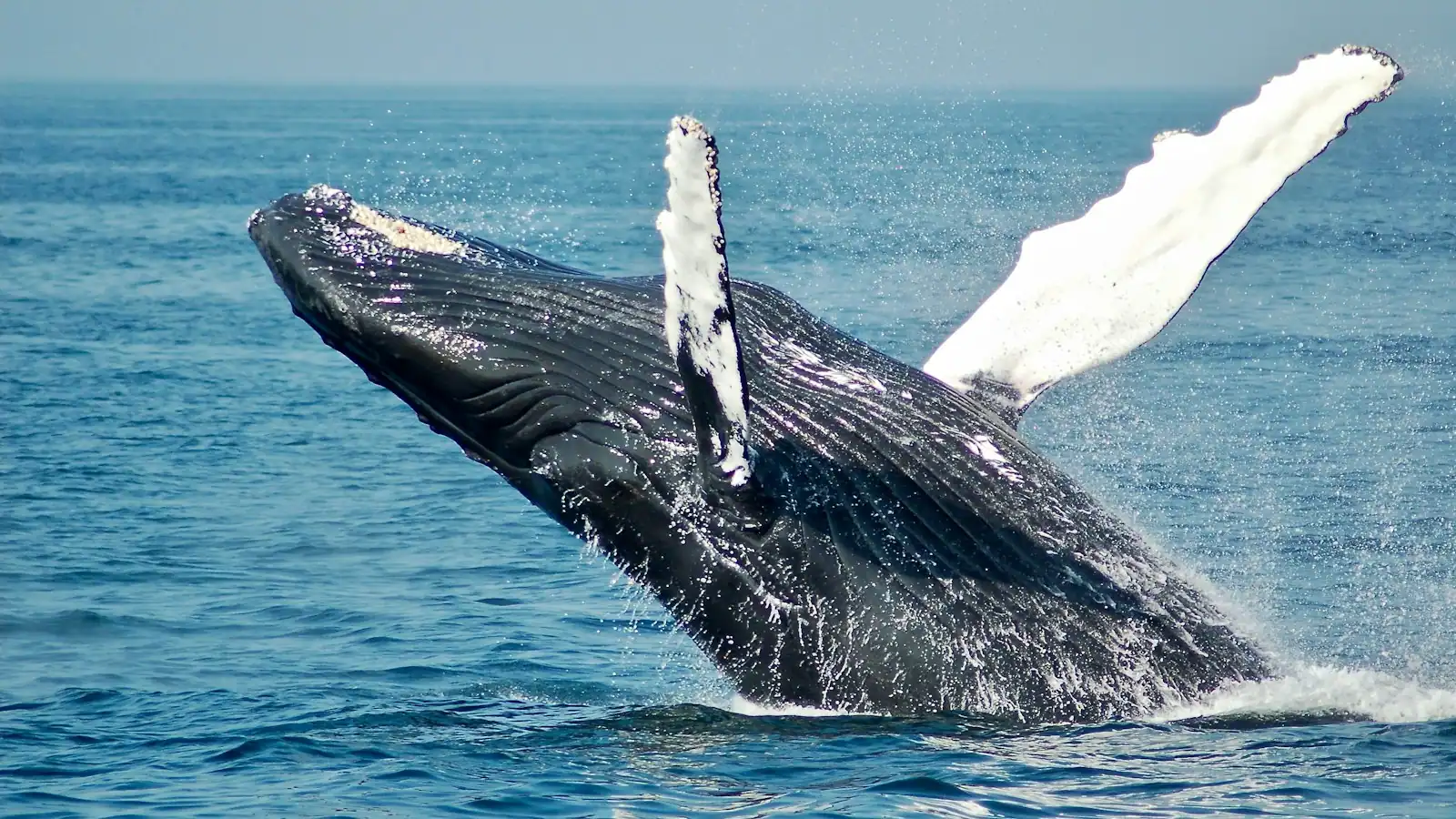
The crossing itself is not filler. Between roughly December and April, humpback whales are in the Maui Nui basin in numbers — this shallow water between Maui, Molokaʻi, Lānaʻi and Kahoʻolawe is the main Hawaiian calving and breeding ground — and a morning Molokini run in February will usually produce whales without trying. Federal law sets the approach distance at 100 yards; a captain who idles down and waits is following the rules, not being unhelpful. Boats cannot chase.
Out the far side of the channel sits Kahoʻolawe, low and reddish and uninhabited, a former bombing range now under restoration and closed to casual visitors. Most crews will explain what it is if asked, and the explanation is worth having.
Spinner dolphins turn up on the crossing year-round, usually early, usually briefly.
Maui is the most expensive destination in Hawaiʻi for tours, and Molokini charters sit at the top of that. The typical spread runs from budget afternoon group trips at the low end to private charters several times that. What moves the number:
Worth asking before you book: how many guests on the boat, how long at Molokini specifically, what happens if the site changes, whether flotation is available, and whether the boat carries a marine head and freshwater rinse.
Book a Molokini trip for early in your stay rather than the last morning. Weather cancels trips on this coast, and a trip that gets moved needs somewhere to move to. Do not book any boat within 24 hours of flying home if you intend to dive.
Operators run these trips past Molokini, or stop there as part of a longer route. We list what the booking data supports — not everything that mentions the name.
Booking through these earns us a commission from Viator. You pay the same, and payment did not decide what is listed.

Involves Animals
We are a family-owned Maui company with over 40 years of experience on Hawaiian waters. Our expert Captains and crew bring decades of…
5 hours
Prices checked

Best Conversion
The fastest way to see one of Maui's most incredible snorkel sites and the famous resident Honu (Hawaiian Green Sea Turtles) that reside…
2–3 hours
Prices checked

Low Last Minute Supplier Cancellation Rate
Experience the flexibility of a true ocean adventure aboard our premium Gold Coast catamaran, where our experienced crew selects the day’s…
5 hours
Prices checked

Short term availability
Your West Maui Snorkel adventure departs from Kaanapali Beach. Along the way keep your eyes open for Hawaiian spinner dolphins, bottle…
4 hours
Prices checked

Nature and Wildlife Tours
Trip Highlights - 15 minute boat ride to Molokini - Snorkel the crystal clear waters of Molokini crater, Maui's 1st Snorkeling destination…
2 hours
Prices checked

Curated Catalog
Enjoy our brand new "2025 Model" vessel. Maui's newest raft boat. Comfortable seating and shade area for everyone. Beat the crowds and…
3 hours
Prices checked

Sustainable Tours
THIS IS A 8 LINES TOUR - JUNGLE ADVENTURE This adventure with Jungle Ziplines Maui includes eight amazing Ziplines, three tree platforms…
2 hours
Prices checked

Day Trips
Discover Maui's famous Road to Hana from the ground and from the sky! On this small-group luxury tour, relax on the drive to Hana in a…
6 hours
Prices checked

Small Group
Take in the sights as you soar up to 1,200 feet or 800 feet above the beautiful waters of Maui on this deluxe parasailing experience…
1 hour
Prices checked
Straight-line distances, so allow more on the road — the island is long and has one main parkway.

Museum
The only aquarium on Maui, showing Hawaiian species exclusively — and by county law, no whales or dolphins in tanks.
2–3 hoursAround $50 for adults, roughly $40 for children 4–12, slightly less for over-65s. Under-fours free. Substantial kamaʻāina and military discount.11.1 mi away

Neighbourhood
Six miles of beach, three lifeguarded parks and the best free whale watching on Maui, plus a wind that arrives every afternoon.
2–8 hoursFree. All the beach parks are public with free parking.9.1 mi away

Beach
Two-thirds of a mile of undeveloped gold sand backed by a cinder cone, with a shorebreak that puts people in hospital every year.
1.5–5 hoursBeach access is free; non-residents pay to park at the state park kiosks.3 mi away

Beach
A small Wailea cove with reef on the point, used by every South Maui dive school, sharing one modest car park with Mokapu.
1–3 hoursFree, including the shared Ulua and Mokapu public car park.5.2 mi away
Where this place fits into a day, and the pages that plan one.

Guide hub
Maui is the most expensive place to book an activity in this network, and it is not close. The typical bookable tour here runs a little over $200 a…

Things to do
Molokini is a crescent of rock sitting in open water in the ʻAlalākeiki Channel, about three miles off the Mākena coast and about eight miles from…

Things to do
Maui has reef on three sides and each side has a different season. That single sentence explains most of the disappointment visitors report about…

Things to do
The stretch of water between Maui, Lānaʻi, Molokaʻi and Kahoʻolawe is the reason humpback whales are the thing Maui is best at. That basin, Maui…

Things to do
More money changes hands on Maui's boats than on anything else visitors do here, and the reason is that the best things about this island are three…

Things to do
Maui dives better than its reputation suggests, and the reason is volcanic. The island's leeward coast is young lava that fell into deep water, so…

Guide
The trade winds decide this, not the guidebooks. Almost every good snorkelling site on Maui is excellent at eight in the morning and mediocre by two in the afternoon.
10 min readDana Whitfield

Guide
Water in the morning, land in the afternoon, and the three reservations booked before you fly. Order the week that way and Maui stops feeling like a driving holiday.
11 min readMarcus Reyes

Guide
Maui County's rule is stricter than the state's: mineral only, no prescription, no exceptions. Most visitors arrive with a bag of sunscreen they should not be using here.
9 min readDana Whitfield
Molokini is worth it for the water clarity, which is the thing shore sites cannot match. Visibility of 100 to 150 feet is normal inside the crescent because there is no runoff and the crater wall blocks the swell. Honolua Bay and Ulua Beach are excellent shore snorkels and free, but on any given morning the water at Molokini is clearer by a wide margin. If you only do one paid ocean trip on Maui, this is the one.
Morning, and the earlier the better. Trade winds on the south coast are light at dawn and build through the late morning, so the 6am and 7am boats get glassy water and the best visibility. Afternoon trips are cheaper because conditions are worse, and they are far more likely to be diverted to a nearer site such as Coral Gardens or the Mākena lava formations. Most operators guarantee a snorkel, not the crater itself.
Yes, but only as a certified diver on a dedicated dive charter. The back wall is the outside of the crescent, dropping sheer past 200 feet into open channel water, usually dived as a drift along the face. It is deep, exposed and sometimes has current, and operators cancel it outright when conditions are marginal. Inside the sheltered cove, introductory dives and SNUBA run in 20 to 40 feet and suit beginners.
Mineral only. Hawaiʻi bans the sale of sunscreen containing oxybenzone or octinoxate, and Maui County goes further, permitting only mineral formulations based on zinc oxide or titanium dioxide without a prescription. In practice the better answer is a long-sleeved rash guard, because you are floating face down for an hour with the sun on your back and no sunscreen survives that. Buy mineral sunscreen on-island if you are unsure what you packed.
Between December and April, very likely. The shallow Maui Nui basin between Maui, Molokaʻi, Lānaʻi and Kahoʻolawe is the main Hawaiian humpback calving and breeding ground, and the crossing to Molokini passes straight through it. Peak numbers are January to March. Federal rules set a 100-yard approach limit and boats are not allowed to pursue whales, so a captain who cuts the engines and waits is doing it correctly.