Skip to content
Menu

Booking through these earns us a commission from Viator. You pay the same, and payment did not decide what is listed.

Search

Historic site

ʻĪao Valley State Monument

Last updated

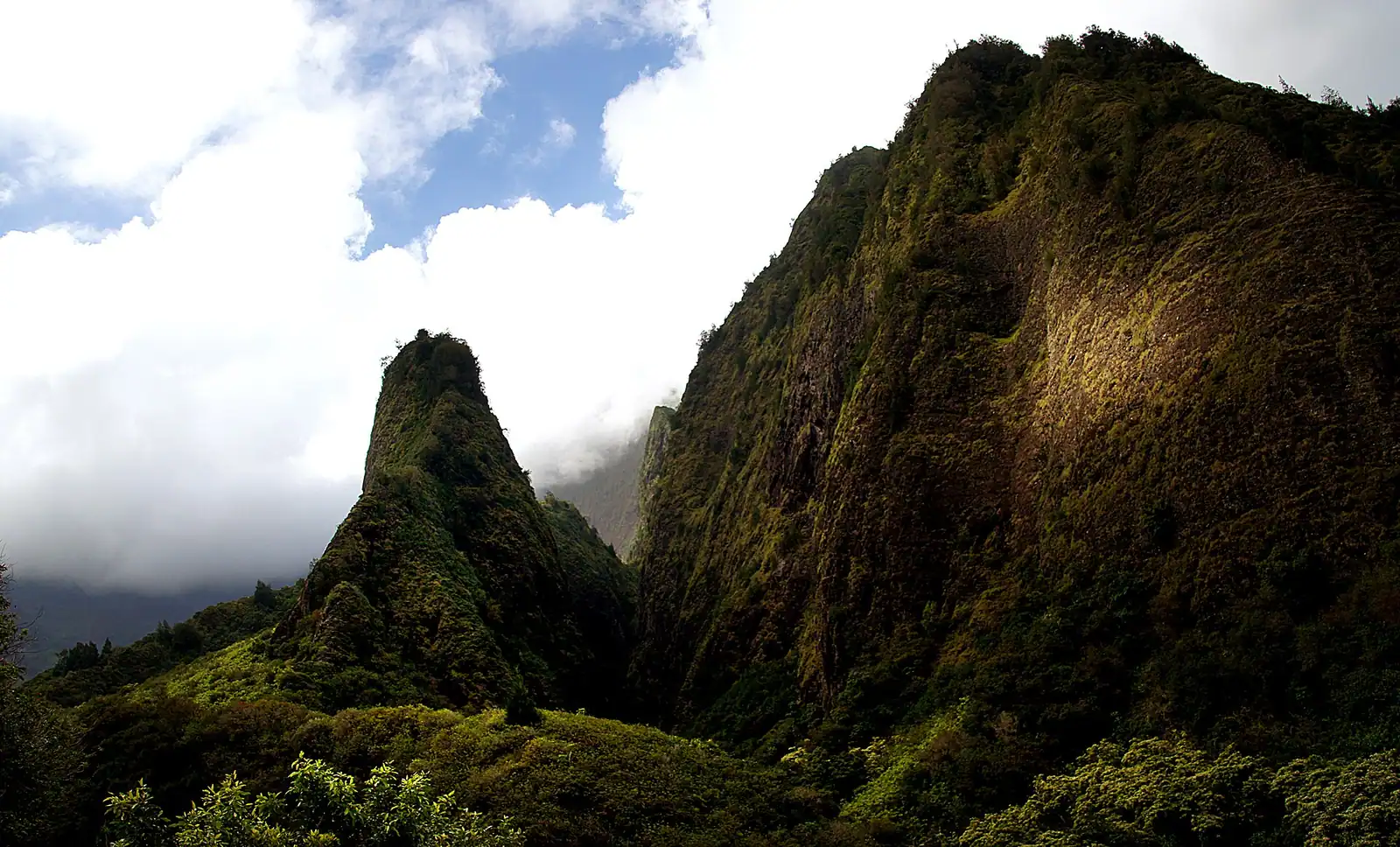
A green spire 1,200 feet above the valley floor, in a place Hawaiians remember as a battlefield rather than a viewpoint.

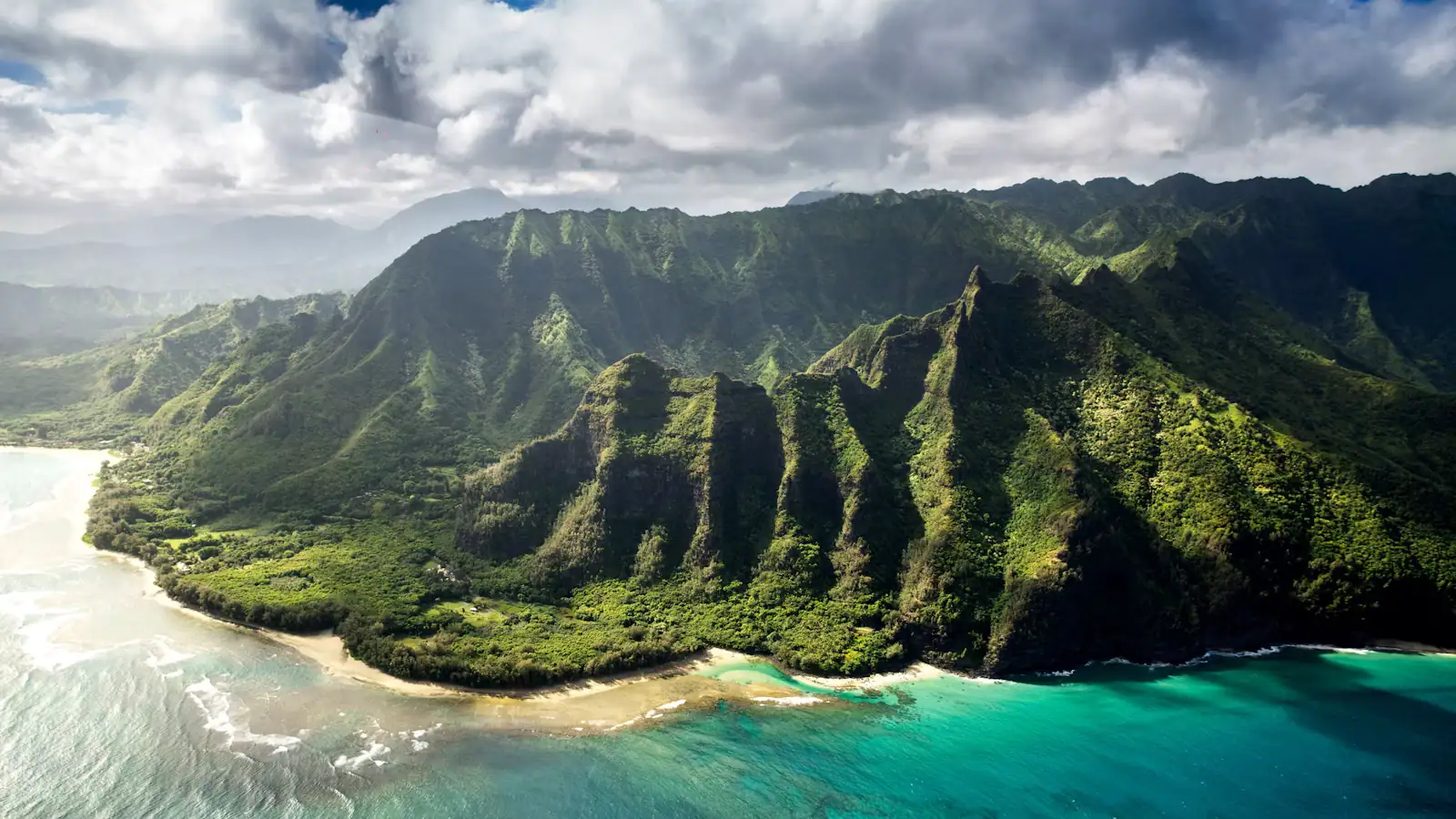
ʻĪao Valley cuts west out of Wailuku into Mauna Kahālāwai, the West Maui Mountains, and ends against some of the steepest and wettest ground in the Hawaiian Islands. At the head of the valley, Puʻu Kukui collects something in the order of 350 inches of rain a year, which is why the walls here are fluted, black where the water runs, and covered in vegetation that looks painted on.

The landmark everyone comes for is Kūkaʻemoku, usually called the ʻĪao Needle. It is a hardened volcanic remnant left standing when the softer rock around it eroded away, rising about 1,200 feet from the valley floor and roughly 2,250 feet above sea level. It is not actually a freestanding spire; it is the end of a ridge, and the angle from the state monument's upper platform is what makes it read as a needle.

What the viewpoint does not announce is what happened underneath it. In 1790 the Battle of Kepaniwai was fought in this valley, when Kamehameha's forces — with cannon and Western advisers — defeated the Maui army under Kalanikūpule during the campaign to unify the islands. The name Kepaniwai means the damming of the waters, and it refers to the dead in ʻĪao Stream. The valley is also a traditional burial place of Maui aliʻi. Visitors are asked to stay on the paved paths, not to enter the stream in the area of the monument, and not to treat it as a backdrop.

Practically, this is a short visit and a well-organised one. The paved loop is around half a mile, with a stiff flight of steps up to the main viewing platform and a gentler lower path down to a garden of Hawaiian food and medicine plants beside the stream. Half an hour to an hour covers it comfortably. It sits ten minutes from Wailuku, which makes it the easiest significant site to reach on the island — and the one most often visited in a hurry.

Since 2022, non-residents have needed an advance reservation to get in at all.
Getting there and parking

From Kahului, take Kaʻahumanu Avenue (Highway 32) west through Wailuku, where it becomes Main Street and then ʻĪao Valley Road, and follow it to the end. It is about ten minutes from Wailuku, twenty from the airport, and forty-five from Kīhei or Kāʻanapali. The road is paved, two-lane and narrow in places near the top, with a couple of one-lane bridge sections.

The car park is at the end of the road and is small, which is why the reservation system exists. Arrive within your booked window — showing up an hour early does not get you in. Spaces are marked, and a portion is held for Hawaiʻi residents.

There is no public transport that serves the monument usefully, and rideshare coverage in upper ʻĪao is thin. Drive, or come on a guided central-Maui tour that includes the entry.

You need a reservation, and there are none at the gate

Every non-resident visitor needs an advance entry and parking reservation, booked online at gostateparks.hawaii.gov. There is no same-day sale at the park, and people arriving without a booking are turned away at the kiosk. This catches out several cars every day, usually ones that decided on ʻĪao over breakfast.

How it works:

  • Reservations are released up to 30 days ahead.
  • You book a timed slot and a vehicle space. The park opens at 7am and the last slot is in the late afternoon, with everyone out by closing.
  • Fees are charged separately for parking and per person: parking runs about $10 per vehicle, and the non-resident entry fee is around $5 per person, with under-threes free.
  • Hawaiʻi residents with a valid state ID enter and park free and do not need a reservation. Out-of-state guests travelling with a resident still need their own booking and still pay.
  • Everyone entering needs an entry ticket, including anyone who will stay in the vehicle or cannot walk the trail.
  • Cancellations generally need three days' notice and may carry a fee.

The parking area is small — this is the actual reason for the system, alongside crowd pressure on a culturally sensitive site. Book it when you book Waiʻānapanapa, and treat the two as the island's fixed points.

The walk: short, steep in one place, and slippery

From the car park, a paved path crosses ʻĪao Stream on a footbridge and then splits.

Up: a long flight of concrete steps climbs to the main viewing platform, with a second smaller shelter above it. This is where the classic view of Kūkaʻemoku is from. It is maybe 130 steps, handrailed, and unpleasant in the heat but short.

Down: a gentler loop drops towards the stream through a planted area of kalo, ʻulu, kō and other canoe plants — species early Hawaiian voyagers carried with them — with interpretive signs that are the most useful ten minutes in the park.

Two things to expect. Rain: this valley sits in one of the wettest catchments in the state and cloud fills the head of it most afternoons. A clear view of the Needle at 3pm is luck, not planning. Wet concrete: the steps and paths stay damp and get genuinely slick, and the handrail matters.

Entering ʻĪao Stream is not permitted in the monument area. Beyond the cultural reasons, this catchment flash floods hard and fast — a 2016 flood tore out sections of the park and the stream bed itself — and water levels here respond to rain falling miles upvalley where you cannot see it.

Kepaniwai: what this valley is

In 1790 Kamehameha landed at Kahului with a fleet and, critically, with cannon and two Western gunners. The Maui forces under Kalanikūpule fell back from the plain into ʻĪao Valley, where the walls narrow and an attacker's numbers matter less. The artillery changed that calculation. The fighting that followed is remembered as Kepaniwai — the damming of the waters — because the dead choked ʻĪao Stream.

That battle is one of the hinge points of the unification of the Hawaiian Islands, and the valley carries it. ʻĪao was also a burial ground for high-ranking aliʻi, its exact sites deliberately not marked or publicised.

This is why the guidance here is stricter than at a scenic overlook: stay on the paths, do not climb the slopes or the stream bed, do not stack rocks, do not remove anything, and keep drones out entirely. The state has restored and re-landscaped parts of the monument with cultural practitioners involved, and the interpretation on site reflects Hawaiian accounts rather than only the tourist version.

A short drive back down the valley, Kepaniwai Heritage Gardens is a county park with pavilions representing the ethnic groups who came to work Maui's plantations — Japanese, Chinese, Portuguese, Filipino, Korean — set around the same stream. It is free, needs no reservation, and gives the industrial-era half of the valley's story.

When to book your slot

Morning, early. The 7am and 8am slots are the ones to want. The light comes over the shoulder of the valley and lands on the Needle, the cloud has not yet built at the head of the valley, and the steps are bearable before the sun is high.

By early afternoon the valley usually clouds in. That is not a failure — the mist moving across the walls is arguably the better photograph — but if you specifically want the postcard shot of a sunlit green spire, an afternoon booking is a gamble.

Rain is the constant. It can be dry in Wailuku, ten minutes away, and raining steadily here. Bring a light waterproof rather than an umbrella, because the steps need both hands in the wet.

Budget 30 to 60 minutes inside. This is not a half-day site, and the reservation slots are sized accordingly. Pair it with Wailuku town for lunch, the Bailey House Museum a couple of minutes down the road, or Kepaniwai Heritage Gardens on the way out. Combining it with Maui Ocean Center at Māʻalaea makes an easy half-day in the island's central corridor, which is the standard wet-weather plan on Maui.

Tours that visit ʻĪao Valley

Operators run these trips past ʻĪao Valley, or stop there as part of a longer route. We list what the booking data supports — not everything that mentions the name.

Booking through these earns us a commission from Viator. You pay the same, and payment did not decide what is listed.

Shared departurespriced per seat, best value for one or two

  • Maui: Lahaina ATV Adventure

    Low Supplier Cancellation Rate

    Maui: Lahaina ATV Adventure (opens in a new tab)

    Free cancellation
    1.8K reviews

    You’ll have the chance to drive, or simply be a passenger in one of today’s most advanced 4 seater off-road vehicles, the Canam sport max…

    2 hours

    Prices checked

    from $202.55
  • Maui Atlantis Submarine Adventure

    Excellent Quality

    Maui Atlantis Submarine Adventure (opens in a new tab)

    Free cancellation
    815 reviews

    All riders must be 36 inches or taller to participate/ride submarine. Dive 100 feet below the surface and experience Maui’s marine…

    2 hours

    Prices checked

    from $144.36Usually $160.41

Private and small-group optionsoften cheaper per head for a family or a group of six

Near ʻĪao Valley

Straight-line distances, so allow more on the road — the island is long and has one main parkway.

  • Low two-storey storefronts along a quiet main street with shopfront awnings

    Neighbourhood

    Wailuku Town

    Free

    Maui's county seat — antique shops, an 1833 mission house and a 1928 theatre, three miles below the mouth of ʻĪao Valley.

    1.5–4 hoursFree to visit the town. Museum admission and theatre tickets are charged separately.2.7 mi away

  • A still lagoon reflecting steep green mountain ridges under scattered cloud

    Park

    Maui Tropical Plantation

    Free

    A working farm at the mouth of Waikapū Valley where the grounds are free and the mountain behind it does most of the work.

    1–2.5 hoursFree to enter the grounds and park. The tram tour, ziplines and food are charged separately.3.1 mi away

  • Fish swimming past a large curved aquarium viewing window

    Museum

    Maui Ocean Center

    The only aquarium on Maui, showing Hawaiian species exclusively — and by county law, no whales or dolphins in tanks.

    2–3 hoursAround $50 for adults, roughly $40 for children 4–12, slightly less for over-65s. Under-fours free. Substantial kamaʻāina and military discount.6.5 mi away

  • Low wooden storefronts with painted signs along a small-town main street

    Neighbourhood

    Pāʻia Town

    Free

    A two-street sugar town that surfers took over, and the last place to buy petrol, coffee and a picnic before the Road to Hāna.

    1–3 hoursFree to visit. You pay for what you buy, and parking is free but scarce.11.6 mi away

ʻĪao Valley: common questions

Do you need a reservation for ʻĪao Valley?

Yes, if you are not a Hawaiʻi resident. Entry and parking must be booked in advance at gostateparks.hawaii.gov, up to 30 days ahead, for a specific time slot. Nothing is sold at the gate and visitors without a booking are turned away. Hawaiʻi residents with a valid state ID enter and park free with no reservation, but out-of-state guests travelling with them still need their own tickets.

How much does it cost to visit ʻĪao Valley State Monument?

Non-residents pay two charges: around $10 per vehicle for parking and around $5 per person for entry, with children under three free. Both are purchased together online in advance. Every visitor needs an entry ticket, including anyone staying in the car. Hawaiʻi residents with state ID pay nothing. Check gostateparks.hawaii.gov for current rates, which have been adjusted periodically.

How long do you need at ʻĪao Valley?

Thirty to sixty minutes. The paved loop is about half a mile, with a flight of steps up to the main viewing platform and a gentler lower path past a planting of Hawaiian canoe crops. The reservation slots are sized for roughly that. Pair it with Wailuku town, the free Kepaniwai Heritage Gardens just down the road, or Maui Ocean Center at Māʻalaea to make a half day of it.

Can you swim in ʻĪao Stream?

Not within the state monument. Entering the stream in the park area is not permitted, for cultural reasons and for safety ones — this catchment sits below Puʻu Kukui, one of the wettest places in the United States, and it flash floods from rain you cannot see falling. A 2016 flood tore out sections of the park itself. Local swimming spots exist further down the valley, but they are not part of the monument.

What happened at ʻĪao Valley?

The Battle of Kepaniwai was fought here in 1790, when Kamehameha's forces, using cannon and Western gunners, defeated the Maui army under Kalanikūpule during the campaign to unify the islands. The name means the damming of the waters, and refers to the dead in ʻĪao Stream. The valley is also a traditional burial place of Maui aliʻi. That history is why visitors are asked to stay on the paths and treat the site as more than a viewpoint.